
The Hidden Curriculum of Self-Discipline
In the age of AI and endless distractions, the quiet skill that still shapes success


You won’t find it on the whiteboard. It’s not in the syllabus or the PowerPoint slides. No one hands it out on Day One.
But every student, whether they know it or not, is enrolled in a silent subject — one that shapes their future just as much as math, science, or English ever will.
It’s called self-discipline. And it’s part of the hidden curriculum.
The Unspoken Subject
Schools teach many things. Some are obvious: how to write, how to calculate, how to analyze a text or conduct an experiment.
But beneath the surface, another kind of education is taking place. Students are constantly learning how to manage their time, delay gratification, resist distraction, and keep going when motivation fades.
These lessons aren't always graded. In fact, they’re rarely even acknowledged.
But their impact? Lifelong.
More Than Just Willpower
Self-discipline isn’t about being a rule-follower or a perfectionist. It’s about learning to show up for yourself when it’s easier not to.
It’s the student who studies an extra hour when no one’s watching.
It’s the kid who chooses sleep over another hour of gaming.
It’s the teen who rewrites an essay again — not for a higher grade, but because they know they can do better.
This doesn’t come naturally to everyone. And it’s not always taught explicitly.
In many ways, the students who “succeed” are often just the ones who figured out the hidden rules before anyone told them what game they were playing.
Where It Begins
For some, self-discipline is modeled at home. For others, it’s forged through trial and error — missed deadlines, late-night cramming, harsh feedback. And for too many, it’s mistaken for laziness or disinterest when it hasn’t had the chance to grow yet.
The truth is, most students aren't lazy. They're overwhelmed. Distracted. Burned out. Or they've simply never been taught how to structure their own time or thoughts in a world filled with noise.
And yet, we keep expecting them to act like they’ve already mastered it.
Why It Matters Now More Than Ever
In a world of constant pings, scrolls, and short attention spans, self-discipline is becoming a kind of superpower.
AI can write your essay. YouTube can explain your assignment. Chat groups can share all the answers.
But only you can decide to not take the shortcut.
Only you can choose to do the work — the deep, boring, difficult work — that actually builds something.
Self-discipline isn’t about punishment. It’s about power. Quiet, steady power over your own future.
So How Do We Teach It?
Maybe it starts with talking about it.
Not as a lecture — but as a real, ongoing conversation. About how hard it is to stay focused. About the tricks that help. About the habits that don’t.
Maybe it’s about giving students more room to fail — and more tools to recover.
Maybe it’s about reminding them that nobody feels disciplined every day — but that showing up, even imperfectly, matters more than waiting for motivation to strike.
Final Thought
The hidden curriculum of self-discipline doesn’t come with clear instructions. It’s messy. It looks different for everyone.
But it’s there.
And the students who learn to master it? They’re not just passing tests.
They’re learning how to write their own stories — one small decision at a time.
About the Creator
Keep reading
More stories from Shaun Andre and writers in Education and other communities.
The AI Generation
In classrooms around the world, something big is happening — and it’s not part of the standard curriculum. It’s silent, swift, and already changing the way young people think, learn, and create. We’re not talking about a new teaching strategy or a digital learning tool. We’re talking about Artificial Intelligence.
By Shaun Andre8 months ago in Education
Natural Ways to Clear Blackheads and Whiteheads
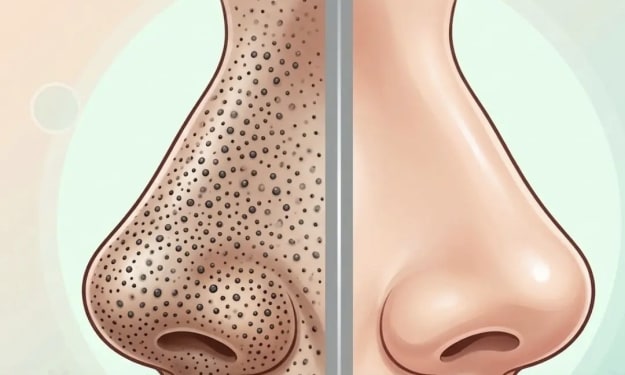
Blackheads and whiteheads are very common skin problems that affect people of all ages. They usually appear on the nose, chin, forehead, and sometimes on the cheeks. These small bumps form when the pores of the skin become clogged with oil, dead skin cells, and dirt. Blackheads appear dark because the clogged material inside the pore reacts with air and becomes oxidized, while whiteheads remain covered by skin, giving them a white or flesh-colored appearance.
By DigitalAddi4 days ago in Education



Comments
There are no comments for this story
Be the first to respond and start the conversation.