
The AI Generation
Are We Ready for the Students of Tomorrow?

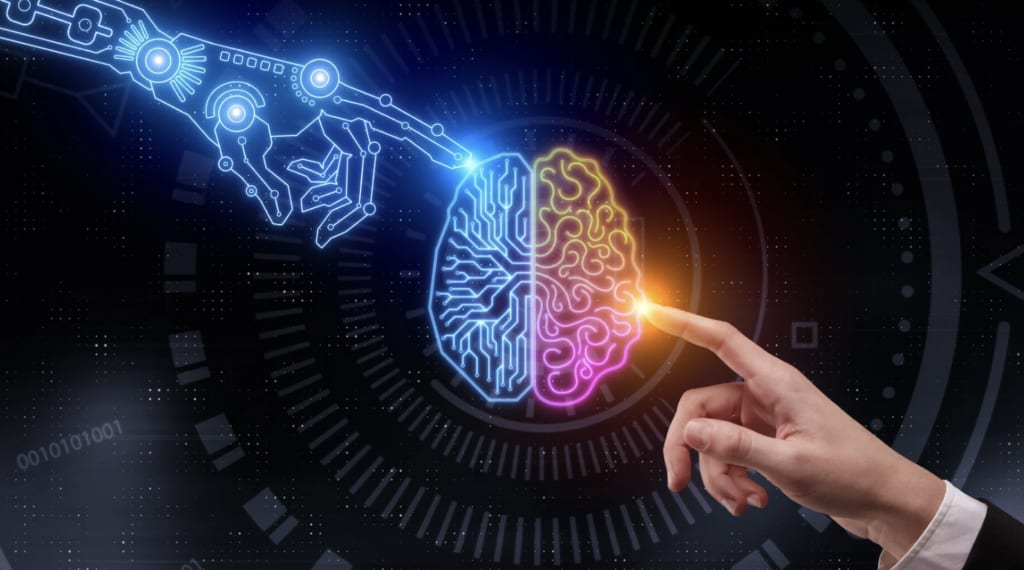
In classrooms around the world, something big is happening — and it’s not part of the standard curriculum.
It’s silent, swift, and already changing the way young people think, learn, and create. We’re not talking about a new teaching strategy or a digital learning tool. We’re talking about Artificial Intelligence.
And for today’s students, it’s not the future — it’s the now.
A Generation Growing Up with AI
While some adults are still debating whether AI tools like ChatGPT or image generators are ethical or dangerous, students are quietly learning how to use them. Not just for fun — but to write assignments, brainstorm ideas, generate code, and sometimes even replace traditional study habits.
To them, AI isn’t a sci-fi villain or a distant threat. It’s a tool, like Google or a calculator. But unlike those, this one can think, write, and sometimes even sound more “human” than we do.
The Benefits We Can't Ignore
Students who embrace AI are developing a whole new kind of literacy:
They know how to prompt effectively.
They test different models to get better results.
They compare outputs and refine tone or logic.
These are real-world skills. And like it or not, they’re marketable. In a future where AI is a regular part of work, these students might actually be ahead of the curve.
AI can also help level the playing field. For students with language barriers, learning difficulties, or anxiety, AI tools can offer support, feedback, or a second set of "ears." Used well, they can be empowering.
But There’s a Catch…
As much as AI can boost learning, it can also weaken it — if we’re not careful.
Some students are using AI to do their thinking for them. Why struggle through an essay when ChatGPT can do it better in seconds?
And even worse: schools often don’t know how to respond. Some ban it. Others ignore it. A few try to integrate it but lack the training or clarity to do it well.
This confusion sends mixed messages:
Is using AI cheating, or is it the future?
Should we avoid it, or embrace it?
Will students fall behind if they don’t use it… or because they do?
A New Kind of Learning
The truth is, education doesn’t need to panic. But it does need to evolve.
We have to teach students not just how to use AI, but how to think critically about what it produces. To question, refine, and challenge it. To see it as a collaborator — not a crutch.
In a way, this moment is less about technology, and more about values.
How do we teach integrity in an age of instant answers?
How do we reward creativity when machines can mimic it?
And most importantly: how do we prepare young minds for a world where intelligence — both human and artificial — will constantly be reshaped?
Final Thought
The students of today are walking into a world we can barely imagine. But they’re not unprepared — they’re just being trained differently.
As adults, educators, and lifelong learners, we don’t need to fear AI.
We just need to stay curious enough to keep up with the students who already know how to use it.
About the Creator
Keep reading
More stories from Shaun Andre and writers in Education and other communities.
The Unspoken Curriculum
There’s the official curriculum — the one printed in documents, embedded in learning management systems, and mapped onto assessment rubrics. Then there’s the one that never makes it into the syllabus, but every student absorbs by the time they walk out the school gates.
By Shaun Andre7 months ago in Education
EdTech and Smart Classroom Market to Attain USD 498.5 Billion by 2032
The Global EdTech and Smart Classroom Market presents a substantial long-term opportunity, expected to scale from USD 146.8 billion in 2023 to USD 498.5 billion by 2032. With a projected CAGR of 15%, the market is benefiting from increasing investments in digital curriculum platforms, AR/VR-enabled learning, AI-driven assessment systems, and connected classroom ecosystems.
By Roberto Crum5 days ago in Education
Clear Paths to Discover Your Purpose in Life
Finding direction in life is a common human search. Many people want their work and daily actions to feel meaningful. When you discover your purpose in life, you gain a sense of direction and inner peace. Purpose does not appear in a single moment for most people. It often grows through reflection, action, and learning. Small steps can lead to deep insight.
By Philip Raymond Baquie4 days ago in Education



Comments
There are no comments for this story
Be the first to respond and start the conversation.