
The Heart of the Milky Way Spins at 220 km/s — The Cosmic Dance of Our Galaxy
Space

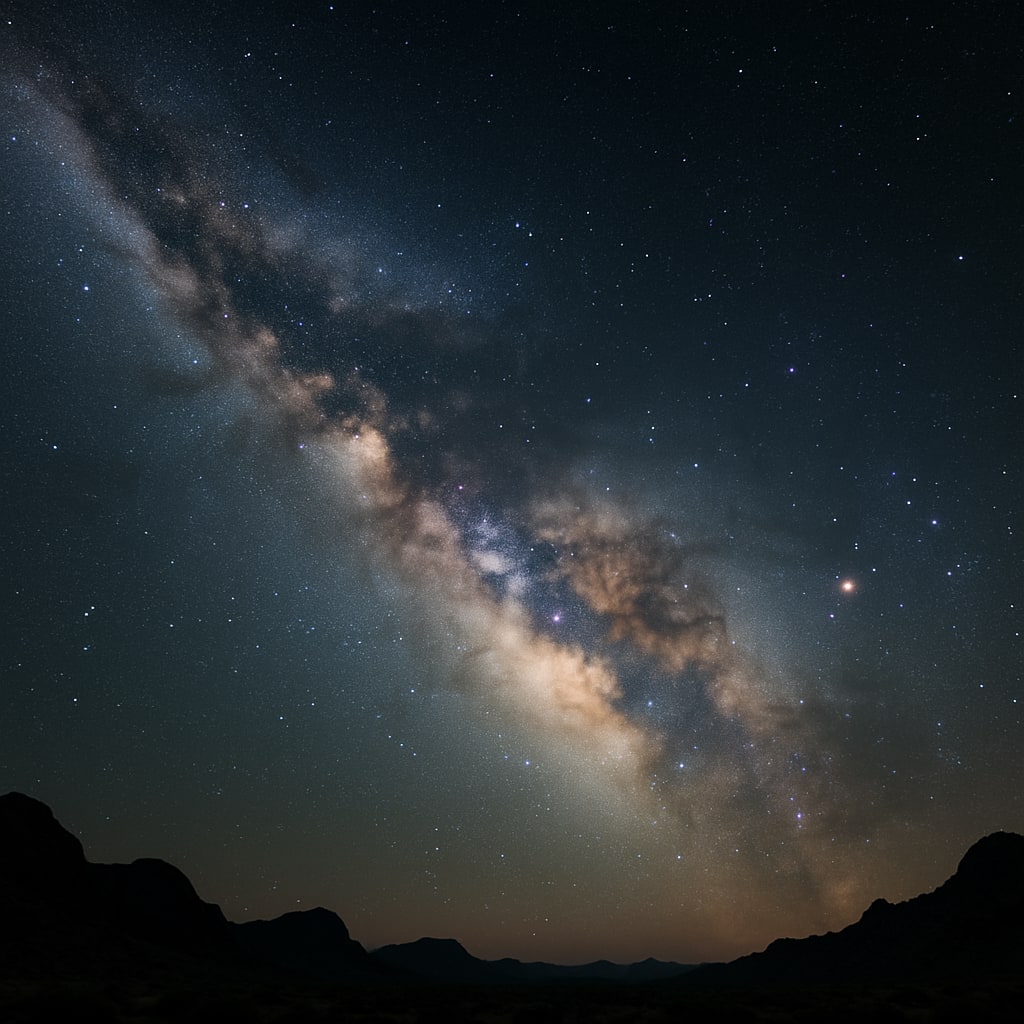
When we gaze up at the night sky, it feels calm and timeless. The stars appear frozen, scattered like glitter across black velvet. But in truth, our galaxy — the Milky Way — is anything but still. It’s a vast, rotating disk of hundreds of billions of stars, dust clouds, and invisible matter, all swirling together in a cosmic dance. And at the heart of it all, the center of our galaxy is spinning at an astonishing 220 kilometers per second, or roughly 800,000 kilometers per hour.
That’s fast enough to circle the entire Earth in just over three minutes.
A Galactic Whirlpool
The Milky Way is a barred spiral galaxy about 100,000 light-years across. It looks a bit like a glowing pinwheel — elegant spiral arms curling out from a bright central bulge. This central region, located in the direction of the constellation Sagittarius, is home to one of the most mysterious objects known to science: a supermassive black hole called Sagittarius A* (pronounced “A-star”).
This black hole weighs more than four million times the mass of our Sun. Everything in the galaxy — from the smallest dust grains to entire star clusters — orbits around this gravitational anchor. But here’s the twist: even this central region isn’t standing still. The entire Milky Way is in motion, rotating around its own axis, like a cosmic merry-go-round.
What Does 220 km/s Really Mean?
It’s easy to read a number like that and not truly feel its scale. But imagine this: if you could travel at 220 kilometers per second, you could fly from New York to Tokyo in less than 30 seconds. You’d orbit the Moon in about five minutes.
This dizzying speed isn’t powered by rockets or engines — it’s gravity doing all the work. The stars, including our Sun, are racing through space because of the immense gravitational pull of the Milky Way’s total mass. Just like planets orbiting the Sun, stars orbit the galactic center, held in balance between gravity pulling inward and their motion pushing outward.
Our Place in the Spin
Our own Sun is located about 26,000 light-years from the galactic center. It, too, is speeding along at roughly 220 km/s. Yet, because everything around us — the Earth, the planets, and even the nearby stars — is moving at nearly the same velocity, we don’t feel it.
It takes the Sun about 230 million years to complete one orbit around the galaxy. That means the last time we were in this part of our galactic journey, dinosaurs were just beginning to roam Earth. Every moment we live, our solar system is moving through an ever-changing part of the Milky Way, crossing streams of stars and clouds of interstellar gas.
The Dark Mystery Behind Galactic Motion
Here’s where things get strange. When astronomers first measured the rotation of the Milky Way, they expected that stars farther from the center would move more slowly — just as planets farther from the Sun orbit more slowly. But the data didn’t fit. Even stars far out on the edges were moving almost as fast as those near the center.
That shouldn’t be possible — unless there’s something invisible adding extra gravity.
This discovery led scientists to propose one of the most revolutionary ideas in modern astrophysics: dark matter. We can’t see it, touch it, or detect it directly, but its presence shapes galaxies and even the structure of the universe itself. Without dark matter, the Milky Way would simply fly apart. It’s as if an unseen hand is holding everything together, maintaining that 220 km/s galactic rhythm.
The Beating Heart of the Galaxy
Modern telescopes, especially those using infrared and radio waves, can peer through the dense clouds of dust that obscure our view of the galactic center. What they reveal is astonishing — stars orbiting Sagittarius A* at breakneck speeds, some completing a full loop in just a few decades. These stars provide direct evidence that a supermassive black hole lurks at the heart of our galaxy, bending space and time itself.
Scientists have even tracked a star called S2, which swoops incredibly close to Sagittarius A* at a speed of over 7,600 km/s — about 2.5% of the speed of light. It’s an extraordinary cosmic ballet, and we’re lucky enough to be watching from one of the spiral arms.
A Moving Home in a Moving Universe
It’s humbling to realize that not only is the center of our galaxy spinning at 220 km/s, but the entire Milky Way itself is racing through space — moving toward the Andromeda Galaxy at about 110 km/s. Eventually, in about 4 billion years, the two galaxies will collide and merge, forming a new, even larger galactic system.
In the grand scheme of the cosmos, everything moves. Every star, planet, and atom participates in a vast, interconnected rhythm. We may not feel it as we stand beneath the quiet night sky, but we are passengers on a cosmic voyage — spinning, orbiting, and drifting through an ever-changing universe.
So, the next time you look up and see the Milky Way stretching across the heavens, remember: you’re not just looking at it — you’re moving with it, hurtling through space at 220 kilometers per second, part of the greatest dance ever choreographed by gravity itself.
About the Creator
Keep reading
More stories from Holianyk Ihor and writers in Education and other communities.
Neutron Stars: Tiny Titans of the Universe
Imagine an object only 20 kilometers across—roughly the size of a city—but with a mass greater than that of our Sun. This isn’t science fiction; it’s a neutron star, one of the strangest and most extreme things the universe has ever created. These tiny cosmic powerhouses defy common sense and push the boundaries of physics itself.
By Holianyk Ihor3 months ago in Education
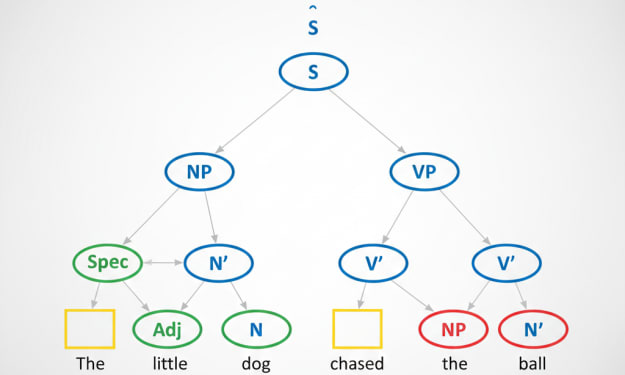
Mastering X-Bar Theory in Grammar in 10 Minutes
Grammar can often feel like a maze of confusing rules, especially when we dive into syntax — the study of sentence structure. One of the foundational tools in modern linguistics is X-Bar Theory, a framework that helps explain how words and phrases combine to form sentences. While it might sound intimidating, understanding X-Bar Theory can become straightforward if approached step by step.
By Games Mode Ona day ago in Education
Miss Persephone's Manual to a Seemingly Ordinary Life
Miss Persephone was found at the dining table, her blue eyes swollen, her tears arriving and retreating like the tides of the ocean. Earlier that day, her family had visited her in the retirement home where she had lived for eight years. It was her eightieth birthday.
By Imola Tóth5 days ago in Fiction


Comments
There are no comments for this story
Be the first to respond and start the conversation.