
The Habits That Shape Our Reading Journey
An Insight into How Time, Medium, and Motivation Influence Story Engagement


When Elena was ten years old, her grandmother gave her a tattered copy of The Secret Garden. The pages were yellowing, the spine had been taped together twice, and the faint scent of old paper clung to every chapter. For Elena, that book wasn't just a story—it was a doorway. Every evening after school, she would curl up by the window and read until her eyelids grew heavy. Her journey with stories had begun in the most traditional way: printed pages, quiet corners, and endless curiosity.
But that was a different time.
Now, at thirty-five, Elena stood on a crowded subway, holding her phone in one hand and a coffee cup in the other, scrolling through an e-book she’d downloaded a week ago. She was on chapter five of The Midnight Library, and she couldn't help but notice how her reading habits had changed. No longer were books companions to silence—they were fillers between tasks, breaks in a fast-moving day. Instead of dedicating hours to lose herself in fiction, she now carved out minutes—waiting in line, during lunch, or in the brief calm before sleep.
Elena wasn't alone. Across the world, readers like her had begun reshaping how stories fit into their lives. Some still swore by the feel of a physical book, its weight comforting and real. Others embraced digital formats, valuing the portability and convenience. Audiobooks had opened doors for those who found themselves too busy to read the traditional way, allowing stories to accompany morning jogs or long drives.
Her younger cousin, Maya, for instance, was a voracious audiobook listener. She would often gush about the latest fantasy saga she had finished while doing laundry or painting her room. "It’s like watching a movie with my eyes closed," she once told Elena. “I can multitask and still get lost in the world.” Elena admired that, but she couldn’t help but feel like something was missing when she tried it herself. For her, the magic still lived in turning pages, even if those pages now glowed on a screen.
The shift in reading habits, Elena realized, was deeply connected to time—or rather, the lack of it. In her childhood, afternoons stretched long and lazy. Now, life was packed. There were work emails to answer, errands to run, family obligations to juggle. Time had become a luxury, and reading, once a leisure, had to compete with countless other priorities.
Yet, despite the changes in how people read, the why often remained the same.
One Sunday morning, Elena visited a local café for a change of scenery. She took a seat by the window and opened her Kindle. Next to her, a teenage boy was flipping through a graphic novel, earbuds in. Across the room, an elderly man held a hardcover close to his face, lips moving silently with every word. A young woman tapped her tablet, eyes bright with focus. And there, in that tiny café, were multiple worlds unfolding—through ink, screens, and sound.
She struck up a conversation with the girl at the next table, who was reading a serialized romance story on an app. “I like how new chapters come out every few days,” she said. “It keeps me hooked, kind of like watching a show.” Elena nodded thoughtfully. Serialized storytelling had returned in a digital cloak—short, episodic reads that fit neatly into busy lives. Motivation, she realized, played a big role too. Some read to escape, others for comfort, and some simply to stay connected to a community of fans.
That evening, Elena reflected on her own journey. She had read books in hammocks, in hospital waiting rooms, on airplanes, and even during midnight bouts of insomnia. Her habits had shifted—paper to screen, hours to minutes—but the stories had never left her. Each book, regardless of format or setting, had added something to her life. A lesson, a moment of peace, a spark of wonder.

She pulled out a notebook and began writing:
“I used to think reading was about time and silence. Now I know it’s about intention. Whether I read a single page or a hundred, in a quiet room or a noisy train, I am still a reader. The medium has changed, but the magic hasn’t.”
The next day, she mailed her niece a copy of The Secret Garden, newly printed, with a note tucked inside:
"This was my first window into another world. May it be yours, too. However you choose to read, never stop letting stories find you."
And in that gesture—simple, sincere—Elena honored the past, embraced the present, and inspired the future of story reading. For reading wasn't about one perfect habit. It was about letting stories walk with us, however and whenever they could.
About the Creator
Abdul Malik
I am a student and I am writing stories on vocal.media earn money and continue my study.
Keep reading
More stories from Abdul Malik and writers in Education and other communities.
School Days
The school bell rang loudly as Arjun rushed through the gates of Sunrise Public School. He was in Class 8, and it was the beginning of a new academic year. His backpack was heavier than usual, filled with fresh notebooks and sharpened pencils. But more than anything, his heart was full of excitement. He was going to see his friends again after the long summer break.
By Abdul Malik8 months ago in Education
The Editorial Stack: Building Content Teams for the Multi-Platform Era
In an age where content travels across screens, feeds, formats, and audiences in real time, the old newsroom model no longer fits the demands of digital publishing. Today's media landscape requires more than great writers and sharp editors—it demands a multi-disciplinary, agile, and strategically aligned editorial stack. From video producers to data analysts, newsletter editors to TikTok creators, modern content teams must be designed with versatility and collaboration at their core.
By James Kaminskyabout 2 hours ago in Education
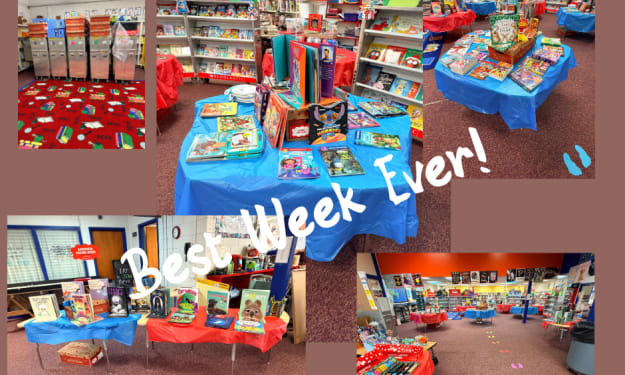
Hosting a Book Fair
How many of you remember the “best week ever!” from when you were a child? Book fairs were the staple of many of our childhoods with Scholastic leading the way. While there are many choices for book fairs today and I absolutely want to talk about them, that’s going to be a later article.
By Reb Kreyling6 days ago in Education


Comments
There are no comments for this story
Be the first to respond and start the conversation.