
The FBI and playboy
FBI tried to take down playboy
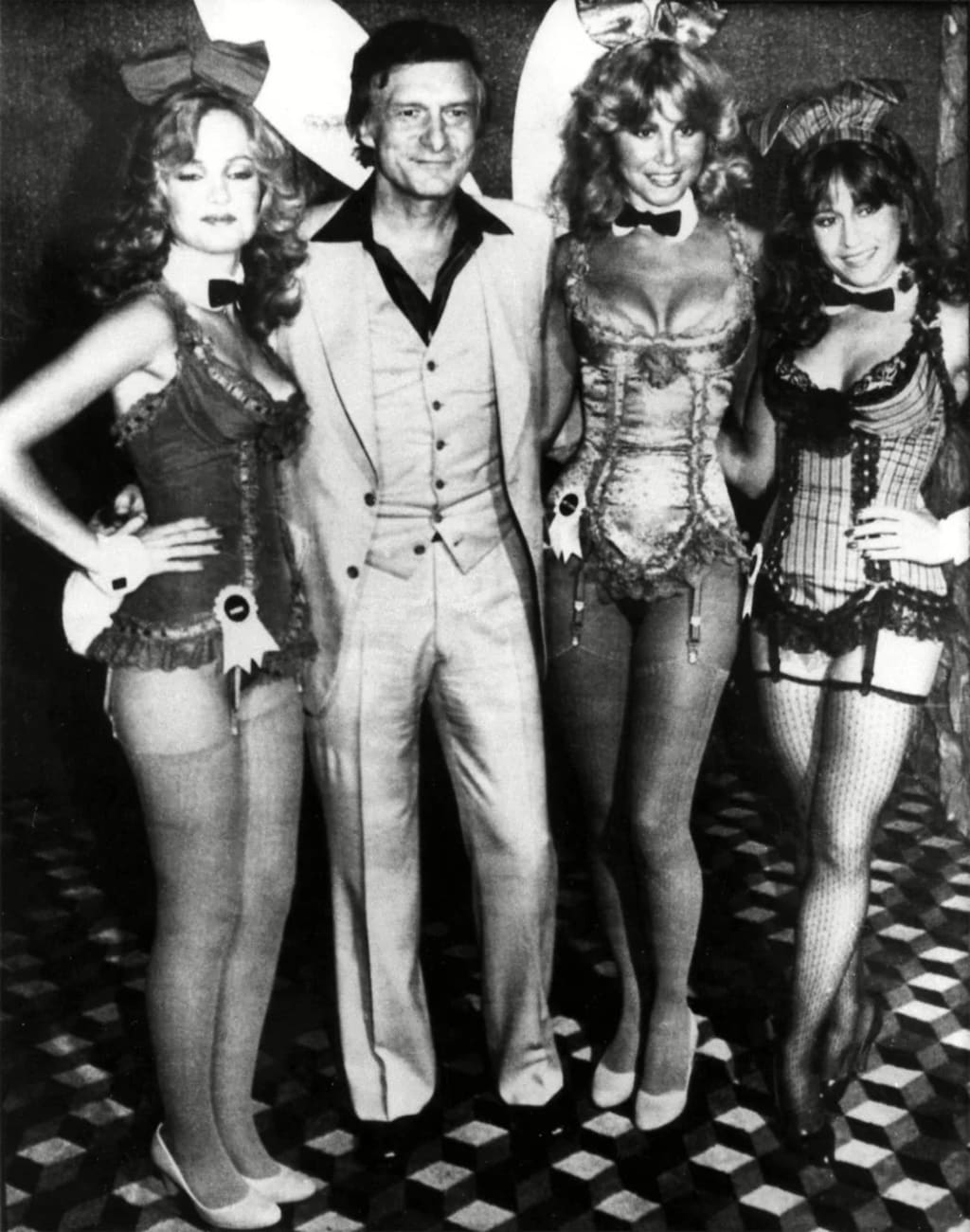
The FBI has gone after some of the most notorious targets around.
Spies. Terrorists. Assassins. And…a magazine publisher?
Why would the FBI go after Hugh Hefner - and how did this result in a body count?
Of course, Hugh Hefner was no ordinary magazine publisher. He was one of the most famous - and infamous - figures in 20th century America, and the legendary “dirty old man” was equally loved and hated.
For most people who knew him, he was a larger-than-life man who lived in a massive mansion surrounded by beautiful, much-younger women nicknamed “Bunnies”.
He was primarily associated with one word - both the title of his most famous creation, and the word that epitomized his lifestyle: Playboy.
But he didn’t start out as a legend of controversy.
Everyone has to start somewhere, and Hefner grew up in a normal midwestern household and was raised Methodist.
His mother even wanted him to become a missionary, but Uncle Sam came calling instead. In the 1940s he served in the Army as a writer for a military newspaper.
That kicked off his passion for writing and journalism, and he went to college and later started at the bottom of the magazine world - working as a copywriter for Esquire. He believed in his dream - but Esquire didn’t quite agree. They denied him a $5 raze, so he quit in 1952.
It would be one of the biggest butterfly effect moments in the history of journalism.
Hefner had a dream, and took out a loan and investments to launch his own magazine.
One of those investments was from his own devout mother - who didn’t like the idea, but believed in her son’s dream anyway. With $8,000, he kicked off a magazine initially planned to be called “Stag Party” - but instead he wisely named it “Playboy”, with the intention of it being a classy gentleman’s magazine. It would have journalism, glamour shots, lifestyle tips - and, of course, some revealing photos of the most beautiful women in the world. And the first issue’s cover star? None other than Marilyn Monroe!
And it would turn Hugh Hefner into a legend.
Gentlemen prefer blondes? That was definitely the case here, with Monroe helping turn the magazine into a huge hit. Her centerfold image was a nude study of the superstar taken for a calendar, and it soon made the magazine a household name. While it was the Playmate of the
Month - the lady on the cover and in the centerfold - that got people talking, the magazine was quickly gaining a reputation as a place for top-tier journalism and literature.
It serialized the iconic anti-censorship thriller Fahrenheit 451 by Ray Bradbury a year after its release, bringing it to a much bigger audience.
And what surprised many people was the magazine’s political bent.
If you had to guess Hefner’s political leaning, what would you guess? Many people today would guess the creator of Playboy was your typical knuckle-dragging misogynist. After all, the magazine was largely about sexy ladies, and seemed to appeal to your man’s man types. No doubt many men assumed Hefner was one of them. But those men were shocked when he debuted his “The Playboy
Philosophy” column in the 1960s. This was where Hefner could express his views - and he became a fierce defender not just of free speech, but of womens’ rights and LGBTQ rights. He was also a big fan of cannabis, and became one of the first prominent activists for legalizing weed.
And this was when he started making powerful enemies.
Those enemies included a diverse coalition - feminists burned copies of Playboy at protests, holding his “Gentleman’s magazine” genre responsible for more extreme spin-offs like
Penthouse and Hustler. Meanwhile, the Neo-Nazi leader George Lincoln Rockwell was infuriated
when Hefner tricked him into being interviewed by a black man. And in 1963, Hefner was even arrested for a particularly racy centerfold and put in trial for obscenity. The jury couldn’t reach a conclusion, the government opted not to retry the case, and Hefner walked free.
But once you wind up on the government’s radar, you usually stay there.
The FBI had been after Hefner for some time, creating a file on the Playboy creator and trying to find evidence of criminal conduct from his empire. When a federal indictment comes down, it’s very rare for the defendant to get off - so Hefner no doubt felt like he had a sword of damocles hanging over his head. They investigated every corner of his empire, particularly the goings-on at the Playboy Mansion. But while they found plenty of evidence of debauchery, what they didn’t find was any rock-solid evidence of crime.
No drugs, no sex trafficking - if Hefner was a criminal, he was very good one.
But the government rarely took no for an answer.
Over time, Hefner’s FBI file ballooned to fifty-eight pages and contained multiple lines of investigation.
Declassified in 2019, it showed he had been interviewed several times in the 1950s and 1960s over possibly transporting obscene material over state lines.
When that came up empty, because Hefner knew his way around local laws, they moved on to trying to find informants that would implicate him. Hefner had many people in his circle, and they just had to find the right one who knew the dirty details on him.
And one woman gave them their opening.
Her name was Bobbie Arnstein, and she was one of the women closest to Hefner. But she wasn’t one of his Bunnies - she was she was one of the people he trusted most on business matters. But she aa questionable judge of character, and she had powerful men leading her down the wrong path.
But that powerful man wasn’t Hefner - it was her boyfriend, Ron Scharf.
And that gave the FBI their opening.
When the FBI descended on the Playboy Mansion in 1974, the man known as “Hef” no doubt thought his enemies were after him again. But they weren’t this time - instead, they descended on Arnstein and arrested her like a dangerous criminal. They had previously cornered one of Scharf’s associates, George Matthews, and offered him a lighter sentence on his own drug charges in exchange for implicating Arnstein. He was more than happy to cooperate, and they arrested both
Scharf and Arnstein. When she was searched, they found a small amount of cocaine on her body - half a pound, which is well below the amount that a high-level trafficker would carry.
But the FBI had what they needed.
Arnstein was arrested for drug trafficking and was considered an active participant in
Scharf’s criminal enterprise - which meant she was facing heavy jail time. But the FBI didn’t care about her - they cared about Hugh Hefner, and they assumed that her proximity would give her information, and the prospect of spending many years in prison would make her say anything they wanted her to say. But they were wrong. It’s possible that Arnstein just had nothing to tell - maybe Hef was actually squeaky clean? - but she was also fiercely loyal.
She was unwilling to cut a deal with the FBI, and essentially told them to do their worst.
And that’s exactly what they did.
Arnstein was put on trial, and the FBI wasted no time making an example of her. Scharf, accused of being the mastermind of the ring, got six years in prison - while Arnstein was convicted of harsher charges and was given a life-ruining sentence of fifteen years in federal prison.
Even with this sentence hanging over her, she made no moves towards turning states’ evidence, and withdrew from the public eye as she awaited the deadline to turn herself in to serve her time.
And things were going from bad to worse for Playboy and Hefner.
Hefner’s pride and joy was mired in scandal at the time, including a racial discrimination lawsuit, an IRS audit, and now a massive collection of headlines associating Hefner’s close associate with a drug trafficking ring. Hefner had even wound up on Richard Nixon’s enemies’ list - which may be a compliment, depending on how you feel about Tricky Dick.
But no doubt many people expected Arnstein to strike the killing blow against Playboy by eventually giving in to the FBI’s pressure and testifying against him.
Instead, Hefner would be hit by a very different blow.
Arnstein had been allowed to leave prison while her appeal was pending, but the odds weren’t looking good. She was then informed by a US attorney that there was a hit out on her life - but no one knew if this was real. She went back to the mansion, but she and everyone else started to get scared about what would happen in the future.
Hefner obsessively searched the mansion for drugs that might have been planted there, and Arnstein increasingly withdrew from the luxurious world Hefner built.
When she next appeared in the headlines, it would be for a very different reason.
It was January 19th, 1975. Arnstein had checked into a hotel room in Chicago, and when she didn’t leave her hotel room one morning, people became suspicious. She wasn’t answering the door, and when the room was opened, they found her dead. She had left a note behind, and an autopsy would reveal that she had taken too many pills. Whatever Hefner’s secrets were, she had taken them with her to her grave - and the note she left behind backed that up.
It was a quick but forceful statement that Hefner was a moral man who had never been involved in criminal activity, and accused the government of pursuing and harassing him without cause.
Did the FBI’s crusade now have a body count?
Until Arnstein’s death, Hefner was largely up against the ropes when it came to the government.
Most people - except those who read Playboy - assumed the colorful Hefner had to be involved in something shady. The government had been after him for a long time. But now a woman was dead, and her funeral was the first Hefner ever attended. He was seen to be genuinely grieving, and this humanized him in the eyes of many people. Journalists took his side against the government - especially since the Nixon administration was now disgraced itself.
But that didn’t protect Playboy from the fallout.
Maybe it was just the association with an accused drug trafficker. Maybe it was because people realized that the government meant business and any of them could be in the crosshairs next. But people started distancing themselves from Playboy - hard.
Original board members left the company, and the stocks dropped quickly. It seemed like the mightly Playboy empire might be on the ropes, but Hefner wasn’t done fighting.
Because he was fighting hard- and he wanted to cause some damage to the government. He held a press conference, seeming shaken, enraged, and more human than anyone had ever seen him.
He accused US attorney Jim Thompson, the man behind the case, of causing Arnstein’s death. And many people agreed with him.
As more details came out, the FBI tried to paint a picture of Arnstein as an emotionally unstable individual. Maybe she was - but it didn’t counter any of Hefner’s points.
They had never proven she was anything but a bit player in Scharf’s schemes, and it was pretty clear they targeted her as a way to get Hefner - with tragic consequences. But some thought the probe might have done its job anyway
About the Creator
Knowledge about the world
I am very interested in improving my knowledge about the world and I know so are a lot of you, so welcome.
Keep reading
More stories from Knowledge about the world and writers in Education and other communities.
Best Laptop for Pro Tools
If your Pro Tools session ever freezes mid-recording, crackles during playback, or struggles with heavy plug-ins, that’s not your skills, that’s your laptop holding you back. Pro Tools needs serious power, stable performance, and good cooling to run smoothly.
By Projectorseaa day ago in Education


Comments
There are no comments for this story
Be the first to respond and start the conversation.