
The Fate of Our Solar System: A Journey Into the Far Future
Space

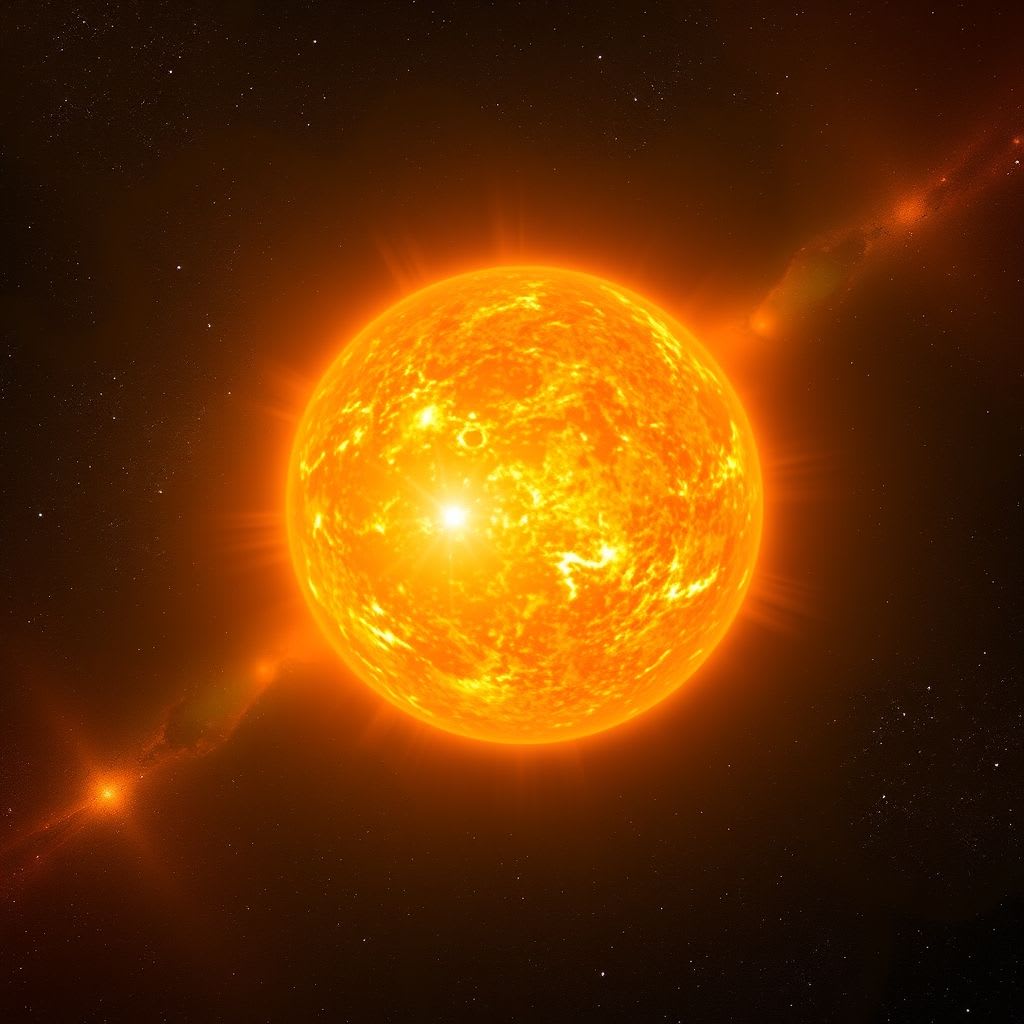
The Solar System has been our cosmic home for billions of years, a relatively calm neighborhood in the vast expanse of the Milky Way. But like everything in the universe, it is not eternal. Our star, its planets, and even the tiniest comets are destined for dramatic changes over unimaginable stretches of time. Let’s take a journey forward far beyond human history to see what awaits our Sun and its family of worlds.
100 Million Years From Now: A Subtle Shift in the Sky
In human terms, 100 million years is incomprehensibly long. In cosmic terms, it’s just a blink. The planets will still follow their familiar orbits, but the details will begin to shift:
- Earth, Mars, and Venus will experience slow but noticeable climate changes.
- The Moon will drift farther from Earth at about 3.8 centimeters a year. Eventually, perfect total solar eclipses will become impossible.
- Asteroids and comets, nudged by gravity, could strike planets, reshaping their surfaces and possibly sparking new cycles of geological activity.
Our night sky will still be recognizable, but subtly different a quiet reminder that even “forever” is temporary.
1 Billion Years From Now: A Brighter, Hotter Sun
The Sun is not static it slowly grows hotter and brighter as it fuses hydrogen into helium. In a billion years, it will shine about 10% brighter than today. This seemingly small change will transform Earth into a hostile world:
- Oceans will slowly boil away, releasing steam into the atmosphere.
- The greenhouse effect will intensify until surface temperatures exceed the boiling point of water.
- Complex life will disappear, and only heat-resistant microbes may survive, clinging to shadowed caves or deep underground.
While Earth becomes a scorched desert, Mars may enjoy a brief golden age its frozen water melting into rivers and seas, its surface warming to more habitable temperatures.
5 Billion Years From Now: The Red Giant Awakens
This will be the most dramatic chapter in the Solar System’s history. When the Sun exhausts the hydrogen in its core, it will swell into a red giant:
- Its size will increase so much that it will likely engulf Mercury and Venus.
- Earth’s fate is uncertain: some models predict it will be swallowed, while others suggest it will just barely escape, but still be burned into a lifeless cinder.
- The icy moons of Jupiter and Saturn, such as Europa, Ganymede, and Enceladus, will thaw. For a few million years, they may host open oceans under a warm sky a fleeting paradise in the outer Solar System.
For any surviving life in those distant regions, it will be an era of warmth and possibility… before the cold returns.
7 Billion Years From Now: A White Dwarf and a Frozen Kingdom
The red giant phase will end when the Sun sheds its outer layers, creating a glowing planetary nebula a breathtaking cloud of gas and dust that will fade over tens of thousands of years. At its heart, the Sun will become a white dwarf: a dense, Earth-sized remnant of pure carbon and oxygen, no longer generating energy, just cooling slowly over billions of years.
- The planets will drift outward as the Sun loses mass.
- Any lingering oceans will freeze, and the Solar System will enter an age of deep cold.
- Even the once-vibrant gas giants will fade into silent, frozen shadows of themselves.
In the Very Far Future: The End of the Solar Family
Over trillions of years, the gravitational pull of passing stars and galactic tides will gradually unbind the Solar System. One by one, the planets will be ejected into interstellar space, becoming rogue worlds dark wanderers drifting without a star. The white dwarf that was once our Sun will eventually cool into a black dwarf, a cold ember invisible against the cosmic background.
Can We Change This Fate?
Science fiction often dreams of civilizations that refuse to let their home system die. Hypothetical technologies could move Earth into a wider orbit as the Sun heats up or even relocate entire planets to another star. While this may sound impossible now, humanity has a long history of turning impossibilities into realities. The far future might belong to species that learned to engineer worlds.
Final Thoughts
The story of the Solar System’s future is both epic and humbling. It’s a tale of transformation, death, and rebirth on scales far beyond our lifetimes. For now, we live in a rare moment when Earth is not too hot, not too cold, and full of life. That makes this present era extraordinary… and worth protecting.
About the Creator
Keep reading
More stories from Holianyk Ihor and writers in Education and other communities.
Teleportation Is Real (Sort Of): The First Experiments in Real Life
Teleportation — once the stuff of sci-fi dreams — is now inching closer to reality, not in fiction, but in labs around the world. And while we’re not beaming humans across the planet just yet, the science is more real than most people think.
By Holianyk Ihor8 months ago in Education
The Confidence Advantage: How Transparent Communication Builds Lasting Investor Trust
Investor relationships thrive on more than financial returns. While performance attracts attention, trust sustains commitment over time. In an environment shaped by rapid information flow and shifting market conditions, transparency has become one of the most powerful tools for building and maintaining investor confidence. When organizations communicate clearly and consistently, they strengthen relationships that endure well beyond short-term results.
By Michael Christopher Venturinoabout 9 hours ago in Education
Golf Handicap Reduction Without a Swing Overhaul: Smarter Ways to Play Better Golf
Lowering your handicap does not always require technical changes or hours on the range; it requires rebuilding your swing. Many golfers overlook the fact that scoring improvement often comes from strategic thinking, mental discipline, and better preparation. By focusing on how you play rather than how you swing, you can unlock consistent progress and enjoy the game more. This article explores practical, on-course methods that help you shoot lower scores while keeping your swing exactly as it is.
By Ian Schenkel Haliburtonabout 9 hours ago in Education



Comments
There are no comments for this story
Be the first to respond and start the conversation.