
The Eye and the Believer
How what we see is shaped by what we believe-and how belief can transform perception.

The eye sees only what the mind is teaching" is a way of saying how a perception shapes reality. Human beings are victims of experiences, emotions, and beliefs that shape their awareness and interpretation of the world. It is the subtle give-and-take between vision and belief—science and philosophy all over again.
Vision Beyond Sight
- Thus, the human eye is a beautiful organ that can focus on millions of colors, adjust under varying conditions of lighting, and observe fine details. However, vision is more than the simple act of seeing; it has to undergo interpretation by the brain based on its context, prior knowledge, and belief systems. For example, while two people look at the same sunset, they may actually see something rather different: the first observer may appreciate and adore big colors, and the second might be filled with a spiritual feeling by considering it as the work of God.
- This is an absolute fact, one being; seeing is not necessarily believing. In fact, believing often creates what we see.
Neuroscience and Perception
Scientific research shows that perception is far from being a passive activity but rather an active, constructive process while building reality. The visual cortex is highly known for processing raw data coming from the eyes but also filling gaps and augmenting detail through expectations. A great example of how an optical illusion may occur is when two lines could appear of different lengths just because of the context surrounding them.
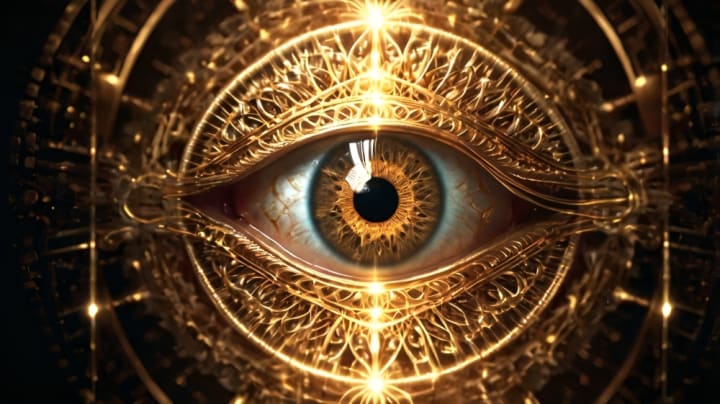
The "believer" in our brain shapes what our mind takes of these visual inputs. The cultural propensity, influence of past life, and personal encounter alter what we see. So often, the eyewitness account of the same happening is brought to be horrifically varied.
Role of Faith and Belief
Faith, religious or secular, provides the human race with a perspective through which they interpret what they happen to be seeing. Most will turn to their perceptions in the hour of need and uncertainty, thus interpreting events to suit their faith. For instance, a person might view surviving car accidents as a miracle if he is spiritual, but another person could just attribute it to good luck or advanced safety technology.
Even religiously, it doesn't have to be. A belief in the legitimacy of scientific constructs can shape one's way of thinking as well. A researcher may see patterns in data that are invisible to others, simply because they believe such patterns exist.
Art and Symbolism: A Window on Belief
Through the arts, an excellent opportunity exists to examine this connection between the eye and faith. Artists have symbolically called for people's faith, hope, or other strong beliefs in life traditionally. Typically, religious paintings are either scenes of miraculous works of God or characters of radiant light and grossly enlarged features of representing godliness. A religious painting will resonate with a viewer who is also guided by that artist's faith, but perhaps with an artist's craftsmanship that even an unbelieving viewer might draw some appreciation for.
This abstract art looks to challenge the viewer to interpret pictures based on his beliefs and emotions. A disordered color arrangement could be peaceful for one individual but in fear for another, in such a way that personal beliefs shape how people interpret the images.
Optical illusions in everyday life
Optical illusions run far beyond the pages of psychology textbooks. They break into our daily lives. There is, for example, "confirmation bias." People holding a very firm belief automatically seek out information that confirms it, and they push away that which contradicts it.
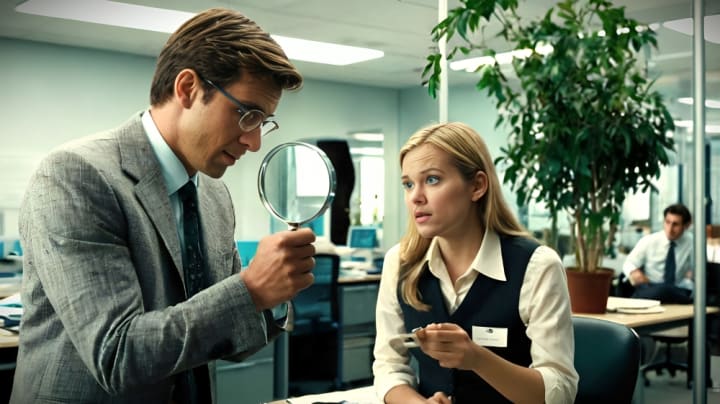
Imagine two people walking through a city. One believes in the goodness of man and sees good deeds: a tourist getting directions from a stranger and a person feeding a stray dog. A skeptic member of society is more likely to see something as selfish or neglectful. Both are viewing the same scene but believe in their perspective.
Technology: Augmented Reality and AI
Secondly, modern technology blurs the vision-belief continuum in that augmented reality layers digital information on top of the real world, blending into a hybrid sense of perception. AR apps will be permitting users to see constellations in the night sky or vision ancient historical landmarks in their original glory. Such tools reinforce belief in abstract concepts and turn them into sensory realities.
Other changes involve artificial intelligence. The new science of object recognition, including faces or emotions, has altered our relationship with the world. However, again, these systems take on biases grounded in human belief.
Identifications of cultural artifacts by a machine are, by themselves, obvious manifestations of human bias and machine learning.
Faith and the Natural World
But nature, besides offering a window of opportunity through which to examine the role of faith between what one sees, is no less than that great ocean, a finely detailed spider's web, or the delicate beauty of a butterfly's wing. One cannot help but be amazed by just these wonderworks. For some, these pictures will refresh belief in a higher power, but for others, they will serve as testimony of the creativity and resilience of evolution.
Just like those astronauts, who look at space are not really much different, the vastness of the universe makes them resonate to the sounds of God's magnificence. To return only reminds him or her of humankind's little yet crucial existence in a big, uninterested space.
The Power of Metaphors
But between seeing and believing, metaphors stand often. "Seeing is believing" or "a vision of hope" is what we are being told and how visible or belief patterns are woven into each other. These phrases remind us that how we perceive the world will help shape how we understand it.
Take the metaphor of "light" in religious and philosophical contexts. Light often represents truth, hope, or divinity. When people say they've "seen the light," it is not about illumination but a profound shift in understanding or belief.
Challenges of Mismatched Perceptions
Conflicts occur when different perceptions of the same thing or an image are viewed. For instance, debates often arise in art, politics, or religion, and the debates come about because of mismatched perceptions. For instance, one might view a monument as a heritage, while another views it as oppression.
This calls for sympathy to grasp these different perceptions. This is because we appreciate that our faith makes our vision, hence in appreciating our people much better.
Eye of the Beholder
It is human experience that really connects the eye and the believer. Everybody has traversed his or her pathway in life, which is filled with innumerable moments of joy, pain, learning, and growth. These experiences inform what we see and how we interpret it.
The one who has held out against hardship can find some beauty in resistance: one flower pushing up through the cracks in the sidewalk. Another will not even see the flower, adrift in a whirlwind of a busy day.
Aware for the Next Step
There is a lot to learn about how vision and faith intertwine. It shook many of my assumptions and kept me open-minded to new ways of thinking in a world increasingly divided by ideology.
All three—science, art, and faith—are sources of inspirational tools to look for a description of this relation. A value-added acceptance of these various lenses can truly enable someone to appreciate the richness of human experience and the very intricate dance between the eye and the believer.
At the end, it is the eye that does not only see but also feels and interprets. It is a bridge to take the outer world into internal truths—a harbinger of what we see is who we are.
The Believer's Responsibility
Because belief informs perception, believers have a responsibility to search for the truth with open hearts and open minds. In a world of misinformation, images can be manipulated and perspectives skewed, however. Being aware of this makes it absolutely necessary to be able to think critically about what we see.
In reality, belief makes one have a view about the world. Social media would be an exact case in point, though. Algorithms feed us, and through those feeds, they line up with our interests and our biases and give us back our preconceived beliefs. A conscious effort to step out of the "filter bubbles" enables broadening and challenging our assumptions.
But there are persuasions to see strength in the beauty and power that belief can foster. A person who chooses to believe in goodness and human kindness would tend to live well and bring others to become good as well.
The Eye and the Believer in Literature
This deep connection has been studied through literature. That the pervasiveness of prejudice has blinded people to the truths beyond stories like To Kill a Mockingbird. So, too, what matters is often unseen to the human eye, as in The Little Prince. What these narratives present before our eyes is that belief is not a denial of reality but a sight beyond what is real.
These are metaphors—the "eye of the soul" or "the heart as a lens"—which run very deep. They call us and challenge us to see with our eyes, with compassion, imagination, and understanding.
The Common Vision for Mankind
This link between the eye and the believer holds much wisdom for humankind. Recognizing the fact that our vision is determined by our beliefs, we can take time to coexist and be kinder to the separated world.
Perhaps, when another's worldview—a cultural, spiritual, or ideological one—is presented to us, we might feel an immediate sense of curiosity rather than judgment. What he sees as truth might contain experience we do not know yet.
It surely does not mean surrendering our beliefs but stretching them to others. Just as in a kaleidoscope, there are broken pieces into something beautiful, it is the same with human existence as diverse beliefs become enriching to our viewpoint of the world in general.
Conclusion: The gift of seeing and believing
Mystery and the gift appear in a context: that of the relationship between the eye and the believer: the power of seeing has been given, structured, to be an incentive of believing; in themselves, those two represent the point of foundation on which the story of our life has been put to paper.
Let's not forget to look beyond the surface, dig a little deeper, question our beliefs, and enjoy that wide and varied perspective in this world of clarity of sights and depth of beliefs. It may well capture the image with its eye, but it takes the believer in us for the real meaning.
By nurturing this relationship, we can then strive to make this world a more compassionate and inclusive place through a synergy of seeing and believing that lights up truth and inspires hope.
About the Creator
Mujeeb Iqbal
My name is.Mujeeb Iqbal and I am an Mechanical Engineer with Masters specialization in Automation & Robotics from Osmania University,
My interests and experience :
Content writing
Blogging
Keep reading
More stories from writers in Education and other communities.
Rabbi Shlomo Slatkin, M.S., LCPC on Imago Dialogue, Repair, and Relationship Safety
Rabbi Shlomo Slatkin, M.S., LCPC, is founder and therapist at The Marriage Restoration Project in the Baltimore area. An ordained rabbi and Certified Imago Relationship Therapist and workshop presenter, he guides couples through intensives, retreats, and counseling aimed at restoring safety, communication, and connection after conflict or crisis. He holds a master’s in Counseling Psychology from Loyola University Maryland and trained with the Imago Relationship Institute. Slatkin earned a B.A. in Middle Eastern Studies, with undergraduate study at George Washington University and Oxford, and authored The Five Step Action Plan to a Happy & Healthy Marriage. He also co-edited curricula.
By Scott Douglas Jacobsen6 days ago in Education
Why Tailwheel Training Still Matters for Pilots in Today’s Aviation World
Tailwheel Training may sound old fashioned to some pilots, but it still plays an important role in modern aviation. Many training aircraft today use tricycle landing gear, which feels easier and more forgiving. This has led some pilots to believe that tailwheel skills are no longer needed. That idea is incorrect. Tailwheel Training teaches core flying skills that improve safety, control, and awareness in any aircraft.
By Duke Valentour3 days ago in Education
Thoughts on Vocal and the way the world is
"Death cannot stop true love, only delay it." – Wesley in The Princess Bride. I decided to come back to Vocal on a very cold and dark night at the end of December. I had been, and still am, convalescing from a horrible staph infection that had gone misdiagnosed for months. This, paired with the increasing challenges of being healthy, making the best choices for my co-parented child, being a wife, and being a director at a new job, was a lot to manage.
By Jazzy 7 days ago in Confessions


Comments
There are no comments for this story
Be the first to respond and start the conversation.