
The Evolution Mindset: Mastering Innovation and Adaptability in a Rapidly Changing World
Innovation drives progress by transforming imagination into practical outcomes


Change is the one constant that defines our modern world. From technological breakthroughs to global economic shifts, the speed of transformation continues to accelerate, reshaping industries, communities, and personal lives. In such an environment, two qualities stand out as essential for long-term success: innovation and adaptability. Innovation allows us to create and evolve new ideas, while adaptability ensures we can pivot effectively when circumstances change. Together, these traits form what can be called the evolution mindset—a way of thinking that helps individuals and organizations thrive amid uncertainty.
The Changing Nature of Success
Success today looks very different from what it did just a decade ago. In the past, stability and consistency often defined achievement. Companies could rely on long-term business models, and professionals could depend on established career paths. However, as industries have become more dynamic, the ability to innovate and adapt has become the new marker of excellence. Standing still, even for a moment, can lead to falling behind.
Innovation drives progress by transforming imagination into practical outcomes, while adaptability enables these innovations to thrive in the face of real-world pressures. The two complement each other in a cycle of constant renewal. When combined, they give businesses the agility to anticipate challenges and individuals the resilience to grow from them. In essence, success has shifted from mastering a single skill to mastering the ability to evolve continuously.
Innovation as the Engine of Growth
At its core, innovation is the process of transforming creativity into tangible results. It is the spark that ignites progress, encouraging people to reimagine what is possible. In business, innovation often begins with identifying an unmet need or a problem that demands a better solution. Those who innovate effectively do more than improve existing systems—they redefine the rules of the game entirely.
However, innovation is not just about technology or new products. It is equally about processes, experiences, and strategies. Leaders who embrace innovation foster cultures where questioning the norm is not only accepted but encouraged. This mindset enables teams to find innovative solutions to challenges, thereby improving efficiency and impact. Innovation thrives when people are willing to experiment, learn from mistakes, and refine their ideas until they achieve excellence.
The Role of Adaptability in Sustained Success
While innovation creates momentum, adaptability sustains it. Adaptability is the ability to respond to change with agility and grace. It is the skill that allows individuals and organizations to recover from setbacks, learn from experience, and redirect their efforts without losing focus on their goals. In many cases, adaptability determines whether an innovation will succeed or fail once it is introduced into the market.
Adaptability is rooted in flexibility and self-awareness. For businesses, it means listening to customers, observing trends, and being willing to adjust strategies when conditions shift. For individuals, it requires emotional resilience and a willingness to step outside one’s comfort zone. Those who can embrace change instead of resisting it not only survive transitions but often emerge stronger. Adaptability, therefore, is less about reacting and more about proactively shaping one’s future.
The Synergy Between Innovation and Adaptability
Innovation and adaptability are most powerful when they work together. Innovation introduces bold new ideas, while adaptability refines them based on experience and evolving realities. Without innovation, progress stalls. Without adaptability, even the most brilliant innovations can fail under pressure. This synergy creates a dynamic equilibrium where growth becomes both sustainable and forward-looking.
Consider industries such as technology or healthcare, where rapid evolution is the norm. In these sectors, companies must continually innovate to remain relevant while also adapting quickly to new regulations, shifting consumer behaviors, and competitive pressures. The organizations that master this balance—such as those that pivoted rapidly to digital solutions during global disruptions—demonstrate that adaptability enhances the impact of innovation. It ensures that creativity is not only groundbreaking but also resilient.
Building a Culture That Embraces Change
To foster innovation and adaptability, organizations must intentionally build cultures that encourage curiosity, collaboration, and courage. Culture sets the foundation for how people think, act, and respond to challenges. When leaders create environments that support experimentation and view failure as a learning opportunity, innovation becomes an integral part of everyday work, rather than a rare event.
Clear communication also strengthens adaptability within a company. When employees understand the reasons behind strategic shifts or new initiatives, they are more likely to support them wholeheartedly. Encouraging open dialogue builds trust and transparency, allowing everyone to contribute ideas without fear. A culture that rewards flexibility and initiative creates a workforce ready to face challenges with creativity and determination. Over time, this culture becomes a strategic advantage, enabling organizations to remain agile even in the face of massive disruption.
Overcoming the Fear of Uncertainty
One of the greatest barriers to both innovation and adaptability is fear. People naturally resist change because it introduces uncertainty and risk. Yet, in a world that changes constantly, the greater danger lies in not evolving. Overcoming fear requires a shift in perspective—from viewing change as a threat to recognizing it as an opportunity for improvement.
Leaders play a crucial role in this transformation. When they model confidence and optimism during times of uncertainty, they inspire others to do the same. Transparency also reduces fear; explaining the purpose behind changes and acknowledging challenges builds credibility and trust. Gradually, people learn that growth often emerges from discomfort and that uncertainty can lead to unexpected breakthroughs. The courage to face the unknown becomes a defining trait of innovative, adaptable teams.
The Importance of Continuous Learning
Continuous learning is the lifeblood of innovation and adaptability. Knowledge and skills can quickly become outdated in a world defined by rapid progress. Professionals who prioritize learning remain ahead of the curve, while organizations that invest in employee development create a culture of resilience and curiosity. Learning allows people to identify trends early, adapt to new technologies, and approach problems from fresh perspectives.
Lifelong learners also tend to be more adaptable because they are comfortable with the process of growth and change. Whether through formal education, mentorship, or hands-on experience, continuous learning fosters a mindset of curiosity and confidence. This mindset not only enhances individual performance but also drives organizational success. The most innovative companies are those that never stop learning, evolving with every challenge they encounter.
Leading Through Innovation and Adaptability
Leadership plays a pivotal role in transforming innovation and adaptability from abstract concepts into tangible results. Effective leaders understand that they must do more than encourage change—they must embody it. By demonstrating openness to new ideas, they signal to their teams that creativity is valued. Similarly, by remaining calm and decisive during uncertain times, they establish a tone that fosters adaptive behavior.
Great leaders also know when to strike a balance between vision and flexibility. They maintain a clear sense of direction but remain open to modifying strategies when evidence suggests a better path. This balance fosters trust and alignment across the organization. Teams that feel supported by adaptable leaders are more willing to take initiative, explore new ideas, and contribute to long-term success. Ultimately, leadership that embraces both innovation and adaptability cultivates an environment where progress becomes inevitable.
About the Creator
Keep reading
More stories from Brian Ferdinand and writers in Education and other communities.
Reinventing Success: How to Build a Workplace Culture That Thrives on Innovation and Embraces Change
In today’s dynamic business environment, innovation at work is no longer optional—it’s essential for survival. Companies that consistently innovate can adapt to evolving markets, unpredictable economies, and fast-paced technological advancements. Innovation does not simply mean inventing new technologies or products; it involves rethinking systems, improving workflows, and finding creative ways to add value. When organizations encourage employees to question existing processes and seek better solutions, they unlock a powerful engine for growth.
By Brian Ferdinand3 months ago in Education
How Studying Information Systems Changed the Way I See the World
Before studying Information Systems, I used to see the world as a collection of separate parts. Businesses were about profit, technology was about gadgets, people were about behavior, and problems were often seen in isolation. I never questioned how deeply interconnected everything truly was. However, studying Information Systems gradually rewired the way I think, observe, and understand the world around me.
By HazelnutLattea6 days ago in Education
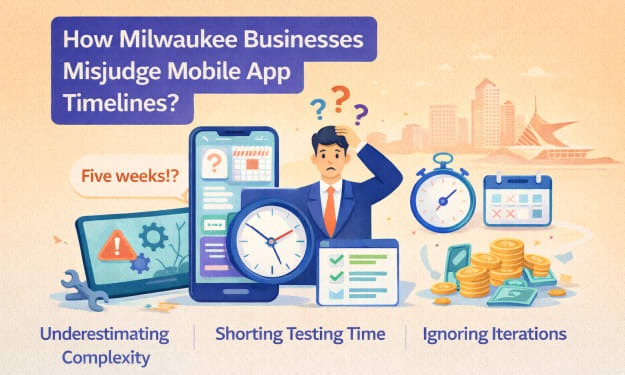
How Milwaukee Businesses Misjudge Mobile App Timelines?
Timeline optimism is one of the most expensive habits in software. In Milwaukee, it shows up quietly. A launch date is set to align with a trade show. A quarter-end deadline is chosen to please leadership. A six-month roadmap is approved because “the features aren’t that complex.” On paper, everything looks reasonable.
By Mary L. Rodriquez3 days ago in Education
Day 4 of Quitting
If this is how sobriety feels, maybe it’s better to go through life a little buzzed… this, along with other hits like, I want to kill myself, I wish I was dead, and I’m going to throw myself off a bridge have been the only thoughts on rotation these past few days. I promise myself that if, in a month, I still feel like this (‘this’ meaning despondent, full of rage, and simultaneously numb) I can go back to smoking. Until mid-February though? Nicotine is off the table.
By sleepy drafts7 days ago in Longevity



Comments
There are no comments for this story
Be the first to respond and start the conversation.