

The Ever-Evolving World of Entertainment
Entertainment is an essential aspect of human life, providing a release from mundane matters, an opportunity to explore new perspectives, and a way to connect with others. From ancient storytelling around the campfire to the streaming platforms of the digital age, entertainment has continually evolved, adapting to social change and technological advancements.
A Historical Perspective
In ancient civilizations, entertainment culture was deeply intertwined with religion. Greek theater, Roman gladiatorial games, and Indian classical dance not only provided pleasure but also provided moral lessons, celebrated victories, or appeased the gods. Storytelling is a universal form of entertainment, preserving history and mythology, ensuring the continuity of cultural traditions.
With the invention of the printing press in the 15th century, literary entertainment became a widely accessible form. Books transported readers into fictional worlds, fueled imagination, and ushered in revolutionary ideas. The invention of the phonograph, radio, and television later revolutionized the way people consumed stories, music, and news.
Impact of technology

The 20th and 21st centuries saw a significant growth in entertainment technology. The advent of cinema in the early 1900s brought visual storytelling to life, capturing the hearts of audiences worldwide. Hollywood became synonymous with glamour and innovation, producing films ranging from slapstick comedies to epic dramas.
In recent decades, the rise of the internet has been a game-changer. Platforms like YouTube, Netflix, and Twitch have democratized the creation and consumption of content. Anyone with a camera and an internet connection can now create content, reaching a global audience. This has led to the birth of influencers, gamers, and indie filmmakers, catering to niche audiences and challenging traditional entertainment powerhouses.
Diversity of modern entertainment
Today, entertainment is more diverse than ever, catering to a myriad of tastes and preferences. For example, music has expanded beyond classical and mainstream to include independent and experimental artists. Streaming services like Spotify and Apple Music offer vast libraries, allowing listeners to listen or watch and discover artists from around the world.

Similarly, video games have emerged as a dominant form of entertainment. Modern video games are no longer limited to simple arcade games, but boast complex storylines, stunning graphics, and multiplayer functionality, making them a social experience. The emergence of e-sports has added a competitive edge to gaming, with tournaments attracting millions of viewers.
Television and film have also undergone significant transformations. Streaming platforms have created a golden age of storytelling, with high-quality series exploring complex themes and diverse characters. Shows like “Stranger Things” and “Money Heist” have transcended language barriers and gained global popularity.
Live performances remain a cherished form of entertainment. Whether it’s a Broadway musical, a rock concert, or a stand-up comedy show, the thrill of experiencing art in real-time is unmatched. Virtual reality (VR) is also making strides in this area, blending technology with live performance to provide immersive experiences.
Entertainment’s Reflection on Society
Entertainment often reflects societal values, aspirations, and struggles. Films and books address important issues like climate change, gender equality, and mental health, sparking conversation and inspiring action. Music becomes a form of protest or celebration, capturing the defining ideologies of an era.
Moreover, entertainment builds connections. Offering experiences, whether it’s watching a series or attending a sporting event, creates bonds between individuals. Social media furthers this sense of community, allowing fans to connect with one another.
Challenges and the Future
While entertainment innovates, it also faces challenges. In the digital age, concerns have arisen about the quality of content, misinformation, and the mental health impacts of screen time. In addition, the industry is grappling with issues of inclusion and representation, trying to reflect the diversity of its audience.
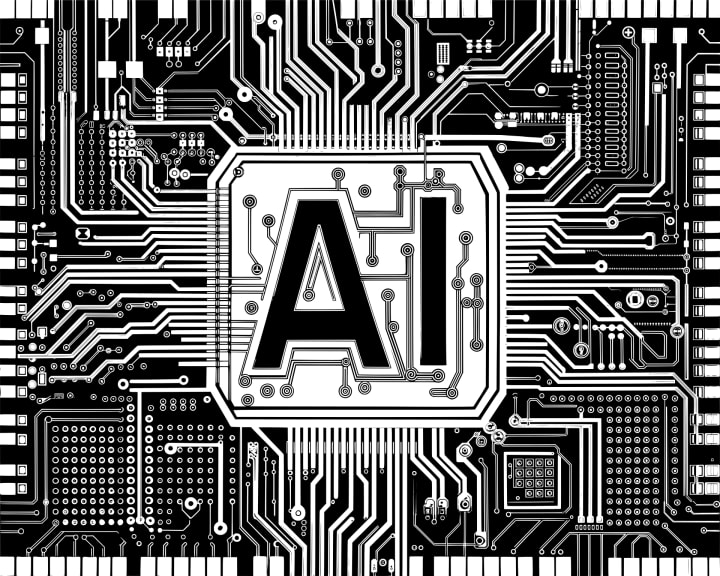
Looking ahead, we see advances in artificial intelligence (AI) and VR promising even more personalized and immersive experiences. AI can create playlists, recommend shows, even create art, and transport VR users to imaginary worlds or historical settings.
In conclusion, entertainment is a dynamic and integral part of human existence. Its evolution reflects our creativity, technological prowess, and social values. As we move into the future, the possibilities for entertainment are endless, promising to keep us engaged, inspired, and connected.
About the Creator
Rubaid Islam
I am not a professional writer. I love to write,so I write for joy it. I hope you will like the articles I write. Your support and love will motivate me to write.
Keep reading
More stories from Rubaid Islam and writers in Education and other communities.
MENTAL INSTABILITY
Some important tips to get rid of mental instability: We basically suffer from mental instability only when something bad happens or keeps happening outside our will. Anyone can suffer from mental instability, so if you can overcome mental instability with the right strategy, life becomes easier and more beautiful.
By Rubaid Islam11 months ago in Humans
Mastering X-Bar Theory in Grammar in 10 Minutes
Grammar can often feel like a maze of confusing rules, especially when we dive into syntax — the study of sentence structure. One of the foundational tools in modern linguistics is X-Bar Theory, a framework that helps explain how words and phrases combine to form sentences. While it might sound intimidating, understanding X-Bar Theory can become straightforward if approached step by step.
By Games Mode On6 days ago in Education
How did Hitler rise to power?
How did Adolf Hitler, a tyrant who orchestrated one of the largest genocides in human history, rise to power in a democratic country? The story begins at the end of World War I. With the successful Allied advance in 1918, Germany realized the war was unwinnable and signed an armistice ending the fighting. As its imperial government collapsed, civil unrest and worker strikes spread across the nation. Fearing a Communist revolution, major parties joined to suppress the uprisings, establishing the parliamentary Weimar Republic.
By Munesh Yadavabout 6 hours ago in Education
Autonomy Is The Real Privilege
Good morning, freedom-seekers! Today we’re gonna be looking at autonomy. A strange word, I know; one many would probably look at blankly and run away from on sight. We’re gonna figure out what it actually means, consider how it’s achieved, and decipher just how deeply most of us are tangled up in dependence without realising it.
By That ‘Freedom’ Guy4 days ago in Humans


Comments
There are no comments for this story
Be the first to respond and start the conversation.