
The Dark Side of AI Hype: How Generative Tools Are Redefining Creativity—And Why We Should Be Worried
Unveiling AI’s Shadow: The Hidden Risks of Generative Creativity

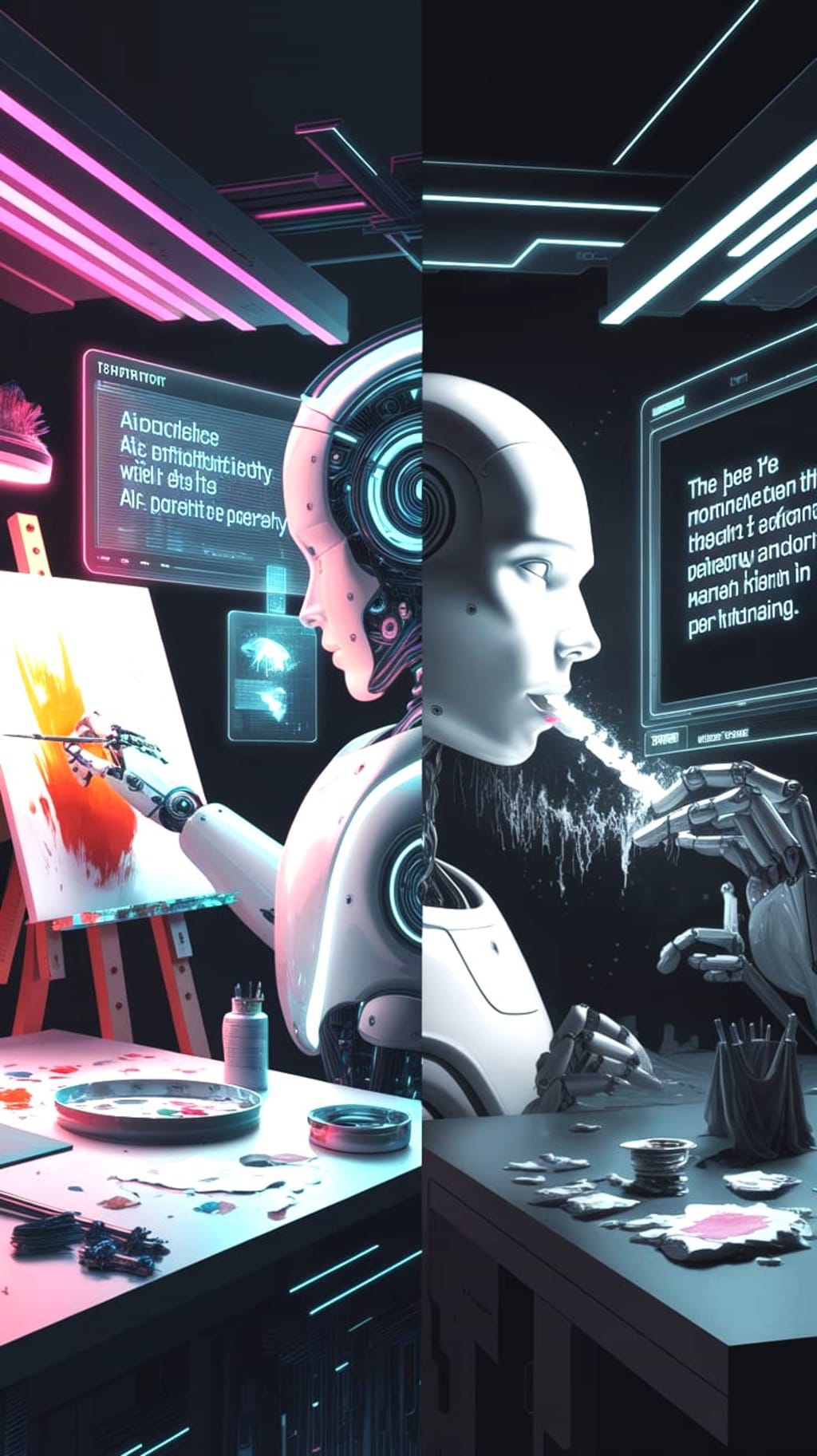
The Internet’s AI Obsession: Innovation or Erosion of Human Creativity?
Generative artificial intelligence has taken the world by storm, captivating tech enthusiasts and businesses alike. From ChatGPT composing eloquent sonnets in seconds to Mi journey crafting hyper-realistic artwork with a single prompt, AI is reshaping creative landscapes. But beneath the viral tweets and dazzling demonstrations lies a pressing controversy: Is AI a tool for human empowerment, or is it undermining creativity itself?
As these technologies dominate headlines, a fierce debate rages over ethics, originality, and the very future of artistic and intellectual expression. Here are the reasons why this issue is more important than ever before and what it means for all of us. The Hype Machine: Why Everyone’s Talking About AI
The rise of generative AI has been nothing short of meteoric. In 2023, Open Ai's ChatGPT amassed 100 million users in just two months, while platforms like DALL-E and Stable Diffusion turned everyday users into “artists” with a few keystrokes. Companies across industries, from marketing firms to Hollywood studios, are integrating AI, promising unprecedented efficiency and innovation. Need a screenplay draft? AI delivers one in minutes. Do you want a new logo? Done.
Yet, this overwhelming hype often glosses over glaring issues. AI models like ChatGPT are trained on vast datasets scraped from the internet—often without consent. They consume personal blog posts, articles, books, and artwork, prompting immediate concerns regarding data ownership. Who profits from this content? And what happens to human creators whose work is used without credit or compensation?
The Creativity Crisis: When Art Becomes Automated Proponents argue that AI democratizes creativity. A teenager in Nairobi can design a professional-grade poster, while a small business owner in Nebraska can generate advertisements without hiring a marketing expert. However, critics warn of a dangerous “race to the bottom,” where creative professions lose value. If AI can generate content for free, why pay human designers, writers, or musicians?
The tension reached a boiling point in 2023 when Hollywood writers and actors went on strike, partly to demand protection from AI’s encroachment on their livelihoods. “These tools aren’t collaborators—they’re extractive,” said screenwriter and Writers Guild member Sarah Myers. “They’re built on the backs of artists who weren’t asked, paid, or credited.”
Even the traditional art world remains deeply divided. When Jason Allen won the 2022 Colorado State Fair art competition with his AI-generated piece Théâtre D’opéra Spatial, backlash erupted. “Calling this ‘art’ is an insult to every human who’s spent decades mastering their craft,” protested painter Lila Torres.
The Ethical Dilemma: Bias, Plagiarism, and Legal Uncertainty Beyond creativity, generative AI introduces a host of ethical concerns:
Bias: AI models often perpetuate harmful stereotypes absorbed from the internet, reinforcing racial, gender, and societal biases.
Plagiarism: AI-generated content frequently mirrors existing work. Renowned authors like Margaret Atwood and Stephen King have taken legal action against Open AI, alleging that their books were used to train AI models without permission.
Environmental Impact: AI training consumes colossal amounts of energy. A single day of ChatGPT’s operations is estimated to use as much electricity as 33,000 U.S. households.
Regulation is struggling to keep pace. In 2023, the U.S. Copyright Office ruled that AI-generated works cannot be copyrighted, but legal loopholes persist. Who is accountable if an AI model plagiarizes a novel? What happens when deepfake audio ruins someone’s reputation?
Case Study: When AI Goes Too Far
In April 2024, a viral TikTok song titled Heartless Beats garnered 20 million streams—until listeners discovered the “artist” didn’t exist. The song was entirely AI-generated, mimicking the style of pop star Billie Eilis. Her record label swiftly issued a takedown notice, but the incident sparked widespread concern.
“This is just the beginning,” warned Grammy-winning producer Mark Ron son. “AI could flood the market with fake content, drowning out real artists.”
Meanwhile, Google’s AI Overviews tool recently advised users to eat rocks and add glue to pizza—a stark reminder that AI lacks human judgment. “We’re outsourcing creativity to systems that don’t understand truth or context,” noted AI ethicist Dr. Chowdhury Rumman.
Can Humans and AI Coexist? A Path Forward Despite the challenges, some creators are harnessing AI in an ethical manner: Authors like R.F. Kuang (Yellowface) use AI to brainstorm ideas while ensuring the core storytelling remains human-driven. Platforms like Adobe Firefly train models exclusively on licensed, royalty-free data. Artists can now opt out of having their work included in AI datasets thanks to startups like Stability AI. Governments are also stepping in. The European Union’s AI Act, passed in March 2024, mandates transparency in AI training data and bans unethical uses like emotion-recognition technology.
Why This Debate Matters Generative AI is more than just a new technology trend; it is a mirror that shows our values. Do we prioritize convenience over creativity? Privacy over profit? As these tools reshape industries, the choices we make today will define the cultural landscape of tomorrow. “The real question isn’t ‘Can AI replace humans?’” says futurist Amy Webb. "What kind of world do we want to build?" is the real question.
About the Creator
Keep reading
More stories from Rocky Brahma and writers in Education and other communities.
Harmonics of Hush: How Silence Is Rewriting the Script of Human Connection
A quiet revolution is taking place in a world that never stops talking, where notifications, debates, and incessant chatter make every second count. This movement isn’t about disconnecting from technology or retreating to mountaintops; it’s about reclaiming the transformative power of silence in a hyperconnected age. The Symphony of Silence, as it has come to be known, is reshaping lives, communities, and cultures, demonstrating that stillness might be the most radical response to the chaos of the present day. The Rise of the Quiet Revolution
By Rocky Brahma10 months ago in Education
Designing a Meaningful Future: Strategic Planning for Mission-Focused Entrepreneurs
In today’s evolving business landscape, entrepreneurs are increasingly motivated by more than financial success. Many are building companies around a mission to create social, environmental, or community-driven impact. While passion and vision ignite these ventures, strategic planning transforms purpose into a lasting, scalable business. For mission-focused entrepreneurs, planning is not about restriction but about clarity, alignment, and sustainable growth.
By Mario Paynea day ago in Education
Why Did Einstein Dislike Quantum Mechanics? The Greatest Scientific Disagreement Ever
Einstein Helped Create Quantum Mechanics It is often forgotten that Einstein was a pioneer of quantum physics. In 1905, Einstein proposed that light comes in discrete packets called photons. This explained the photoelectric effect and earned him the Nobel Prize. His work was one of the pillars of quantum theory.
By shahkar jalal6 days ago in Education


Comments
There are no comments for this story
Be the first to respond and start the conversation.