
The Central Nervous System: Master Control of the Human Body
Exploring the Brain and Spinal Cord—Structure, Functions, and the Power Behind Human Thought and Movement

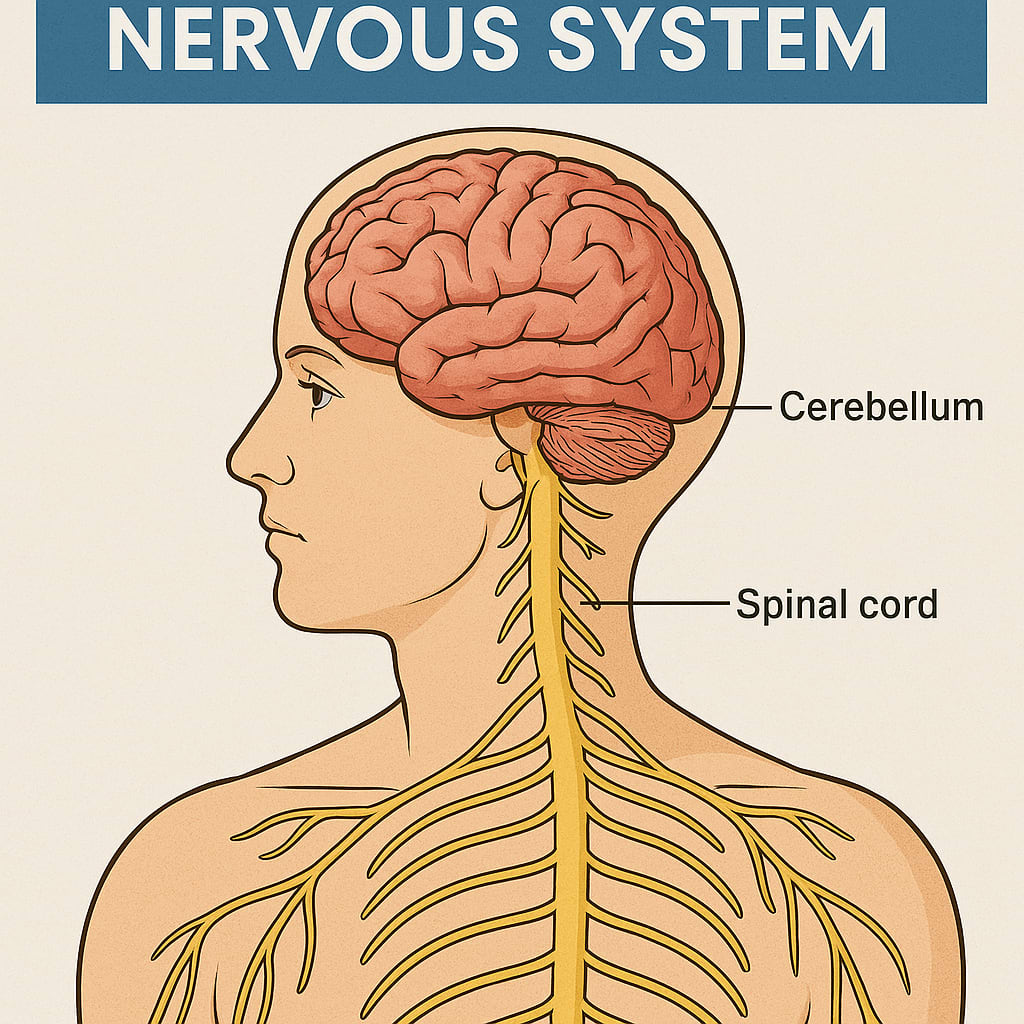
The Central Nervous System (CNS) of the Human Body
The central nervous system (CNS) is one of the most vital and complex systems in the human body. It acts as the control center for all bodily functions, responsible for processing sensory data, regulating motor functions, and facilitating cognitive abilities such as thinking, memory, and emotion. The CNS is composed of two primary components: the brain and the spinal cord.
1. Structure of the CNS
The Brain
The brain is the command center of the CNS, located within the skull and protected by the cranium and cerebrospinal fluid. It is divided into several key parts:
Cerebrum: The largest part of the brain, responsible for higher functions like reasoning, emotions, movement, and sensory processing. It is divided into two hemispheres (left and right) and four lobes (frontal, parietal, temporal, and occipital).
Cerebellum: Located beneath the cerebrum, it helps coordinate voluntary movements such as posture, balance, coordination, and speech.
Brainstem: The brainstem includes the midbrain, pons, and medulla oblongata. It connects the brain to the spinal cord and regulates essential functions like breathing, heart rate, and blood pressure.
The Spinal Cord
The spinal cord extends from the brainstem down through the vertebral column. It serves as the primary communication pathway between the brain and the rest of the body. It is protected by the vertebrae, meninges, and cerebrospinal fluid. The spinal cord is segmented into different regions (cervical, thoracic, lumbar, sacral, and coccygeal) that control different body areas.
2. Functions of the CNS
The CNS is responsible for an array of essential functions that sustain life and enable interaction with the environment:
Sensory Processing: It receives input from sensory organs (eyes, ears, skin, etc.) and interprets that information, such as detecting light, sound, temperature, and pain.
Motor Control: The CNS sends signals through motor neurons to muscles and glands, controlling both voluntary and involuntary movements.
Cognitive Functions: This includes thinking, decision-making, memory formation, language, and attention, primarily managed by the cerebral cortex.
Emotion and Behavior: The CNS influences emotions through structures like the limbic system, affecting mood, fear, pleasure, and motivation.
Homeostasis: It maintains internal stability by regulating processes like temperature, sleep cycles, appetite, and hormone levels via communication with the endocrine system.
3. Protection of the CNS
Due to its importance, the CNS has several layers of protection:
Skull and Vertebrae: These bones provide structural protection against mechanical damage.
Meninges: These are three protective membranes (dura mater, arachnoid mater, and pia mater) that surround the brain and spinal cord.
Cerebrospinal Fluid (CSF): This fluid circulates within the CNS, cushioning it from shocks and removing metabolic waste.
Blood-Brain Barrier (BBB): A selective barrier that prevents harmful substances in the blood from entering the brain, while allowing essential nutrients to pass through.
4. CNS Disorders and Diseases
Because of its complexity, the CNS is susceptible to a range of disorders:
Stroke: Caused by disrupted blood flow to the brain, leading to brain cell damage.
Multiple Sclerosis (MS): An autoimmune disorder where the immune system attacks the protective sheath of nerve fibers in the CNS.
Parkinson’s Disease: A neurodegenerative disorder affecting movement due to the loss of dopamine-producing neurons.
Alzheimer’s Disease: A progressive brain disorder that leads to memory loss and cognitive decline.
Spinal Cord Injuries: Can result in paralysis or loss of sensation depending on the location and severity of the damage.
5. Neuroplasticity and Healing
One of the remarkable features of the CNS is neuroplasticity—its ability to reorganize and adapt by forming new neural connections. This is especially important during learning and recovery from injuries. While the CNS has limited regenerative capacity compared to other tissues, certain therapies, such as physical rehabilitation, cognitive training, and in some cases, medication, can help restore function after damage.
The CNS is not only a biological marvel but also the foundation of who we are as individuals—controlling our movements, memories, emotions, and consciousness. Understanding its functions and vulnerabilities is key to maintaining both mental and physical health
About the Creator
Zeeshan Ali
i am just a student but want to share my toughts with you
Keep reading
More stories from Zeeshan Ali and writers in Education and other communities.
Inside Your Head: Exploring the Fascinating Structure of the Human Brain
Introduction: The Brain—Your Body’s Command Center Imagine the most complex machine in the known universe—and it’s sitting right inside your head. The human brain, weighing just about three pounds, is made up of billions of neurons and trillions of connections. It's what allows you to think, feel, dream, remember, move, and breathe. It’s both mysterious and magnificent.
By Zeeshan Ali9 months ago in Education


Comments
There are no comments for this story
Be the first to respond and start the conversation.