
The 5G Revolution: Transforming the Mobile Telecom Industry
The mobile telecom industry stands on the brink of a revolution. 5G is more than just an upgrade; it represents a fundamental shift in how we think about and use mobile networks.

In the last decade, mobile telecommunications have undergone tremendous changes, driven by advancements in technology and the changing habits of consumers. But no technology has promised as much as 5G. As we stand at the cusp of this new era in telecom, it’s essential to dive deeper into what 5G really means for the mobile industry, its consumers, and businesses across the globe. While 5G isn’t exactly brand new, its full potential is still unfolding, and it promises to revolutionize the world in ways we’ve only begun to understand.
What is 5G, Really?
For many consumers, 5G might just seem like a faster version of 4G. And yes, it does provide lightning-fast speeds compared to its predecessor, but 5G is much more than that. The difference between 4G and 5G is like comparing dial-up internet to fiber optics. "It's not just about speed; it's about latency, capacity, and the ability to support a massive number of devices all connected at once,” said John Donovan, former CEO of AT&T Communications.
5G operates on three different frequency bands: low, mid, and high. Low-band 5G offers broad coverage but isn’t significantly faster than 4G. Mid-band 5G provides higher speeds and better coverage than low-band, but the real game-changer is high-band 5G, often referred to as millimeter wave (mmWave). With mmWave, you can achieve speeds upwards of 10 Gbps, compared to the 100 Mbps cap that’s common with 4G. But there's a catch: its range is short, making it useful only in densely populated areas.
The Economic Impact of 5G
The economic potential of 5G is one of its most appealing aspects, especially in a world that's becoming increasingly reliant on connectivity. By 2035, the global economic impact of 5G is estimated to reach $13.2 trillion, according to a report by IHS Markit. Industries such as healthcare, transportation, and manufacturing stand to benefit enormously.
Take healthcare, for instance. With 5G, remote surgeries, real-time patient monitoring, and AI-driven diagnostic tools could become standard practice. Imagine a world where a specialist in New York City can perform surgery on a patient in rural India via robotic arms controlled in real time. While this sounds like science fiction, it's already happening. In early 2019, China completed the first remote surgery using 5G technology, and experts predict that this could become a normal procedure within the next decade.
Manufacturing, too, will witness a seismic shift. "Factories will become truly autonomous with 5G, as machines communicate with each other and optimize their own efficiency," says Dr. Marcus Weldon, former CTO of Nokia. With low latency and high bandwidth, 5G will enable near-instantaneous data transfer, meaning machines can talk to each other in real time without delays. This will reduce downtime, enhance efficiency, and drive down costs.
5G and the Consumer Experience
While industries will see significant transformations, consumers will also feel the impact of 5G, albeit in more subtle ways. Right now, people are familiar with mobile data used for browsing, streaming, and gaming, but 5G will go beyond that. Ultra-fast download speeds will allow for the seamless streaming of 4K and even 8K content, making buffer times a thing of the past.
Cloud gaming is another frontier set to be conquered by 5G. Currently, gaming often relies on local hardware like consoles or high-end PCs to run demanding software. But with 5G's low latency and high capacity, gaming could move entirely to the cloud. Players could access high-performance games via mobile devices without needing powerful internal hardware. Google's Stadia and Microsoft's xCloud are already attempting to capitalize on this opportunity, though their current success has been limited by the constraints of 4G.
Augmented Reality (AR) and Virtual Reality (VR) applications are poised to benefit enormously from 5G. Think about augmented reality glasses that overlay real-time information as you walk down a busy street, or virtual reality experiences that allow you to explore far-off lands in hyper-realistic environments from your living room. For these immersive technologies to work seamlessly, they need high bandwidth and low latency – both of which are promised by 5G.
The rise of smart cities is another area where consumers will feel the impact. Everything from traffic management to public safety will be enhanced through connected devices and real-time data. Imagine never being stuck in traffic because the city’s smart grid directs cars around congested areas in real time, or emergency services arriving at an accident scene before a call is even made because a network of connected sensors already detected the crash.
The Challenges of 5G Rollout
However, with great promise comes significant challenges. One of the most pressing issues with 5G is the infrastructure needed to support it. Unlike 4G, which relies on fewer but larger cell towers, 5G – particularly the high-band mmWave – requires many more small cells distributed throughout cities. These cells have a much shorter range and are more easily blocked by buildings and other obstacles. As a result, telecom companies need to invest heavily in building out infrastructure, and that comes with a hefty price tag.
“5G is not just a network upgrade; it’s a complete infrastructure overhaul,” said Börje Ekholm, CEO of Ericsson. While the upfront costs are substantial, the long-term benefits are undeniable. Countries like South Korea, China, and the United States have already invested billions in the race to be the global leader in 5G. South Korea, which is often hailed as the global leader in 5G, had over 13 million 5G subscribers by the end of 2020, representing roughly 20% of its population. But even in such a technologically advanced country, there have been complaints about inconsistent coverage and the slower-than-expected rollout of high-band 5G.
Privacy and Security Concerns
With the introduction of 5G also comes a renewed focus on privacy and security. Given the vast amount of data that 5G networks will handle, the stakes are higher than ever. The Internet of Things (IoT) will explode with 5G, connecting billions of devices, from smartphones and computers to refrigerators, wearables, and even cars. But with this vast interconnectivity comes the risk of new vulnerabilities.
"With 5G, we are connecting everything to everything, and that creates an enormous attack surface for cybercriminals," warns Dr. Eric Cole, a cybersecurity expert and former member of the Commission on Cyber Security for the Obama Administration. The worry is that as more devices become connected, there will be more opportunities for hackers to exploit vulnerabilities. In 2019, for example, a hacker breached a casino's network through a smart thermostat in its fish tank, demonstrating how even the most innocuous connected devices can become an entry point for cyberattacks.
Governments are also concerned about 5G's potential for espionage. China's Huawei, one of the leading providers of 5G infrastructure, has been at the center of a global controversy. Several countries, including the United States and the United Kingdom, have raised concerns about the security risks associated with Huawei equipment, fearing it could be used by the Chinese government for espionage. In response, these countries have imposed bans or restrictions on the use of Huawei’s technology in their 5G networks.
5G and Geopolitics
5G isn't just about faster internet – it's also a geopolitical battleground. Nations are racing to establish dominance in 5G, viewing it as a critical asset in the future global economy. China, in particular, has made massive strides in deploying 5G and is poised to lead the world in 5G adoption.
The U.S. has been vocal about its concerns regarding Chinese dominance in 5G, particularly with Huawei being one of the key players in the field. This led to the U.S. banning Huawei from its 5G infrastructure and urging its allies to do the same. “Whoever leads in technology in 5G, they’ll have a real economic advantage. But it’s not just an economic advantage; it’s about influence and power globally,” said Dr. Amy Webb, a futurist and professor at the NYU Stern School of Business.
This technological arms race has created tension between the U.S. and China, with both nations vying for global supremacy in the telecom sector. The ramifications extend beyond just economic influence – they also impact national security, global alliances, and even the nature of future warfare.
The Future Beyond 5G
As 5G continues its global rollout, the industry is already looking ahead to the next frontier: 6G. While 6G is still in its infancy and likely won’t become mainstream until the 2030s, early research suggests it could provide speeds up to 100 times faster than 5G, with virtually no latency. Beyond just faster speeds, 6G could enable even more futuristic technologies, such as holographic communication, where users can interact with life-like holograms of people in real-time, regardless of their location.
"The transition from 5G to 6G will make today’s innovations look like stepping stones," says Dr. Rethink Technology’s Simon Saunders. "But we’re still scratching the surface of what 5G can do. The innovations that 5G will enable over the next decade will reshape our world in unimaginable ways."
Conclusion
The mobile telecom industry stands on the brink of a revolution. 5G is more than just an upgrade; it represents a fundamental shift in how we think about and use mobile networks. With the promise of ultra-fast speeds, low latency, and the ability to connect millions of devices seamlessly, the potential applications are vast and varied, from transforming industries to enhancing everyday
About the Creator
Keep reading
More stories from writers in Education and other communities.
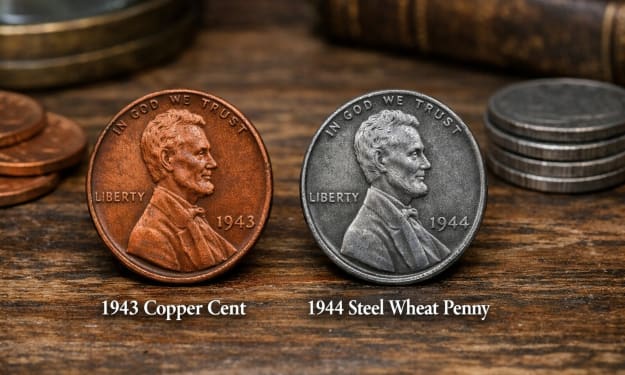
The 1943 Copper Cent vs. The 1944 Steel Penny: How to Spot the Legendary Mistakes
For over eight years as a Senior Numismatic Analyst, few questions ignite the passion of a collector like the legends of the 1943 Copper Cent and the 1944 Steel Penny. These coins represent the most famous mint errors in American history, born from the unprecedented material shifts of World War II. I've examined countless coins brought to me with hope, only to find they were clever counterfeits. The truth is, genuine examples of these errors are extraordinarily rare, but knowing exactly what to look for is the first step from fantasy to fact. This guide will cut through the myths and give you the concrete, professional methods to understand and identify these numismatic legends.
By Laura Bennett7 days ago in Education



Comments