
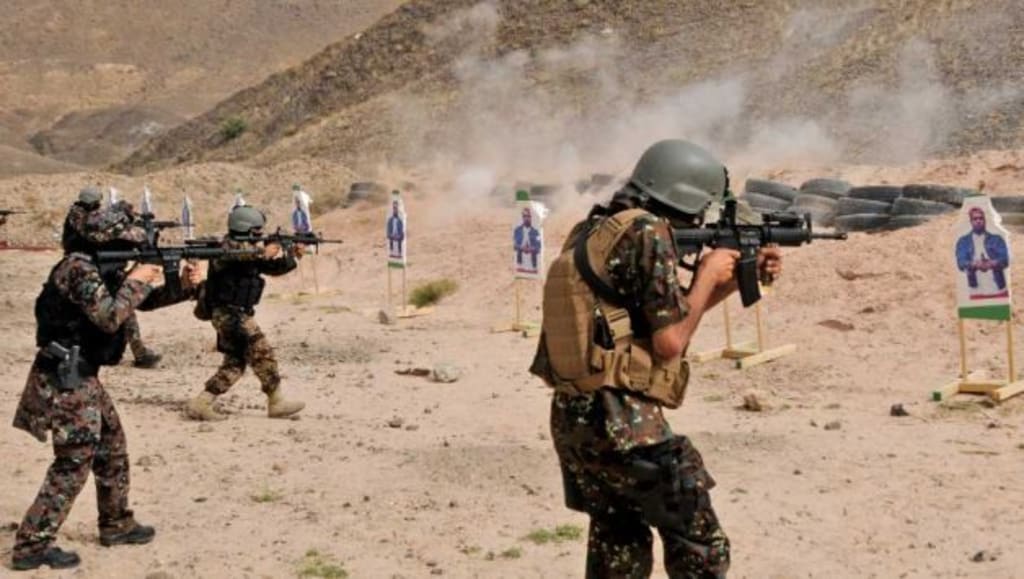
Terrorism has been a major issue in Pakistan for several decades now. The country has faced numerous terrorist attacks, resulting in the loss of thousands of lives and causing significant damage to the economy and society. The problem of terrorism in Pakistan is multi-faceted, with a complex mix of political, religious, and social factors contributing to its persistence.
One of the main reasons for terrorism in Pakistan is the country's history of political instability. Pakistan has experienced military coups and weak civilian governments, which have led to a lack of governance and a breakdown in law and order. This has created an environment where extremist groups can thrive, and terrorists can operate with impunity.
The rise of extremism in Pakistan can be traced back to the 1980s, when the country became involved in the Afghan War. Pakistan's military regime, led by General Zia-ul-Haq, saw an opportunity to establish close ties with the United States by supporting the Afghan Mujahideen in their fight against Soviet forces. The country became a major staging ground for the war effort, and the influx of foreign fighters, weapons, and money led to the proliferation of extremist groups.
Another factor contributing to terrorism in Pakistan is the influence of radical religious ideologies. Pakistan is home to many extremist groups that use religion as a tool to justify their violent actions. These groups often target religious minorities, such as Christians and Shia Muslims, as well as the country's security forces and political leaders.
One such group is the Tehrik-i-Taliban Pakistan (TTP), which emerged in 2007 as an umbrella organization for various militant groups operating in the country. The TTP has been responsible for numerous attacks on civilians and security personnel, including the deadly attack on an army-run school in Peshawar in 2014, which killed over 140 people, mostly children.
Furthermore, Pakistan's proximity to Afghanistan has also contributed to its terrorism problem. The country has a long and porous border with Afghanistan, which has allowed militants to move freely between the two countries. The Taliban, Al-Qaeda, and other extremist groups have used this border to launch attacks in both Pakistan and Afghanistan.
The Pakistani government has taken various measures to address the problem of terrorism in the country. These include military operations against militant groups, the establishment of anti-terrorism courts, and the formation of counter-terrorism units. The government has also worked with international partners, such as the United States and China, to combat terrorism.
One of the most significant military operations against militants in Pakistan was the Zarb-e-Azb operation, launched in 2014, which targeted the TTP and other militant groups operating in the tribal areas of the country. The operation was largely successful, and the TTP was significantly weakened as a result. However, the group has continued to carry out sporadic attacks in the country, highlighting the persistence of the terrorism problem.
The establishment of anti-terrorism courts in Pakistan has also been a significant development in the country's fight against terrorism. These courts are designed to expedite the trial and conviction of suspected terrorists, and have been responsible for the successful prosecution of many militants in the country. However, the effectiveness of these courts has been limited by a lack of resources and infrastructure.
Another measure taken by the Pakistani government has been the formation of counter-terrorism units, such as the National Counter Terrorism Authority (NACTA). These units are tasked with coordinating the country's counter-terrorism efforts, and have been instrumental in developing a national strategy to combat terrorism.
Despite these efforts, terrorism continues to pose a significant threat to Pakistan's security and stability. The country has made progress in reducing the frequency and intensity of terrorist attacks, but the underlying causes of terrorism in Pakistan remain unresolved. The government needs to address the root causes of extremism, such as political instability, poverty, and social inequality.
About the Creator
Menu Boards for Cafés: Design Ideas and Benefits
I'll never forget the first time I walked into a local coffee shop that had just upgraded from their hand-written chalkboard to a sleek digital menu display. The difference was striking—not just visually, but in how quickly I could scan the menu, see vibrant images of specialty drinks, and notice the seasonal promotions rotating in the corner. That experience opened my eyes to how much menu presentation actually matters in café environments.
By Jerry Kane about 14 hours ago in Education
Mastering the Mental Game: Pro Poker Strategies to Eliminate Tilt for Good
Avoiding tilt is one of the most crucial elements for long-term success in poker. Tilt, the emotional state that leads to poor decision-making, can unravel even the most skilled player’s efforts. Professional poker players understand that maintaining a calm, composed mindset is as important as knowing the odds or mastering bluffing techniques. Here’s how the best in the game stay mentally sharp and emotionally resilient.
By Micah Raskin Poker 4 days ago in Education



Comments
There are no comments for this story
Be the first to respond and start the conversation.