
The Psychology of Money
Timeless lesson on wealth, greed and happiness…..
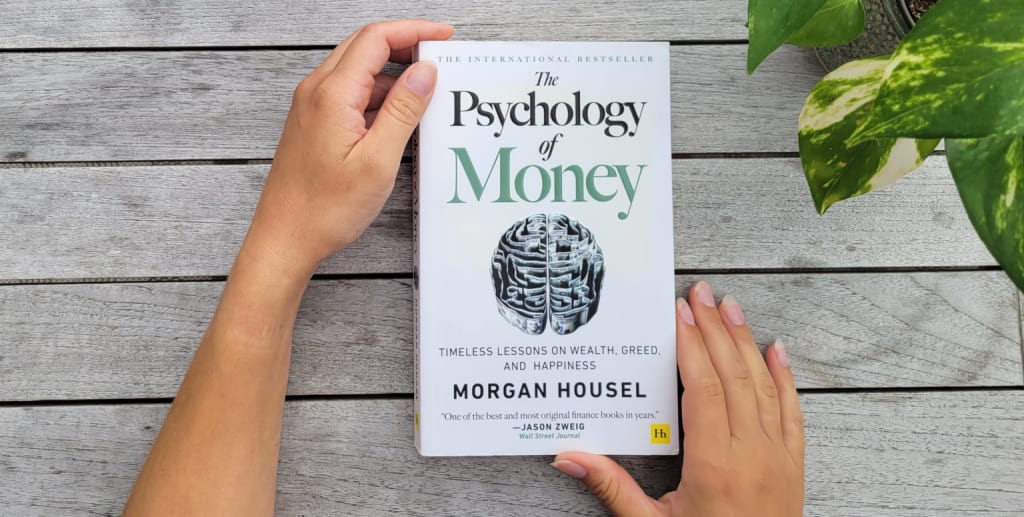
“The Psychology of Money” by Morgan Housel is an insightful and thought-provoking book that explores the psychological and emotional aspects of money management. Drawing from a wealth of research and real-life examples, Housel argues that our beliefs and behaviors around money are often shaped by deep-seated emotions and biases that can either help or hinder our financial success.
One of the key themes of the book is the idea that our relationship with money is not just about numbers and rational decision-making, but also about the stories we tell ourselves about money and the values we attach to it. Housel explores the various ways in which our emotions and biases can influence our financial decisions, from overconfidence and greed to fear and loss aversion. One of the strengths of the book is its accessibility.
Housel writes in a clear and engaging style, making complex concepts easy to understand and relate to. He also uses a wide range of real-world examples to illustrate his points, from the fortunes of famous investors to the experiences of everyday people.
This makes the book both relatable and informative, as readers can see how the principles outlined in the book apply to their own lives. Another strength of the book is its practicality. Housel doesn’t just describe the various psychological biases that can affect our financial decisions; he also provides practical strategies for overcoming them. For example, he suggests that we focus on our long-term goals rather than short-term gains, and that we avoid making impulsive decisions based on fear or greed. These strategies are backed up by research and are presented in a clear and actionable way.
Overall, “The Psychology of Money” is a well-written and engaging book that offers valuable insights into the often-overlooked emotional and psychological aspects of money management. Whether you’re a seasoned investor or just starting out on your financial journey, this book is well worth a read. It will challenge your assumptions and help you develop a more nuanced understanding of the complex relationship between money and psychology.
The Psychology of Money by Morgan Housel is a book about the emotional side of money. It explores how our emotions can lead us to make bad financial decisions, and how we can overcome these biases to make better choices.
The book is divided into 10 chapters, each of which focuses on a different psychological aspect of money. Some of the topics covered include loss aversion, the endowment effect, and the sunk cost fallacy. Housel uses stories and examples to illustrate his points, and he provides practical advice on how to overcome our emotional biases.
The Psychology of Money is a well-written and engaging book. It is full of insights that can help us make better financial decisions. I highly recommend it to anyone who wants to improve their financial literacy.
Here are some of the key takeaways from the book:
Our emotions can lead us to make bad financial decisions. We are all susceptible to emotional biases, such as loss aversion, the endowment effect, and the sunk cost fallacy. These biases can lead us to make irrational choices, such as selling an investment at a loss because we don't want to admit we were wrong.
We can overcome our emotional biases by being aware of them. The first step to overcoming our emotional biases is to be aware of them. Once we know what our biases are, we can start to develop strategies for avoiding them.
There is no one-size-fits-all approach to personal finance. What works for one person may not work for another. The best way to find what works for you is to experiment and find what strategies work best for your personality and your financial goals.
The Psychology of Money is a valuable resource for anyone who wants to improve their financial literacy. It is a well-written and engaging book that is full of insights that can help us make better financial decisions. I highly recommend it to anyone who is interested in learning more about the psychology of money.
Here are some additional thoughts on the book:
The book is written in a very accessible style, making it easy to understand even if you don't have a background in finance.
The book is full of practical advice that you can use to improve your financial situation.
The book is a great reminder that our emotions can often lead us to make bad financial decisions. By understanding our biases, we can make better choices.
Overall, I highly recommend The Psychology of Money to anyone who wants to improve their financial literacy. It is a valuable resource that can help you make better financial decisions.
About the Creator
Reader insights
Good effort
You have potential. Keep practicing and don’t give up!
Top insights
Compelling and original writing
Creative use of language & vocab
Easy to read and follow
Well-structured & engaging content
Excellent storytelling
Original narrative & well developed characters
Expert insights and opinions
Arguments were carefully researched and presented
Eye opening
Niche topic & fresh perspectives
Heartfelt and relatable
The story invoked strong personal emotions
Masterful proofreading
Zero grammar & spelling mistakes
On-point and relevant
Writing reflected the title & theme
The Logistics of Flavor Chile Food Delivery Revolution in 2026
Chile, a country of extremes and culinary delights, has experienced a deep digital transformation in the past few years. As we move through the world of 2026, the classic view of dining out in the bustling streets of Santiago or the colourful alleys of Valparaíso is being supplemented and, in many cases, replaced by a high-tech, high-speed food delivery system. What began as a convenience-driven niche has grown into a multi-billion-dollar backbone of the Chilean economy. With a tech-savvy middle class, an unprecedented explosion in mobile penetration, and an urban population that prizes time above almost everything else, the food delivery market in Chile is no longer simply about delivering a pizza to your doorstep; it is about a complex system of AI-powered logistics, cloud kitchens, and a new "On-Demand" lifestyle that is redefining the very fabric of Chilean society.
By Neeraj kumar5 days ago in Education


Comments (1)
Amazing