
Tajweed Meaning
The Quran is the holy book of Muslims, and its recitation holds great spiritual significance.

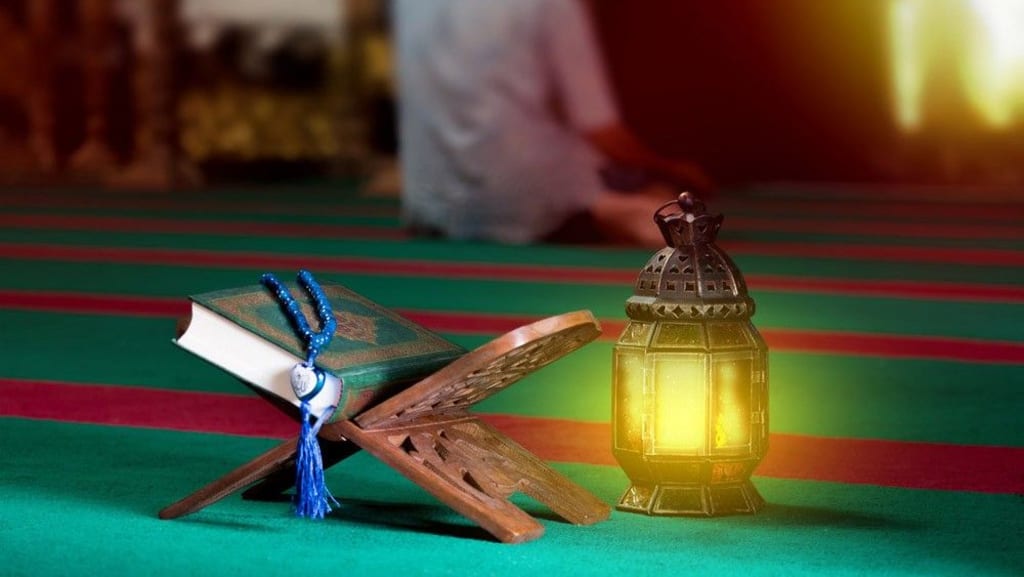
Reciting the Quran correctly is crucial, as it ensures that the meaning of the divine message is conveyed accurately. Tajweed is a term used to describe the rules that govern the proper pronunciation and recitation of the Quran.
The word "tajweed" comes from the Arabic root word "j-w-d," which means to make something good or better. Tajweed is therefore the process of improving the recitation of the Quran. Tajweed rules help in the proper pronunciation of the letters and words of the Quran, and aid in the correct recitation of its verses.
The importance of Tajweed in Quranic recitation cannot be overstated. Tajweed ensures that the Quran is recited correctly, with the right pronunciation and intonation. This is important because reciting the Quran correctly is not only a matter of religious obligation but also a spiritual practice that brings one closer to Allah.
Tajweed is not only important for those who wish to recite the Quran in a religious context but also for those who are learning Arabic. Tajweed rules provide a foundation for learning Arabic pronunciation, and they help in the correct enunciation of the language.
Tajweed rules cover various aspects of Quranic recitation, such as the pronunciation of letters, the lengthening or shortening of vowels, and the proper use of stops and pauses. Tajweed also teaches the correct way to recite words with similar letters, such as the difference between the Arabic letters 'seen' and 'sheen.'
In addition to aiding in the proper pronunciation of the Quran, Tajweed rules also enhance the beauty of its recitation. The melodic flow of recitation that is achieved through Tajweed is a source of inspiration and awe for many Muslims. The beauty of the Quranic recitation is also believed to have a healing effect on the heart and soul.
In conclusion, Tajweed is an essential part of Quranic recitation. It ensures the proper pronunciation and recitation of the Quran, which is crucial for conveying its divine message accurately. Tajweed rules are not only important for those who wish to recite the Quran but also for those who are learning Arabic. The beauty of the Quranic recitation achieved through Tajweed is a source of inspiration and healing for many Muslims. Therefore, it is important to learn and practice Tajweed in order to fully appreciate the beauty and significance of the Quran.
The most critical mistakes Muslims do when reciting the Holy Quran are:
The first mistake, made by Arab and non-Arab Muslims alike, is in making inappropriate starts and stops. There are two issues of this mistake. The first issue is that the appropriate way to stop on a word is by putting a sukoon, or absence of a vowel on the last letter of the word. It is not permitted to stop using the harakah, or vowel on the last letter of the word. The second issue of stopping is that of stopping at a place that does not contradict the meaning intended by Almighty Allah, the Exalted. The same mistake can occur when starting up after stopping and taking a breath. We cannot just start on the next word at random, that is; the meaning needs to be considered, and the start should be on a word that represents the absolute and perfect meaning, even if the reader needs to go back two or three words.
There are two most common tajweed mistakes made by non-Arabs: the timings of the vowels (madd letters in Arabic) and in the articulation points of the letters.
The first type concerning the timing of the vowels (i.e. lengthening a vowel longer than one vowel count), and natural lengthening (making them shorter than they should be). Each vowel over a letter receives one count.So a kasrah receives the same timing as a fath, as does a dhammah, whenever these letters are not followed by the madd letters alif; or a ya' with no vowel preceded by a kasrah, or wow with no vowel preceded by a dhammah). Whereas Madd letters have two vowel counts if they are not followed by a hamzah or a sukoon. All vowels, as stated above, have equal timing in length. This is not true for letters without vowels or saakin letters.The timings of saakin letters vary depending on their characteristics.The difference is in not a great length of time, though.
The second type, which is in the articulation of the letters themselves, is a critical issue that needs to be addressed by all non-Arabs in any other part of the world. The problem here is not that the letters are different from Arabic than the other languages; but in fact, there are letters in Arabic the same to other languages but do not share the same articulation points with their counterparts.
About the Creator
Studio Arabiya
Studio Arabiya is the leading Arabic & Quran institute, specializing in all aspects of teaching Arabic, Quran, and Islamic Studies to all ages and all levels online and abroad.
Keep reading
More stories from Studio Arabiya and writers in Education and other communities.
Online Quran Classes For Adult
For many adults, however, finding the time and resources to attend traditional Quran classes can be a challenge. That's where online Quran classes for adults come in. With the rise of digital technology, it's now easier than ever to learn the Quran from the comfort of your own home.
By Studio Arabiya3 years ago in Education
Avoiding Common Counterfeit U.S. Coins: Expert Tips from Laura Bennett
Expert Guide to Spotting Fake U.S. Coins I’ve handled tens of thousands of coins in my career, and that moment of doubt—the gut feeling something isn’t right—is something every collector experiences. That feeling isn't a weakness; it's your best line of defense. This guide is your toolkit to turn that doubt into decisive action. I’ll share the same systematic approach I use to separate the real treasures from the clever fakes, so you can build your collection with confidence.
By Laura Bennett6 days ago in Education
The Devil's Cut
“Comrade, finally you’re awake.” The voice was smooth, sensual. A flickering incandescent bar was all that lit the white, sterile room. All Vladimir remembered was everything going black. He tried to move his arms and found them strapped to the gurney.
By Matthew J. Fromm5 days ago in Fiction



Comments
There are no comments for this story
Be the first to respond and start the conversation.