stem
The four major disciplines propelling our students and our society forward; all about education in science, technology, engineering, and mathematics.
The Importance of RF Testing for BIS Certification. Content Warning.
The world of technology is rapidly evolving, as new electronic devices arrive in the market. Simultaneously you will find it difficult to choose among the thousand and one options available. This is where RF (Radio Frequency) testing and BIS certification come in.
By Pritam Mondalabout a year ago in Education
Student
Student loans are a critical and often life-altering financial tool for many students worldwide. They provide access to higher education, opening doors to opportunities that might otherwise be out of reach. However, they also come with challenges and responsibilities that can have long-term implications. Let's delve into the emotional landscape of student loans, exploring their impact on individuals and society.
By Aminu Muhammadabout a year ago in Education
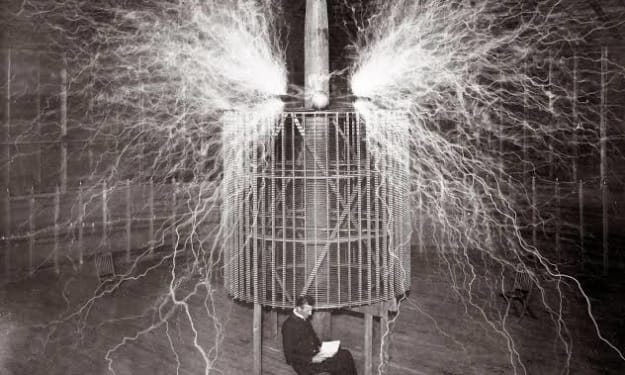
A Journey of Nikola Tesla. AI-Generated.
### The Journey of Nikola Tesla **Nikola Tesla was born** on July 10, 1856, in a small village in what is now Croatia. From a young age, he was curious about how things worked. He loved to read and was especially fascinated by science and machines. His father was a writer and a priest who wanted Nikola to follow in his footsteps, but Nikola had different dreams.
By Karl Nicken about a year ago in Education
Depressive and Bipolar Disorders: Crash Course Psychology
American psychologist, and professor of psychiatry, Kay Redfield Jamison, is one of the world's foremost authorities on bipolar disorder. She's spent her career researching, lecturing, and writing seminal books on the condition. A condition that she also happens to have had her entire adult life. In her memoir, "An Unquiet Mind," Jamison details what it really means to be bipolar. She writes of not sleeping for days on end, of feeling long periods of euphoria, and filling whole notebooks with her racing thoughts and grandiose ideas. While in these manic states, she experienced a tremendously inflated sense of self-esteem and did impulsive things that felt good at the time but had painful consequences, like going on lavish shopping sprees, engaging in promiscuous behavior, racking up credit card debt, and emptying her bank accounts. But these episodes were followed by emotional crashes: Crippling bouts of depression that sent her into a suicidal spiral. At the age of 28, Jamison tried to kill herself by taking an overdose of Lithium, lapsed into a coma, but thankfully emerged from it determined to find help through medication and therapy. Through her research and writing, Dr. Jamison has pioneered our understanding of bipolar disorder, depression, and the nexus of mental struggles that we now think of as mood disorders. And she's probably one of the best ambassadors we have for all those people who live successful, productive lives with mental illness. Just like the anxiety disorders we talked about last time, mood disorders are misunderstood. They're diluted by depictions of depression as something that can be treated with one day at a spa or descriptions of people as manic depressive just because they were sad yesterday and aren't today. As students of psychology, our job is to understand what mood disorders really are, how they manifest themselves, and what might cause them. And as you probably guessed, this can be pretty tough terrain to explore. These disorders can take people from terrifying highs to pits of despair that seem all but bottomless. But! In between there's what Jamison has called, "A rich, imaginative life" -- all made possible by your moods. We've been talking a lot about terms and concepts that mean something different than what you think they mean, but this time, the term "Mood" is not one of those. In a psychological context, moods are pretty much exactly what you think they are: Emotional states that are even more subjective and harder to define than the emotions themselves. And while psychologists have defined about 10 basic emotions, moods tend to fall into two broadly and infinitely variable categories. You got the good moods and the bad moods. Probably the most important distinction between emotion and mood is that moods are long-term emotional states rather than discreet, fleeting feelings. And "mood-disorders," which are characterized by emotional extremes and challenges in regulating mood tend to be longer-term disturbances. These include depressive disorders, typified by prolonged hopelessness and lethargy, and bipolar disorders, the most prominent of which involve alternating between depression and mania. Depression has been called the common cold of psychological disorders. Which is not to say that it isn't serious, but it's common and it's pervasive and it's the top reason people seek out mental health help. We've all felt down before, obviously, often in response to a specific loss: a breakup or a lost job or the death of a loved one. And the fact is, you probably should feel bad at times like those. It can actually be good for a mind and body to slow down, to help digest losses that you experience, but in general, sadness is temporary. It's when sadness and grief extend beyond the generally accepted social norms, or plunge into a depth that causes serious dysfunction that you find yourself in the territory of depressive disorders. The DSM-5, our handy (if super flawed) user's guide to psychological disorders officially diagnoses a major depressive disorder when a patient has experienced at least five signs of depression for more than two weeks. These symptoms include not just depressed mood, but also significant weight or appetite loss or gain, too much or too little sleep, decreased interest in activities, feeling worthless, fatigued, or lethargic, difficulty concentrating or making decisions, and recurrent thoughts of death or suicide. So while everyone experiences sadness, depression is a physiological as well as psychological illness. It messes with your sleep, and appetite, and energy, and neurotransmitter levels, all interfering with the way your body runs itself. Plus in keeping with our definition of psychological disorders, to be considered a true disorder this behavior needs to cause the person or others around them prolonged distress - the feeling that something is really wrong. Just as a person with a severe, generalized anxiety disorder may never want to leave the house, a clinically depressed person often feels so hopeless and overwhelmed that they have trouble living a normal life. And unlike the bipolar disorders, the depressive disorders tend to be all lows. You've probably heard of manic depression. It's the outdated term for bipolar disorders. These include those classic dark lows of depression, but also bouts of the opposite - of extreme mania in more severe cases. Someone suffering from a bipolar disorder may flip back and forth between normal and depressive and manic phases within a single day or week or month. And a true manic episode doesn't just mean being energetic or happy, it's a period of intense, restless, but often optimistic hyperactivity in which your estimation of yourself and your abilities and your ideas can often get skewed. Like, really, REALLY skewed. Some patients experience mania only rarely, but when they do, it can be destructive. Kay Jamison has testified to that. Once during a manic episode, she bought up a drug store's entire supply of snake-bite kits, convinced of an imminent attack of rattlesnakes that only she knew was coming. In another, she purchased 20 books by the Penguin Publishing House because she said, "It could be nice if the penguins could form a colony." In other words, bad judgment is common. And it can get worse. Full blown manic episodes often end up in psychiatric hospitalization, since the risk to self or others can become severe. When the highs eventually end, they're often followed by dark periods of depression. When left untreated, suicide or suicide attempts are common, another element of the disorder that Jamison herself can attest to. Like so many things in psychology, the cause of mood disorders is often a combination of biological, genetic, psychological, and environmental factors. We know, for example, that mood disorders run in families - genes matter. And you're more likely to experience a bipolar or depressive disorder if you have parents or siblings who suffer from them. Studies have of identical twins show that if one twin has a bipolar disorder, that the other has a seven in ten chance of also being diagnosed, regardless of whether they were raised together or apart. And while a stressful life can't give you bipolar disorder, it could trigger a manic or depressive episode in someone with a pre-existing condition. Or start a descent into a major depressive episode in someone who never before had experienced depression. In other words, a person who loses a loved one could go from sad to depressed or slide into a bipolar episode, but it couldn't cause them to have the disorder to begin with. In the case of depressive disorders, for most people, after weeks, months, or even years, their depression can end, hopefully with the return to baseline healthy functioning. World-wide, women tend to be diagnosed with major depression more often than men, but many psychologists think this is simply because women tend to seek treatment more. It's also possible that depression in men tends to manifest itself more in terms of anger and aggression, than as sadness and hopelessness. This is just an example of how depression is much more than just being sad and that the characteristic lack of purpose and helplessness can manifest itself in a lot of different ways. Looking at mood disorders from a neurological perspective, we see that depressed, manic, and average brains show very different brain activity in neural imaging scans. As you might expect, a brain in a depressed state slows down. While a brain in a manic state shows a lot of increased activity, making it hard for that person to calm down or focus or sleep. Our brain's neurotransmitter chemistry also changes with these different states. For example, norepinephrine, which usually increases arousal and focus, is severely lacking in depressed brains, but kind of off the charts during manic episodes. In fact, drugs that seek to reduce mania in part do it by reducing norepinephrine levels. You may have also heard about how low serotonin levels correlate with depressive states. Exercise, like jogging or break dancing or whatever, increases serotonin levels, which is one reason exercise is often recommended to combat depression. And most medications designed to treat depression seem to work by raising serotonin or norepinephrine levels. And of course there's yet another way to look at things. The social-cognitive perspective examines how our thinking and behavior influence depression. People with depression often view bad events through an internal lens or mind set that influences how they're interpreted. And how you explain events to yourself, in a negative or positive way, can really effect how you recover from them - or don't. Say you were humiliated in the lunch room when someone tripped you and chicken soup flew all over the place, and you sat down on a brownie, and it was just a bad day. A depressive mind might immediately start thinking that the humiliation will last forever, that no one will ever let you live it down, that it's somehow your own fault, and you can't ever do anything right. That negative thinking, learned helplessness, self-blame, and over-thinking can feed off itself and basically smother the joy out of the brain, eventually creating a vicious self-fulfilling cycle of negative thinking. The good news is that the cycle can be broken by getting help from a professional, turning your attention outward, doing more fun things, and maybe even moving to a different environment. But again, that social-cognitive prospective is just part of a much bigger puzzle. Positive thinking is important, but it's often inadequate on its own own when up against genetic or neurological factors. So mood disorders are complicated conditions and rarely are they eliminated with a single cure. Instead, they're often things you just live with. And as Dr. Jamison has shown us, you can live well. Today we talked about what mood disorders are, as well as what they aren't. You learned about the symptoms of depressive and bipolar disorders, and the possible biological, genetic, environmental, and social-cognitive causes of mood disorders.
By Mai Vinh Thangabout a year ago in Education
Inclusion of Marks from Classes 9-11 in Class 12 Report Card: A Comprehensive Overview
In a significant move towards reforming the evaluation system in Indian schools, the National Council of Educational Research and Training (NCERT) unit PARAKH has proposed the inclusion of marks from Classes 9, 10, and 11 in the final Class 12 report card. This initiative aims to create a more holistic and consistent evaluation process across various school boards in India. This article provides an in-depth analysis of the proposed changes, their implications, and insights from discussions with education authorities.
By Priyangini about a year ago in Education
NEET UG 2024 Counselling Schedule Announced: Essential Information for Parents and Students
The NEET UG 2024 counselling schedule has been officially released by the Medical Counselling Committee (MCC). This announcement is crucial for students aspiring to pursue medical and dental courses in India, and it provides a structured timeline for the upcoming counselling process. This article aims to provide detailed insights and guidance on the NEET UG 2024 counselling schedule, seat availability, and the counselling process, ensuring that parents and students are well-prepared for the next steps.
By Priyangini about a year ago in Education
School Closures in Dehradun, Mumbai, and Pune Amid Heavy Rainfall: Ensuring Student Safety
In recent developments, severe weather warnings from the India Meteorological Department (IMD) have prompted the closure of schools in Dehradun, Mumbai, and Pune. As an educational expert, it is essential to understand the implications of these closures, the measures taken by authorities, and the importance of prioritizing student safety during such events. This article aims to provide an in-depth analysis of the situation, highlighting the proactive steps taken by local authorities and offering practical insights for parents and students.
By Priyangini about a year ago in Education
"History of Dinosaurs: The Kingdom of Giant Creatures and Their Tragic Fall"
History of Dinosaurs: The Kingdom of Giant Creatures and Their Tragic Fall Origins of Dinosaurs Dinosaurs are a group of reptiles that first appeared during the late Triassic period, about 230 million years ago. They descended from a group of primitive reptiles called archosaurs, which also includes crocodiles and birds.
By Al-hassan Emamabout a year ago in Education
Chronic Kidney Desease : Diagnosis And Managment
Chronic Kidney Disease: Diagnosis and Management Chronic Kidney Disease (CKD) is a condition characterized by the gradual loss of kidney function over time. As the kidneys are vital for filtering waste and excess fluids from the blood, maintaining proper electrolyte balance, and regulating blood pressure, CKD can have serious health implications if not properly managed. Early diagnosis and effective management are essential to slow the progression of the disease and improve the quality of life for those affected.
By Urooj Razzaqabout a year ago in Education