pop culture
Pop culture has a place in the classroom; popular trends like hip hop help to foster interest and ignite conversations in education.
Vocal.Media: A Creative Platform for Writers and Storytellers
Vocal.Media is an online publishing platform designed to give writers, bloggers, and storytellers a place to share their voices with the world. Launched in 2016, it has grown into a space where creators can publish articles, short stories, poems, reviews, and essays while connecting with an engaged audience. Unlike traditional blogging platforms, Vocal provides writers with built-in readership opportunities, monetization options, and themed communities called “Vocal Communities,” which allow creators to target specific audiences.
By Muhammad Ibrahim5 months ago in Education
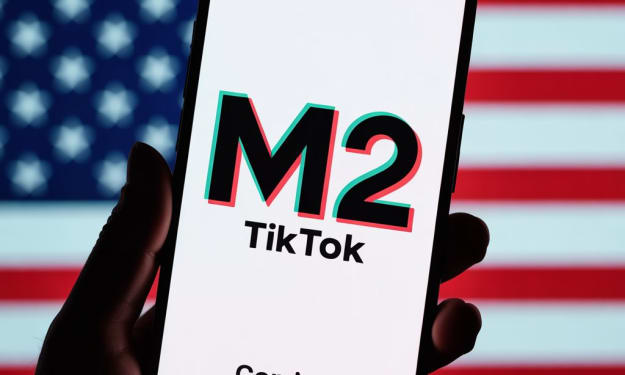
M2 TikTok: The New Era of Social Media in the U.S.
In the fast-changing world of social media, every innovation can shift the way people connect, share, and express themselves. The upcoming launch of M2 TikTok, scheduled for September 5th, marks one of the most significant changes in the platform’s history — especially for users in the United States. This new app version is not just an upgrade; it is a strategic move designed to address political, security, and cultural concerns while promising a fresh experience for millions of users. 🔵 What is M2 TikTok? M2 is the codename for a brand-new TikTok app built specifically for the U.S. market. Unlike the current global version of TikTok, M2 will operate with U.S.-based servers and its own unique code, potentially featuring a redesigned algorithm. This change comes amid growing pressure from U.S. lawmakers, who have raised concerns about data privacy and national security risks due to TikTok’s Chinese parent company, ByteDance. 🔵 Why is it launching now? The U.S. government has been considering a possible ban on TikTok unless ByteDance divests its U.S. operations. By creating M2, TikTok is offering a solution: a platform built for American users, managed under U.S. laws, and hosted on American servers. This move aims to satisfy national security requirements while preserving the app’s massive American user base. 🔵 Key Features and Potential Benefits M2 TikTok promises several advantages: 1. Improved Data Privacy: Storing user data on U.S.-based servers reduces concerns about foreign access to personal information. 2. Custom Algorithm: A new recommendation system could be designed to better align with American regulations and preferences. 3. Smoother Performance: With local infrastructure, the app may offer faster loading times and improved video quality. 4. Fresh User Experience: M2 could bring new editing tools, trending features, and an interface tailored to the U.S. audience. 🔵 Impact on Content Creators For creators, this transition could be both exciting and challenging. On one hand, M2 might offer better opportunities to reach American audiences and monetize content in new ways. On the other, it could require adjusting strategies to fit any new algorithm or content guidelines introduced in the app. 🔵 Economic and Cultural Significance TikTok is more than just a social media platform; it’s an economic engine for many small businesses, independent artists, and educators. The introduction of M2 could reshape digital marketing strategies in the U.S., giving brands more secure and locally managed advertising tools. Culturally, it will be fascinating to see whether M2 maintains the same global trends that made TikTok popular or evolves into a more uniquely American experience. 🔵 Challenges Ahead While M2’s launch is promising, it also raises questions. Will users need to download a separate app? How will their old TikTok data and followers transfer over? And will M2 actually win the trust of critics who have been calling for a complete ban? The answers will depend on how TikTok manages the transition and communicates its goals clearly to the public. 🔵 A New Chapter in Social Media History The debut of M2 TikTok could mark the start of a new chapter for short-form video in the United States. If successful, it might set a precedent for how global apps adapt to local laws and values. For users, this means more control over their data, potentially more relevant content, and a stronger sense of connection to a platform that truly operates within their own country. In a world where technology evolves faster than ever, M2 represents a careful balance between innovation and responsibility. It is a reminder that even in the age of global connectivity, local trust and ethical practices remain essential for digital success. As September 5th approaches, all eyes will be on TikTok to see if M2 can deliver on its promises and lead the way into a safer, more user-focused future.
By Javed Khan 5 months ago in Education
Predicting the Future, Cartoon-Style: The Simpsons’ Hits and Misses
If someone had told you back in the 1990s that a yellow cartoon family could “predict” the future, you probably would’ve laughed. Yet here we are, decades later, still talking about The Simpsons and how often their fictional jokes seem to line up with reality. Created by Matt Groening in 1989, this show wasn’t made to be a crystal ball — it was meant to make people laugh. But somehow, between all the slapstick humor, satirical jabs, and life in the quirky town of Springfield, the writers have dropped hints about events that actually came true. And of course, not every prediction hit the mark — some were way off, and that’s part of the fun.
By Vocal Member 5 months ago in Education
She Sells Seashells by the Seashore – An Essay
There are some phrases in the English language that seem almost timeless. They roll off the tongue in a playful way, yet they hide more depth than most people expect. “She sells seashells by the seashore” is one of those phrases. At first glance, it’s just a tongue twister, the kind you might hear in a classroom or around a campfire when someone challenges you to say it three times fast. But behind those eight little words is a fascinating mix of history, clever language, and even a story of determination that reaches back to the early 1800s.
By Vocal Member 5 months ago in Education
uk papulation issue
The UK’s Population Issue: Trends, Challenges, and Solutions Introduction The population of the United Kingdom has grown significantly over the past century, surpassing 67 million in 2024. While a growing population can provide economic benefits—such as a larger workforce and consumer base—it can also create pressure on housing, healthcare, education, infrastructure, and the environment. The UK’s “population issue” is not simply about numbers. It involves the balance between population growth, demographic change, resource availability, and regional inequalities. England, in particular, is one of the most densely populated countries in Europe, intensifying the debate over how to manage growth sustainably.
By zakir ullah khan5 months ago in Education
The Brutal Truth About TikTok Growth: Why 93% Fail (And How to Actually Succeed)
Let’s cut to the chase: TikTok is a goldmine. We’ve all seen the stories – creators building massive followings, brands generating insane sales, and ordinary people turning viral moments into life-changing income. With over 1.5 billion daily active users spending nearly 100 minutes per day on the platform, the potential audience is staggering. Reports suggest a staggering 77% of users have bought something after seeing it on TikTok. It’s not just hype; it’s a fundamental shift in how attention and commerce collide.
By Epic Vibes6 months ago in Education
Empowering Minds: The Transformative Power of Education
Empowering Minds: The Transformative Power of Education How Learning Shapes Brighter Futures and Builds Stronger Communities In a small village nestled between rolling hills and golden fields, lived a curious 10-year-old girl named Amina. Her eyes sparkled with questions about the world — why the stars twinkled, how birds knew where to fly, and what lay beyond the horizon. But for a long time, her questions had no place to land. Her family, like many others in the village, struggled to make ends meet, and school was a distant dream. That changed when a local non-profit partnered with government educators to open a school in the village. It wasn’t grand — just a few classrooms, wooden benches, and a chalkboard — but for Amina and dozens of other children, it was a gateway to a new world. From the moment she stepped into the classroom, Amina’s life began to change. She learned to read, write, and count. She discovered the stories of faraway lands, the mysteries of science, and the beauty of her own culture’s history. Most importantly, she discovered her own voice. Education gave Amina something she had never felt before: hope. It gave her the confidence to dream beyond her circumstances and the tools to one day make those dreams real. --- Amina’s story is just one of millions around the globe — a testament to the power of education. Beyond just reading and writing, education builds critical thinking, empathy, confidence, and a sense of belonging. It’s one of the most powerful tools we have to fight poverty, inequality, and injustice. Why is education so important? Education doesn’t only shape individuals — it strengthens families and transforms communities. When children go to school, they grow up to make better choices, access better job opportunities, and contribute positively to society. Educated individuals are more likely to support democratic values, care for their environment, and raise healthier children. According to UNESCO, each additional year of schooling can increase a person’s income by up to 10%. Girls who complete secondary education are far less likely to marry early and more likely to become leaders and entrepreneurs. In fact, when you educate a girl, you educate an entire generation. In communities where education is prioritized, there are lower crime rates, better health outcomes, and stronger economies. Simply put, education plants the seeds for long-term, sustainable growth. --- But despite the proven benefits, millions of children worldwide still lack access to quality education due to poverty, conflict, discrimination, or lack of resources. For many, the nearest school is hours away, the teachers are undertrained, or families can't afford the supplies. That’s why organizations, governments, and individuals around the world are working together to break these barriers — by building schools in rural areas, training passionate educators, providing scholarships, and advocating for policies that protect every child’s right to learn. In one rural region of South America, for example, a mobile classroom project brings education to children who live in remote mountain communities. Teachers travel by donkey or boat, carrying books and supplies to ensure no child is left behind. In cities, mentorship programs help young students from low-income families stay in school and believe in their potential. These are more than just feel-good stories — they are real-life examples of how education changes lives. --- Back in Amina’s village, years have passed. She is now a confident teenager, teaching her younger siblings how to read and write under the same tree where she once asked about the stars. Her school helped her gain a scholarship to attend secondary school in the nearby town. She dreams of becoming a doctor, not just to treat people but to teach others how to care for their health. Her journey is a reminder that the gift of education is never just for one person — it spreads. When we educate one child, we invest in a ripple effect of growth, change, and possibility. --- Conclusion: Education is more than just learning facts — it's about unlocking potential. It gives people the tools to build a better life, to understand the world, and to shape the future. Amina’s story, like many others, shows us that when we invest in education, we are building a brighter, more just world for all. It reminds us that no matter where a child is born — whether in a big city or a quiet village — every mind deserves the chance to shine. Because when we empower minds, we empower humanity.
By Muhammad Saad 6 months ago in Education
Unlocking Potential: The Power of Education
Education is more than just books and classrooms. It’s the bridge between dreams and reality, the spark that ignites curiosity, and the tool that empowers individuals to shape their future. Around the world, access to quality education has proven to be one of the most powerful forces for positive change—not only for individuals but for entire communities. Take the story of Amina, a young girl from a small rural village. For years, education in her community was seen as a luxury, especially for girls. Most families prioritized early marriage and household responsibilities over schooling. But Amina had a different vision for her life. She dreamed of becoming a doctor to help the sick in her village who often lacked access to healthcare. Thanks to a community education initiative, Amina was given the opportunity to attend school. The road wasn’t easy—she walked several kilometers each day and often studied by candlelight—but her determination never faded. Years later, Amina graduated from medical school and returned to her village, where she opened a small clinic. Today, she not only provides healthcare but also mentors young girls, encouraging them to pursue their own dreams through education. Amina’s story is just one example of how education changes lives. Education Opens Doors Across the globe, research consistently shows that higher levels of education are linked with better job opportunities, higher incomes, and improved health. But the benefits go far beyond personal gain. When people are educated, they are more likely to engage in their communities, vote, start businesses, and help others rise with them. Education fosters critical thinking, empathy, and innovation—qualities that every thriving society needs. For children, the early years of education build the foundation for lifelong learning. As they progress through school, they gain not just knowledge but also confidence and communication skills. For adults, continuing education opens doors to new careers, better financial security, and personal growth. The Ripple Effect Education doesn’t just affect the learner—it creates a ripple effect. Studies show that when women are educated, their children are more likely to survive infancy, attend school themselves, and grow up healthier. Educated parents are better equipped to support their children's learning, manage their family’s health, and contribute to their local economies. In communities where education levels rise, poverty often decreases. Local businesses grow, crime rates fall, and innovation flourishes. Education is like planting a seed—it takes time to grow, but when nurtured, it transforms entire landscapes. Barriers Still Remain Despite the progress made globally, millions of people still lack access to quality education due to poverty, conflict, gender inequality, and lack of resources. For many, even basic education remains out of reach. In some parts of the world, children walk miles to reach the nearest school. In others, they face overcrowded classrooms, untrained teachers, or outdated materials. Girls, in particular, face additional challenges such as early marriage, cultural bias, or safety concerns that prevent them from completing their studies. However, positive change is possible—and happening every day. Governments, non-profits, and community leaders are working together to break down barriers, build schools, train teachers, and provide scholarships to those who need them most. Technology as a Gateway In recent years, technology has become a powerful tool in expanding access to education. Online classes, mobile learning apps, and virtual classrooms have brought learning to remote villages, refugee camps, and busy city neighborhoods. Even during times of crisis—like the COVID-19 pandemic—technology enabled millions to continue learning from home. With the right investment and planning, digital education can bridge the gap for students who would otherwise be left behind. Investing in the Future Education is not just an expense—it’s an investment. For every dollar spent on education, societies see multiple dollars returned in the form of economic growth, public health, and civic engagement. By ensuring that every child, teen, and adult has the opportunity to learn, we build stronger economies and more peaceful societies. We unlock the potential of inventors, teachers, artists, entrepreneurs, and leaders who will shape the future. A Call to Action As Amina’s story shows, the impact of education goes far beyond the classroom. It’s about empowerment, opportunity, and transformation. It’s about planting seeds today that will bloom into a better tomorrow. Whether you’re a student, parent, teacher, or policymaker, there’s a role to play in supporting education. Advocate for equal access, donate to educational programs, mentor a young learner, or simply encourage those around you to keep learning. In a world facing so many challenges, education is one of our most hopeful solutions. It equips us to solve problems, understand each other better, and dream bigger. Let’s invest in learning. Let’s unlock potential. Let’s build a brighter future—one educated mind at a time.
By Muhammad Saad 6 months ago in Education
Unlocking Potential: The Power of Education
At 42 years old, Carmen Alvarez never imagined she'd find herself back in a classroom. A single mother of two and a night-shift janitor at a local hospital, her days were already full—of responsibility, fatigue, and routine. But something had shifted inside her the day her son Mateo asked, “Mom, did you go to college?” She had smiled and answered honestly. “No, mijo. I had to start working when I was your age.” Mateo had simply nodded, but his question lingered. Not as judgment, but as possibility. The next week, Carmen enrolled in a GED prep course at the community center. Her hands trembled when she signed the registration form. It had been over two decades since she’d last held a pencil for anything other than jotting down grocery lists. But that night, as she sat at the kitchen table with a used algebra textbook and a lukewarm cup of coffee, something stirred inside her: hope. Carmen’s story is not unique. Across cities and small towns, in libraries, online classrooms, and late-night study groups, adults are rediscovering the transformative power of education. Not just as a stepping stone to a better job, but as a key to unlocking self-worth, community change, and lifelong growth. Learning Beyond Limits When Carmen passed her GED exam nine months later, she cried in the testing center bathroom. It wasn’t just a piece of paper. It was a symbol of everything she had overcome—poverty, doubt, time. Her confidence grew. She enrolled in a community college part-time, studying health sciences with the hope of becoming a certified nursing assistant. Her classmates came from all walks of life: a retired mechanic learning computer programming, a young mother studying early childhood education, an immigrant working toward his business degree. They were bound by a shared belief—that it was never too late to learn. One of her professors, Dr. Lillian Reeves, often said, “Education isn’t just about degrees—it’s about dignity. It’s about giving people the tools to contribute meaningfully to their world.” That philosophy rang true in the community. The Ripple Effect As Carmen progressed in her studies, she noticed a shift at home. Mateo and his younger sister began doing homework more diligently. “If Mom can do it, I can too,” Mateo said one evening, grinning across the table. Carmen wasn’t just learning for herself—she was modeling resilience for her children. At the hospital where she still cleaned during the night shift, her coworkers started asking her about school. A few of them, inspired by her courage, signed up for adult education courses. The break room began buzzing with talk of class schedules and future plans. A community that learns together, grows together. Building a Brighter Future Education, especially lifelong learning, has a multiplier effect. It doesn’t stop with individual achievement—it builds stronger families, healthier communities, and more adaptable economies. Carmen’s journey eventually led her to a full-time position as a CNA. The financial stability allowed her to move her family into a safer neighborhood and reduce her hours at the hospital. But she didn’t stop there. With encouragement from her instructors, she began mentoring new students, helping others overcome the fear she once knew so well. At a local education summit two years after earning her GED, Carmen stood on stage and shared her story. “I used to think education was something I missed out on,” she said to the audience. “Now I realize it’s something I’m always a part of—as a student, a mother, a mentor. Learning never ends.” Education as Empowerment In today’s fast-changing world, where technology reshapes industries and global challenges demand adaptable minds, lifelong learning is more important than ever. It equips people not just to survive, but to thrive—to pivot careers, engage in civic life, and build a future rooted in equity and innovation. But access remains a challenge. Carmen was fortunate to live in a district with funded adult programs. For millions, barriers like cost, transportation, and childcare remain daunting. That’s why communities, governments, and organizations must invest in making education accessible at every age. Conclusion Carmen’s story is a testament to the power of education—not just formal schooling, but the broader, ongoing journey of learning that fuels personal transformation and community uplift. It’s a reminder that the classroom can be anywhere: a kitchen table, a public library, a late-night break room. What matters is the spark inside—the belief that learning can unlock a better version of ourselves. Education isn’t a finish line; it’s a lifelong passport to possibility. And when one person learns, we all grow.
By Muhammad Saad 6 months ago in Education