pop culture
Pop culture has a place in the classroom; popular trends like hip hop help to foster interest and ignite conversations in education.
What Is a Network. Content Warning.
What Is a Network: Understanding the Backbone of Modern Communication In today's interconnected world, the term "network" has become ubiquitous. Whether we're talking about the internet, social networks, or even our local Wi-Fi connections, networks are an integral part of our daily lives.
By Dayax writer2 years ago in Education
Simplifying relationships:
Title: Simplifying Relationships: Finding Joy in Connection Introduction: In our increasingly complex and fast-paced world, simplifying relationships has become more important than ever. Simplification doesn't mean reducing the depth or quality of our connections; rather, it's about streamlining the way we approach, nurture, and cherish our relationships. In this article, we will explore strategies for simplifying relationships, allowing you to find greater joy and fulfillment in your connections with others.
By Caleb Idris2 years ago in Education
Personal Transformation
Amelia had always been a city girl, born and raised amidst the concrete jungle. She lived in a cramped apartment, drove her sleek car through a maze of traffic, and spent her days in a high-rise office building, where the view from her window was nothing but steel and glass. Nature was something she saw in picture books and documentaries, a distant and unattainable world.
By Destiny Ordua2 years ago in Education
Youth Vote for Republican Primary
This article written by AI. In the heart of a small, conservative town in the American heartland, where politics was often seen as the solemn duty of the older generations, there emerged a group of young Republicans determined to change the narrative. They called themselves "The Youth Revival," and their passion was contagious.
By Sadia Maqsood2 years ago in Education
Bonge
BONGE A traditional storage bank commonly seen in bwatiye communities. In Bwatiye land, grain storage are usually associated with dry climatic conditions, under which it is possible to reduce the moisture content of the harvested grain to a satisfactory storing level simply by sun-drying it.
By Jordan Lawi Hassan2 years ago in Education
Etiquette
Etiquette: The Cultural Compass of Social InteractionIn a world as diverse as ours, etiquette serves as the cultural compass that guides our interactions with one another. This intricate web of customs, manners, and norms shapes our behavior and ensures harmonious coexistence. Etiquette varies widely across cultures and regions, reflecting the rich tapestry of human diversity. In this exploration of etiquette, we will delve into its significance, its evolution, and its role in today's globalized society.**The Significance of Etiquette:**Etiquette is more than just a set of rules; it is a reflection of a society's values, history, and identity. It serves as a social lubricant, smoothing interactions and reducing the risk of misunderstandings or conflicts. By adhering to established etiquette, individuals demonstrate respect for others and contribute to the overall well-being of their communities.One significant aspect of etiquette is the way it governs communication. The language we use, the tone of our voice, and our body language are all subject to social norms that help ensure effective and respectful dialogue. For instance, in some cultures, direct communication is valued, while in others, indirect or subtle communication is preferred. Understanding these nuances is crucial for successful cross-cultural interactions.**The Evolution of Etiquette:**Etiquette has a long and evolving history. What was considered polite or proper in one era may be seen as outdated or even offensive in another. This evolution is often driven by changes in society, technology, and global interconnectedness.For example, the advent of the internet and social media has introduced new etiquette challenges. Issues like online harassment, cyberbullying, and the responsible use of technology have prompted the development of digital etiquette or "netiquette." In this context, etiquette extends beyond face-to-face interactions and encompasses our behavior in the digital realm.Additionally, globalization and increased cultural exchange have led to a growing awareness of the importance of cross-cultural etiquette. Understanding and respecting the customs and norms of different cultures has become essential in a world where people from diverse backgrounds frequently interact.**Etiquette in Today's Globalized Society:**In today's interconnected world, etiquette takes on a new dimension. We often find ourselves engaging with individuals from various cultural backgrounds, whether in business, travel, or online communities. Understanding and practicing cross-cultural etiquette is crucial for building positive relationships and avoiding unintentional cultural faux pas.One fundamental principle of cross-cultural etiquette is cultural sensitivity. This involves recognizing and respecting cultural differences, such as greetings, gestures, and taboos. For example, while a firm handshake is a common greeting in many Western cultures, it may be seen as overly assertive in some Asian cultures, where a bow or a more reserved handshake is preferred.Moreover, gift-giving is a universal practice that varies significantly in etiquette. In some cultures, gifts are exchanged frequently, while in others, there are specific occasions and protocols for giving and receiving gifts. Understanding these nuances is essential to avoid unintentional offense.Etiquette is also deeply intertwined with dining customs. Table manners can vary greatly from one culture to another, and a lack of knowledge in this area can lead to awkward or uncomfortable situations. Familiarizing oneself with the dining etiquette of a particular culture before traveling or dining with individuals from that culture is a sign of respect and consideration.**Conclusion:**Etiquette, in all its complexity and diversity, plays a vital role in our global society. It not only facilitates harmonious interactions but also fosters cultural understanding and appreciation. As our world continues to change and evolve, so too will the rules and expectations of etiquette. Therefore, it is essential for individuals to remain adaptable, open-minded, and culturally sensitive in their interactions with others. By doing so, we can navigate the intricate web of etiquette and contribute to a more respectful and interconnected world.
By Izuchukwu James Nwebonyi2 years ago in Education
Renewable Energy Sources (R.E.S.)
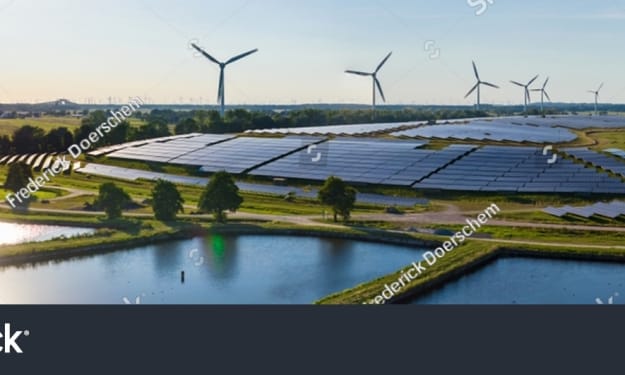
Renewables have been one of the main goals of the sustainability movement. Solar energy is cheaper now than oil, gas, nuclear, and coal. This is an impressive recent development. Coal used to be the cheapest source of energy, but wind and solar plants were more expensive than coal thirteen years ago. Banks considered them a high-risk investment back then.Solar energy has an extensive history of being subsidized by government, which has resulted in solar prices becoming incredibly low. However, there are many problems with solar that may need to be addressed before it can become the go-to form of energy.Shell and other fossil fuel companies require an 8 to 12 percent return on investment for renewable energy projects to be profitable. However, this is not a realistic expectation, as solar and wind-based energy generation projects typically yield returns of only 4 to 8 percent . Fossil fuel companies are unlikely to fulfill their promises to transition to renewables because they know that these conditions are arbitrary and unattainable.But that’s not what happened. After I finished saying that sentence, cities all over Britain started filling up with black smoke. My mistake was that I didn’t realize that steam was better for exploiting humans than water. Although water was a cheaper source of energy, it was less profitable because flowing water sources are pretty often out in the countryside. If you want to use them, you often need to bring people to the water, and if those people you moved closer to the water strike, it’s hard to find scabs to replace them out in the boonies. Fossil fuels, however, can be brought into the cities where a massive population of recently impoverished people are already there and they’re desperate for work now that the enclosures have cut them off. Community-managed farms abundant city workers are more exploitable than scarce countryside workers. Water has its own rhythm; sometimes it doesn’t flow, and therefore people don’t work in the city. Though as long as you keep shoveling coal, you can work through the night every day of the week for as long as you can get people to stay in the factory. The only limit on exploitation is the amount of people and the amount of coal, and there was plenty of both. Lastly, water is hard to collect and privatize; a coal mine or an oil well is fundamentally just a hole in the ground surrounded by guns. It’s easy to claim as your own and to enforce that claim with violence in a way that is much harder with the naturally occurring water source that can run for miles. And if you’re thinking about building a reservoir… well, that gets a little too.Community projects for privatization meant that even though water was cheaper, it was less profitable as a source of energy. Fossil fuels, coal specifically, were fantastic for the burgeoning capitalist class not because they were cheaper but because they were an excellent source of surplus value. Okay, detour over. The reason I took that massive detour is not only that it reiterates this video’s main point which is that under capitalism profit matters not price, but it’s also giving us a bit of insight into what’s happening with renewables right now. In this video, you’ve heard me say over and over again that renewables aren’t profitable, and that’s not exactly true. Providing renewable energy isn’t profitable since governments have slowly stopped guaranteeing high prices to renewable energy providers. Something you won’t be surprised to find out is that the fossil fuel industry lobbies for the efficiency race which is good for all of us has been bad for those trying to extract a profit. They used to be able to generate electricity for cheap and sell it for expensive, and now they can’t do that anymore which has driven them out of the energy providing game. Basically, the strategy of creating a competitive capitalist market that countries like Germany undertook worked too well to the point that the margins don’t justify the investment anymore. Capitalism always requires monopoly and strategic inefficiency to extract profit to the detriment of the rest of us. Competition is often the enemy, and right now that makes solar energy provision a bad venture
By Neville Apongshine2 years ago in Education
THE TOP 5 MUST-READ BOOKS FOR BOOKS STORE. Content Warning.
We all know that the bookstore is one of the best places to spend your time and money. If you're a book lover, then you probably spend hours browsing through shelves, debating whether or not to buy something new or just browse some more. But there's also another benefit to being a bookstore shopper: You can find some pretty great reads! So today we're going to share our favorite reads from our library (plus one bonus book) so that you can get ready for your next trip to your local bookstore (or library).
By Nexus Narrator2 years ago in Education
The Rich Culinary and Cultural Tapestry of Locust Beans. Content Warning.
Locust bean, commonly referred to as iru by Yorubas, ‘ogiri’, ‘dawa dawa’ by Igbos, is a local seasoning or condiment used in soups and stews. A very popular soup ingredient, globally, it is referred to as African locust bean with the botanical name as Parkia biglobosa. It is not easy to look at, and the smell is unpleasant – at best. These aside, Locust Bean is the single, most significant ingredient guaranteed to take your soups, stews or mixed vegetables from just okay to great.
By Ogoh Emmanuel 2 years ago in Education
The Emotional Depths of Cancer Moon Sign
Hey there, fellow star-gazer! Ever wondered why some people seem to feel emotions more deeply than others? Or why certain folks are just so darn intuitive? Well, the answer might just be written in the stars – or more specifically, in their moon sign. Let's dive deep into the emotional world of the Cancer Moon Sign.
By Wojciech Zych2 years ago in Education
The Dual Nature of Leo: Strengths and Challenges
Every zodiac sign has its unique characteristics, and Leo is no exception. Represented by the lion, Leos are known for their majestic presence and dominant personalities. But what truly makes a Leo tick? Let's delve deeper into the world of this fiery sign.
By Wojciech Zych2 years ago in Education
Tourism in Pakistan: A Journey Through Rich Culture, Stunning Landscapes, and Historical Wonders
Introduction: Pakistan, frequently alluded to as the "Land of the Pure," is a nation known for its different scenes, rich social legacy, and verifiable importance. While it has confronted its portion of difficulties throughout the long term, Pakistan has been consistently arising as an alluring vacationer location. From the magnificent pinnacles of the Himalayas and Karakoram reaches to the clamoring urban communities saturated with history, Pakistan offers a special and extraordinary experience for explorers. In this article, we will investigate the assorted aspects of the travel industry in Pakistan, featuring its regular magnificence, social fortunes, and verifiable importance.
By Mukhtar Hussain2 years ago in Education