list
The best in education made simple and easy; lists for all things school-related, from websites that sell cheap textbooks to the 'most expensive colleges' lists that will put you in the red.
10 Best Free AI Tools for Beginners
I remember the first time I tried to edit a video for a client presentation. It was 2019, and I spent three hours watching YouTube tutorials just to figure out how to trim clips in Adobe Premiere. The learning curve felt vertical. The software cost more than my monthly grocery budget. I ended up using Windows Movie Maker. Fast forward to today, and a complete beginner can generate professional voiceovers, edit videos, write code, and design graphics without spending a dollar or watching a single tutorial. Something fundamental has shifted in who gets to create things. This isn't about technology replacing humans. It's about technology finally catching up to human intent. The gap between "I want to make something" and "I made something" has never been smaller. Understanding Free AI Tools in Today's Creative Landscape Free AI tools are software applications powered by artificial intelligence that anyone can access without payment, technical knowledge, or special equipment. They handle tasks that used to require expensive software, formal training, or hiring specialists. What makes them different from traditional free tools isn't just that they're powered by machine learning. It's that they understand context. You don't need to know the right buttons to click or the proper terminology. You describe what you want in plain language, and the tool interprets your intent. A decade ago, free tools meant limited features and watermarks. They were deliberately crippled versions of paid software, designed to frustrate you into upgrading. Today's free AI tools often provide genuinely useful functionality because the companies behind them benefit from user feedback, model training, and building ecosystems around their platforms. The business model has changed. These tools aren't charity. They're often free at the entry level because AI companies need real-world usage data, diverse applications, and early adopters who'll evangelize the platform. You get capability. They get insights. It's a trade that actually works for beginners. Why This Shift Matters More Than Ever The cost of experimentation used to be prohibitive. Want to try graphic design? That's Adobe Creative Cloud at sixty dollars monthly. Curious about video editing? Another subscription. Interested in learning to code? Years of study or an expensive bootcamp. This created a selection bias in who became creators. You had to commit significant resources before knowing if you'd even enjoy the work. Talented people were filtered out by economics, not ability. Free AI tools remove that barrier. A teenager in a small town can now experiment with the same creative capabilities as a professional studio. A career-changer can test whether they enjoy data analysis or content creation without financial risk. A small business owner can create their own marketing materials rather than choosing between amateur-looking content and unaffordable agencies. The democratization is real, but it's also creating new pressures. When everyone has access to professional-grade tools, the baseline for acceptable quality rises. What impressed people five years ago now looks basic. The competition isn't just more accessible. It's more intense. This matters because we're seeing an explosion of micro-creators, solo entrepreneurs, and portfolio workers who need to wear multiple hats. You can't afford to hire a designer, video editor, copywriter, and developer when you're just starting. You need to be capable across domains, at least enough to prototype and test ideas quickly. Key Shifts Reshaping How Beginners Access Creative Power The Move from Skill-Based to Intent-Based Tools Traditional software required you to learn its logic. Photoshop doesn't care what you're trying to accomplish. It offers you layers, masks, and blending modes. You need to translate your vision into the software's language. AI tools flip this relationship. You state your intent, and the tool figures out the technical execution. Instead of learning how to manipulate anchor points in vector software, you describe the logo you imagine. Instead of studying color theory and composition, you iterate through variations until something resonates. This doesn't mean skill becomes irrelevant. It means the entry point is lower. You can create something decent on day one, then gradually learn the principles that make your work excellent rather than just acceptable. The Collapse of Specialization Requirements Five years ago, you were either a writer or a designer or a developer. The tools demanded such deep knowledge that cross-functional work was rare. Now, a writer can generate accompanying images. A designer can write the copy. A developer can create marketing videos. This isn't making specialists obsolete. It's making beginners multidimensional. You can explore multiple domains before choosing where to deepen your expertise. You can also remain a generalist who's competent across several areas rather than expert in one. The cultural shift here is significant. We're moving away from the industrial model of deep specialization toward something more fluid. Your career might involve cycling through different creative modes depending on the project, the season, or your interests. The Shift from Ownership to Access Previous generations of creators invested in tools they owned. You bought software licenses, built libraries of assets, accumulated plugins and extensions. That investment created switching costs. Changing platforms meant losing your accumulated resources. Free AI tools are mostly cloud-based and subscription-oriented, even at the free tier. You're accessing capability, not owning software. This makes experimentation cheaper but also means you're building on rented land. The tool's policies can change. Features can be removed. The company can fold. This creates a new kind of literacy: understanding which tools to depend on and which to use opportunistically. Smart beginners now think about portability and platform risk in ways that weren't necessary before. How Experienced Creators Are Adapting to This New Ecosystem The professionals I know aren't threatened by free AI tools. They're integrating them into workflows to handle routine tasks faster, freeing up time for the work that actually requires human judgment. A graphic designer friend uses AI to generate initial mood boards and concept variations, then refines the strongest ideas manually. The AI handles the divergent thinking phase. She handles convergent refinement. Her output has tripled without sacrificing quality. A content strategist I work with uses AI writing tools to draft outlines and first drafts, then rewrites everything in his own voice. The AI eliminates blank page paralysis and surfaces angles he might not have considered. His editing skills matter more than ever because he's editing more volume. What I notice is that experienced creators treat AI tools as collaborators rather than replacements. They maintain creative control and final judgment. They use AI to amplify their output, not substitute for their expertise. The beginners who succeed fastest are those who adopt this mindset early. They don't expect AI to do everything. They expect it to handle the parts they're not good at yet while they develop the skills that matter: taste, judgment, strategic thinking, understanding audiences. Common Mistakes Beginners Make With Free AI Tools The biggest mistake is believing AI output is finished work. It's almost never finished. It's a strong first draft or a useful starting point. Treating it as final usually produces generic, forgettable results. I see beginners use AI-generated images without any editing, AI-written articles without adding personal experience, AI-created designs without adjusting for brand consistency. The output looks competent but soulless. There's no personality, no specificity, no perspective that could only come from you. Another mistake is tool-hopping without developing proficiency. A new AI tool launches every week, and beginners waste time constantly switching rather than learning one tool deeply enough to produce excellent work. Surface-level familiarity with twenty tools is less valuable than genuine competence with three. There's also a tendency to over-rely on AI for decisions that require human judgment. Which direction should your business go? What message will resonate with your specific audience? What's the right tone for this sensitive topic? AI can offer options, but it can't make these calls. You need to develop your own decision-making capacity. Finally, beginners often ignore the learning curve entirely. Because AI tools are easy to start using, people assume they're easy to master. They're not. Getting decent results is easy. Getting excellent results requires understanding the tool's strengths and limitations, learning effective prompting techniques, and developing workflows that combine AI with manual refinement.
By Muhammad Usman2 months ago in Education
100+ US History Trivia Questions (and Answers). AI-Generated.
From the first settlers arriving on American shores to the modern era, the United States has experienced a remarkable journey filled with revolution, expansion, innovation, and transformation. American history is rich with pivotal moments, legendary figures, and decisions that shaped not only a nation but influenced the entire world. Whether you're a history buff or looking to brush up on your knowledge, this comprehensive trivia collection will challenge what you know about the land of the free and the home of the brave.
By Md. Nurul Afsar2 months ago in Education
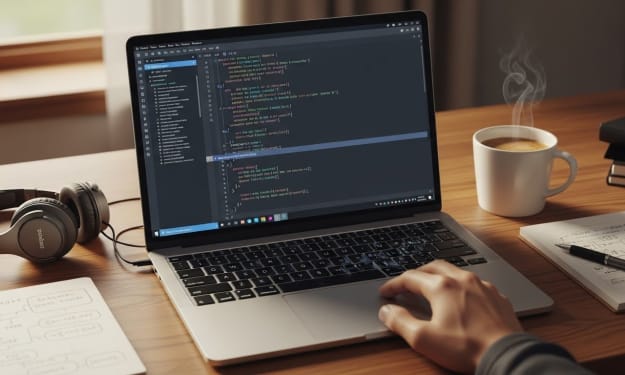
Best Laptop for Coding
Coding can be exciting until your laptop freezes, runs slow, or can’t keep up with your workflow. If you’ve ever waited for a build to compile or watched your IDE lag at the worst moment, you already know the right laptop can change everything.
By Tab Delite2 months ago in Education
Best Laptop for Business
Running a business in today’s world means one thing you need a laptop that can keep up. No lag, no slowdowns, no compromises. Whether you’re handling meetings, managing data, or traveling nonstop, the right laptop can make your entire workday smoother, faster, and more productive.
By Print Frey2 months ago in Education
Best Laptop for Video Editing
Imagine finishing your video edit in half the time no lag, no crashes, just creative flow. If you’ve ever stared at a spinning wheel in the middle of your timeline and wondered if there’s a better way, you’re in the right place.
By Home Care Ranks2 months ago in Education
Best Laptop for Collage
Starting college? It’s an exciting new chapter new classes, new friends, and new challenges. And there’s one tool you’ll rely on every single day: your laptop. It’s what keeps you connected, helps you study smarter, and lets you relax after long classes.
By Projectorsea2 months ago in Education
The Smartest 6 Real Estate Investors To Learn From in 2026
Real estate in 2025 (soon to be 2026) is no longer about chasing quick wins or copying trends. The smartest investors are builders. They focus on systems, people, and long-term value rather than shortcuts. Markets continue to shift, interest rates fluctuate, and sellers are more cautious. Investors who win are those who simplify the process, communicate clearly, and deliver certainty when others cannot.
By Jamie Gold2 months ago in Education