college
Maximize your university experience with these tips for all things collegiate–how to achieve a perfect GPA, select the right major, finance your college education and more.
The Titans of Technology: Understanding the FAANG Companies
FAANG is an acronym that refers to the five most popular and valuable technology companies in the United States: Facebook, Amazon, Apple, Netflix, and Google. These companies are known for their innovative products and services and have significant influence on the technology industry and the global economy as a whole. They are also known for their high stock prices, and they are considered to be some of the most valuable companies in the world. They are considered to be the leaders in technology and are known for their disruptive approach to business.
By Hari vignesh 3 years ago in Education
Scientists are turning dead spiders into robots, are they dead? Will things start moving in the labs now?
The idea of making a robotic device from a dead spider did not come for no reason, but there were many reasons for it. As it is biodegradable, that means it gets mixed in the soil without harming the environment. Second, as a gripper, spiders are able to do a great job. A dead spider can also lift about 130 times its own weight. It can act as a robotic arm. But experts didn't think of so many benefits all of a sudden, rather it started by chance.
By Ravi Kumar 3 years ago in Education
Overcoming The Learning Gap: Strategies For Closing The Achievement Gap In Education"
The achievement gap in education refers to the persistent disparities in academic performance between different groups of students, particularly those from low-income and minority backgrounds. Closing the achievement gap is a complex and challenging task, but it is essential for ensuring that all students have an equal opportunity to succeed. In this article, we will explore some strategies for closing the achievement gap in education.
By Lawrence Luke3 years ago in Education
The Importance Of STEM Education: Why Every Student Should Learn Science, Technology, Engineering, And Mathematics?
STEM education, which stands for Science, Technology, Engineering, and Mathematics, is becoming increasingly important in today's world. The fields of science, technology, engineering, and mathematics are constantly evolving and are playing a crucial role in shaping our future. Therefore, it is essential that every student has access to a high-quality STEM education. In this article, we will explore the reasons why every student should learn STEM subjects and the benefits that stem education provides.
By Lawrence Luke3 years ago in Education
Understanding the National Academy of Agricultural Sciences (NAAS) Rating System
The National Academy of Agricultural Sciences (NAAS) rating is a system used to evaluate the impact and quality of agricultural research in India. The rating system, which was first introduced in 2000, is based on a scale of 1 to 5, with 5 being the highest possible rating. The purpose of the NAAS rating is to recognize and promote excellence in agricultural research, and to encourage researchers to strive for higher levels of achievement.
By Lakshmi Kanth3 years ago in Education
Career in Fashion Design
Fashion design is a highly creative and dynamic field that requires a combination of artistic talent and technical skills. A career in fashion design can be both challenging and rewarding, as it offers the opportunity to create unique, beautiful, and functional clothing and accessories that reflect the changing tastes and styles of society.
By Shaina Trivedi3 years ago in Education
Working Tips to Disguise Your Voice with a Voice Changer for Live Streaming!
Disguising your voice when streaming can be a fun and easy way to keep your identity hidden from the audience. By altering the sound of your voice you can maintain anonymity and prevent others from identifying you. While there are many ways to change your voice, using a voice changer for streaming is one of the most popular methods. Today, we're going to talk about how voice modulators work. We will also discover how Podcastle's brand-new digital voices can help you stay disguised while streaming to your audience.
By Sirak Ghroyan3 years ago in Education
Full Details About Solar Sysem part - 1
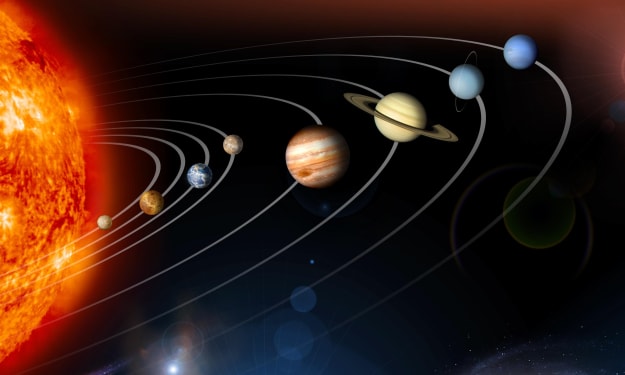
solar system, assemblage consisting of the Sun—an average star in the Milky Way Galaxy—and those bodies orbiting around it: 8 (formerly 9) planets with about 210 known planetary satellites (moons); countless asteroids, some with their own satellites; comets and other icy bodies; and vast reaches of highly tenuous gas and dust known as the interplanetary medium. The Sun, Moon, and brightest planets were visible to the naked eyes of ancient astronomers, and their observations and calculations of the movements of these bodies gave rise to the science of astronomy. Today the amount of information on the motions, properties, and compositions of the planets and smaller bodies has grown to immense proportions, and the range of observational instruments has extended far beyond the solar system to other galaxies and the edge of the known universe. Yet the solar system and its immediate outer boundary still represent the limit of our physical reach, and they remain the core of our theoretical understanding of the cosmos as well. Earth-launched space probes and landers have gathered data on planets, moons, asteroids, and other bodies, and this data has been added to the measurements collected with telescopes and other instruments from below and above Earth’s atmosphere and to the information extracted from meteorites and from Moon rocks returned by astronauts. All this information is scrutinized in attempts to understand in detail the origin and evolution of the solar system—a goal toward which astronomers continue to make great strides. Composition of the solar system orbits Located at the centre of the solar system and influencing the motion of all the other bodies through its gravitational force is the Sun, which in itself contains more than 99 percent of the mass of the system. The planets, in order of their distance outward from the Sun, are Mercury, Venus, Earth, Mars, Jupiter, Saturn, Uranus, and Neptune. Four planets—Jupiter through Neptune—have ring systems, and all but Mercury and Venus have one or more moons. Pluto had been officially listed among the planets since it was discovered in 1930 orbiting beyond Neptune, but in 1992 an icy object was discovered still farther from the Sun than Pluto. Many other such discoveries followed, including an object named Eris that appears to be at least as large as Pluto. It became apparent that Pluto was simply one of the larger members of this new group of objects, collectively known as the Kuiper belt. Accordingly, in August 2006 the International Astronomical Union (IAU), the organization charged by the scientific community with classifying astronomical objects, voted to revoke Pluto’s planetary status and place it under a new classification called dwarf planet. For a discussion of that action and of the definition of planet approved by the IAU, see planet.
By Giri Sivakaran3 years ago in Education
Advancing Your Impact: The Advantages of a Master's Degree in Elementary Education
This field covers the age range of kindergarten through sixth grade, which is a crucial time in a child's development. It is the foundation of their academic journey, and it lays the foundation for all their future learning. With an education in elementary education, you'll have the opportunity to make a difference in the lives of young students and see them grow and succeed.
By Bryan Smith3 years ago in Education