bullying
The Architect of Ability
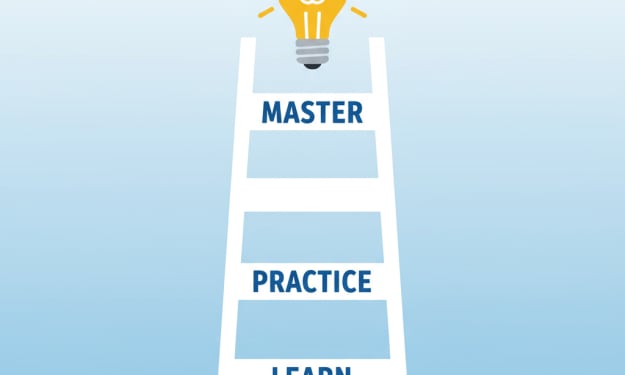
In a world that never stops evolving, the ability to learn and improve new skills is no longer a luxury; it's a necessity. Whether you want to advance your career, pursue a passion, or simply keep your mind sharp, the process of skill improvement is a journey that follows a reliable map. It’s not about innate talent, but about strategy, consistency, and a mindset geared for growth.
By KAMRAN AHMAD5 months ago in Education
The Lawyer and the Teacher
When Wisdom Meets Trickery There’s an old tale — the kind that slips through time like a whispered joke between generations. A lawyer once sold his well to a teacher. A simple transaction, signed and sealed. But two days later, the lawyer came back with a grin that could slice through glass.
By Omasanjuwa Ogharandukun5 months ago in Education
Wired for Love: The Biology Behind Deep Human Connection
Wired for Love: The Biology Behind Deep Human Connection Exploring the Science of How Our Bodies and Brains Build Lasting, Positive Bonds When Maya met Elias, there was no thunderclap or cinematic swell of music — just a quiet comfort, as if her nervous system recognized something before her mind could catch up. Their first conversation wasn’t remarkable on paper — a shared laugh over mismatched coffee orders, a few words about the weather, and an easy silence that didn’t demand filling. But inside their bodies, something ancient and profound was already beginning to stir. Unknown to them, oxytocin — often called the “bonding hormone” — was being subtly released with each moment of eye contact and touch. This neurochemical, produced in the hypothalamus, plays a crucial role in human connection. It deepens trust, fosters empathy, and reinforces social bonds. It’s the same hormone that floods a parent’s brain when holding their newborn, and it’s present when we feel safe in someone’s arms. But love isn’t just about a rush of oxytocin. In the weeks that followed, Maya noticed something strange — she slept better after seeing Elias, her heart rate slowed when he called, and she even craved less sugar. Biology had something to say about that too. Falling in love activates the parasympathetic nervous system — the “rest and digest” mode — which explains the calm many feel in the presence of someone they trust. At the same time, dopamine pathways — the same ones triggered by chocolate or music — light up in the brain’s reward center, making time together feel euphoric and addictive. Yet what made their connection special wasn’t just chemistry. It was biology in harmony with intention. They learned each other’s nervous systems, often without realizing it. Maya’s anxiety melted when Elias spoke gently and held her hand — touch that lowered her cortisol levels, the body’s primary stress hormone. Elias, whose childhood had left him wary of closeness, found his heart rate syncing with hers during quiet moments — a phenomenon researchers call physiological synchrony, where couples in healthy relationships actually mirror each other’s breathing and heartbeat patterns. Their love, it turned out, wasn’t just in their hearts. It was in their brains, their skin, their bloodstream. It was cellular. But deep connection isn’t sustained by initial chemistry alone. Real love — lasting love — requires consistency, presence, and a willingness to co-regulate. Co-regulation is a concept from neuroscience and psychology that refers to the way two people can help stabilize each other’s emotional states. When Elias had bad days at work, Maya didn’t try to fix it — she just sat with him, her presence grounding. When Maya spiraled into self-doubt, Elias reminded her of her strength, not with words alone, but with a steady presence that told her: “I’m here. You’re safe.” These weren’t grand gestures. They were small, biological acts of love. Over time, their brains adapted. Neural pathways formed and strengthened — literally rewiring how they responded to stress, to joy, to each other. Functional MRI studies have shown that couples in long-term, loving relationships have increased activity in the brain’s empathy and attachment centers. That kind of connection isn’t just emotional; it’s anatomical. They learned to pause during arguments, to breathe deeply — activating the vagus nerve, which regulates heart rate and emotional control. They built rituals that nurtured their bond: morning coffee hand-in-hand, evening walks, small acts of touch and praise that kept their nervous systems attuned and responsive. Love, science tells us, is not a static emotion. It’s a biological process — dynamic, adaptable, and deeply intertwined with our health and well-being. When Maya got sick one winter, Elias sat by her bed, her hand in his. Just that touch was enough to ease her pain — studies confirm that loving touch from a partner can reduce physical discomfort by signaling safety to the brain. They weren’t perfect. No couple is. But the foundation they built wasn’t just emotional — it was cellular, neurological, hormonal. It was biology in service of connection. Years later, they still held hands the same way. Not out of habit, but because their bodies remembered what their minds might forget in hard moments — that love, real love, isn’t a mystery. It’s measurable. It’s made. It’s maintained. And it’s wired deep within us.
By Muhammad Saad 5 months ago in Education
The Fundamentals of Corrosion
Corrosion is the spontaneous tendency of metals to revert to lower-energy, oxidized states. This tendency provides the thermodynamic driving force for corrosion; whether corrosion actually proceeds—and how fast—depends on kinetics and environment. Engineers need a firm grip on both to select materials, design protection, and predict service life.
By Sayed Zewayed6 months ago in Education
The Marvel Within: Unlocking the Wonders of Human Biology
The Marvel Within: Unlocking the Wonders of Human Biology From the moment we take our first breath, an intricate symphony of biological processes begins, playing in perfect harmony to sustain life. The human body is not merely a vessel we inhabit—it is a masterpiece of engineering, intelligence, and adaptability. Every heartbeat, every thought, and every step we take is powered by a network of systems that work together with astounding precision. At the center of it all is the brain, often referred to as the command center of the body. This three-pound organ contains about 86 billion neurons, each forming thousands of connections. These connections shape our thoughts, store our memories, and control everything from our movements to our emotions. The brain constantly rewires itself in response to experience, a phenomenon known as neuroplasticity—a testament to our incredible ability to learn and adapt. Flowing through us is the cardiovascular system, a vast network of arteries and veins powered by the heart. This powerful muscle beats more than 100,000 times a day, pumping blood to deliver oxygen and nutrients to every cell. The blood also carries away waste products, keeping our internal environment balanced. It’s not just circulation—it’s life in motion, a quiet engine that never stops. Supporting our survival in the face of invisible threats is the immune system. A vast army of cells and proteins works tirelessly to identify and neutralize harmful invaders like viruses and bacteria. When we get a cut or catch a cold, this system springs into action. It remembers past invaders, making us stronger and more resistant over time. This biological memory is what makes vaccines effective and healing possible. The lungs, expanding and contracting without conscious thought, bring in oxygen and expel carbon dioxide with every breath. We inhale over 20,000 times a day, and each breath fuels cellular energy. Tiny structures in the lungs, called alveoli, are where this gas exchange takes place—millions of microscopic miracles happening silently, moment by moment
By Muhammad Saad 6 months ago in Education
Money Mastery Zone – Secrets to Financial Freedom Online
Money Mastery Zone – Secrets to Financial Freedom Online In today’s fast-changing world, the internet has become more than a place to scroll, shop, or chat. It has become a gateway to financial freedom. Ordinary people—students, parents, office workers, and even retirees—are learning how to turn laptops and smartphones into tools for building real income. Welcome to the Money Mastery Zone, where you’ll discover the secrets to creating financial independence online without needing a million-dollar budget or a fancy degree.
By Sharifullah Muhammadi6 months ago in Education
The Rise of Artificial Intelligence: Shaping Our Future
The Rise of Artificial Intelligence: Shaping Our Future In today’s fast-changing digital world, one of the most talked-about trends is Artificial Intelligence (AI). From social media platforms to healthcare systems, AI is transforming how we live, work, and communicate. What was once a futuristic idea is now a daily reality, influencing industries and shaping the future of humanity.
By Article Master 6 months ago in Education
The Bridge Between Dreams and Reality
M Mehran Every human being is born with a spark. Some sparks are easy to see—like the child who paints beautiful pictures before even learning to write. Others are hidden, waiting for the right moment to be discovered. What decides whether these sparks fade or ignite into flames? More often than not, the answer is education.
By Muhammad Mehran6 months ago in Education
The Hidden Light of Education
The Hidden Light of Education In a small village surrounded by mountains, there lived a boy named Adeel. His father was a farmer who worked tirelessly in the fields, and his mother stitched clothes for neighbors to add a little to the family income. Life in the village was simple but hard, and most children joined their parents in work as soon as they could walk properly. For many, the idea of school was a luxury.
By Article Master 6 months ago in Education
Is the NEET 2026 Syllabus Updated?
A lot of Indian students want to know about NEET exam and if there has been any update in the syllabus. The recent examination of NEET 2025 has been a tough one for many Indian students who wanted to get admission in the medical colleges. The cut-off score was 686 in 2025 which was much lower than the cut-off from the NEET 2024. There have been changes in the NEET-UG this year, and we will look at what these changes are. Moreover, we will look at the NEET syllabus to see if there have been any changes for the students.
By Tanya Sharma6 months ago in Education
The Clock That Ate Time
The Clock That Ate Time The little town of Everford was an ordinary place. People went to work, children played in the streets, and the church bells rang every Sunday morning. Yet, at the very center of the town square stood an object no one could quite explain: a clock without hands.
By Article Master 6 months ago in Education