
Study Smarter for the FE and PE Civil Exams with Guides and Practice Tests
The Bigger Picture of Civil Engineering Licensure

Civil engineering is one of the oldest and most impactful professions in the world. From bridges and highways to water systems and skyscrapers, civil engineers shape the infrastructure that societies depend on every single day. But to be recognized as a trusted professional in this field, aspiring engineers must achieve critical milestones: the FE Civil Exam, the PE Civil Exam, and sometimes specialized certifications such as the CFM Certification.
Preparing for these exams may feel overwhelming at first, but with structured tools like the FE Exam Prep Study Guide, PE Exam Prep Study Guide, and PE Civil Practice Exam, you can confidently approach them step by step. This blog will give you a clear understanding of each exam, why they are important, and how to prepare effectively.
1. The FE Civil Exam – Building the Foundation
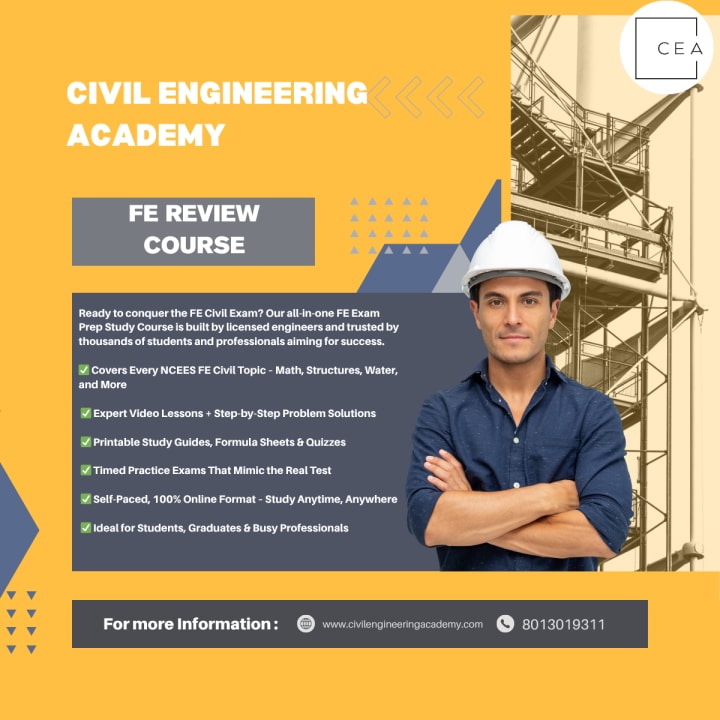
The FE Civil Exam (Fundamentals of Engineering) is usually the first professional exam for civil engineers. It is aimed at students in their final year of engineering school or recent graduates. Passing it grants you the title of Engineer-in-Training (EIT) or Engineering Intern (EI), depending on your state.
What Does It Cover?
The FE exam is computer-based and includes 110 multiple-choice questions across topics such as:
Mathematics and probability
Statics and dynamics
Fluid mechanics
Structural engineering basics
Geotechnical principles
Environmental and water resources
Transportation systems
Why Is It Important?
Passing the FE exam proves you have mastered the fundamentals of civil engineering. It’s the first step toward becoming a licensed professional engineer. Many employers especially government agencies look for candidates who have passed this exam before hiring.
Example:
Anjali, a fresh civil engineering graduate, wanted to work with the state Department of Transportation. By passing the FE Civil Exam, she not only made her resume stronger but also demonstrated her readiness to take on engineering responsibilities.
2. The PE Civil Exam – A Career Milestone
After passing the FE and gaining around four years of work experience under a licensed engineer, you become eligible for the PE Civil Exam (Principles and Practice of Engineering).
Why the PE Exam Matters
Professional Legitimacy: Once you pass, you can officially call yourself a Professional Engineer (PE).
Increased Responsibility: PEs can sign off on projects, take legal responsibility, and ensure compliance with safety standards.
Career Growth: A PE license opens doors to senior positions, consulting roles, and higher salaries.
Example:
Ravi had been working in a private firm for five years but couldn’t lead projects independently without a PE license. After passing the PE Civil Exam in the Structural depth area, Ravi earned the authority to sign engineering documents. This not only increased his salary but also made him a trusted leader in his firm.
3. The Role of Practice Exams and Study Guides
Preparing for professional exams requires more than just reviewing textbooks. That’s where a PE Civil Practice Exam, PE Exam Prep Study Guide, and FE Exam Prep Study Guide come into play.
Benefits of a Practice Exam
Simulates the actual exam format and time pressure.
Highlights your weak subjects.
Builds confidence before test day.
Benefits of Study Guides
Provide a structured plan, reducing stress and confusion.
Cover the entire syllabus with explanations and practice questions.
Offer strategies for time management during the exam.
Example:
Priya graduated two years ago but struggled with subjects like probability and hydrology. By using an FE Exam Prep Study Guide, she reviewed those topics systematically, practiced problems, and went into the exam with confidence.
4. FE Exam Prep Strengthening Your Core
The FE Civil Exam requires a mix of problem-solving skills and memory recall. Using a FE Exam Prep Study Guide helps you:
Revisit concepts from college that you might have forgotten.
Get familiar with the NCEES FE Reference Handbook, which you’ll use during the test.
Learn shortcuts and problem-solving techniques to save time.
Tip for Success
Break your preparation into small study blocks. For example, spend a week on structural engineering problems, then move to environmental topics. Regularly test yourself with short quizzes to track progress.
5. PE Exam Prep – The Final Push
The PE Civil Exam is challenging because it requires depth of knowledge and practical application. A PE Exam Prep Study Guide can help you master both the breadth and depth sections.
For the breadth section, practice solving problems across all disciplines quickly.
For the depth section, go deeper into your chosen specialty.
Example:
Naveen, who chose the Geotechnical depth exam, focused his prep on soil mechanics, foundation design, and slope stability. Using a PE Civil Practice Exam, he learned how to pace himself and spot tricky questions skills that proved invaluable on exam day.
6. CFM Certification – A Specialized Credential
While the FE and PE exams are essential for licensure, specialized certifications like the CFM Certification (Certified Floodplain Manager) add an extra layer of credibility.
Why Pursue CFM?
Floodplain management is becoming more critical with increasing climate risks.
It demonstrates expertise in reducing flood risks, community safety, and sustainable planning.
Opens opportunities in government agencies, consulting firms, and disaster management projects.
Example:
Meera, a licensed PE, earned her CFM Certification to work on water resources projects. This specialized credential set her apart from colleagues and positioned her as an expert in flood management.
7. Why These Exams Are Worth It
Beyond the titles and certifications, the true value of these exams lies in the benefits they provide.
Benefits of Passing FE and PE Exams
Career Security – Licensed engineers remain in demand across industries.
Higher Salaries – Studies show that PEs earn significantly more than non-licensed engineers.
Leadership Opportunities – A PE can manage projects independently, lead teams, and consult.
Public Trust – Clients and communities trust the judgment of licensed professionals.
Global Recognition – Many countries respect U.S. engineering licensure, expanding international career options.
8. Practical Tips for Success
Start Early – Give yourself at least 4–6 months for prep.
Use Study Guides – They save time by organizing material effectively.
Take Practice Exams – Simulate real test conditions.
Join a Study Group – Learning with peers can clear doubts faster.
Stay Consistent – Regular, short study sessions are better than last-minute cramming.
Conclusion
Civil engineering is about designing, building, and maintaining the infrastructure that makes modern life possible. To excel in this noble profession, passing the FE Civil Exam and PE Civil Exam is essential. Along with using tools like the FE Exam Prep Study Guide, PE Exam Prep Study Guide, and PE Civil Practice Exam, engineers can also strengthen their careers with certifications such as the CFM Certification.
These exams aren’t just hurdles they are stepping stones to professional growth, credibility, and the ability to make an impact on communities. Whether you’re a student preparing for the FE or a professional ready to tackle the PE, remember: success comes from structured preparation, consistent practice, and belief in your abilities.

Final Takeaway: Start preparing today. Each hour you dedicate brings you closer to your PE license, higher career opportunities, and the chance to leave a lasting mark on the world through civil engineering.
About the Creator
Keep reading
More stories from Isaac Oakeson and writers in Education and other communities.
Revealing The Truth Behind Common PE and FE Exam Prep Myths
Preparing for the PE (Professional Engineer) and FE (Fundamentals of Engineering) exams can feel overwhelming. These are major milestones in an engineer’s career, and with so much information available, it’s easy to get confused by misleading advice.
By Isaac Oakeson7 months ago in Education
Could future humans build artificial wormholes?
What Is a Wormhole? A wormhole is a hypothetical structure in spacetime that acts like a tunnel connecting two distant points. Instead of traveling through ordinary space, a traveler would pass through a shortcut created by spacetime geometry itself.
By shahkar jalal7 days ago in Education
What is Affiliate Marketing: A Beginner's Step-by-Step Guide
Affiliate marketing is a performance-based online business model that generates over $12 billion annually in the U.S. alone and continues to grow as e-commerce expands. At its core, affiliate marketing allows individuals to earn commissions by promoting products or services created by other companies. Affiliates share unique tracking links through websites, blogs, social media, email lists, or videos, and earn a percentage of each sale or action completed through those links. Because affiliates don’t handle product creation, inventory, payment processing, or customer support, it’s one of the most accessible ways to monetize an online presence.
By Mohammad Sufyaan5 days ago in Education


Comments
There are no comments for this story
Be the first to respond and start the conversation.