
Steel on Tracks: The Everlasting Journey of Trains
From steam-powered giants to bullet-fast marvels, trains have revolutionized how humanity travels, connects, and thrives.

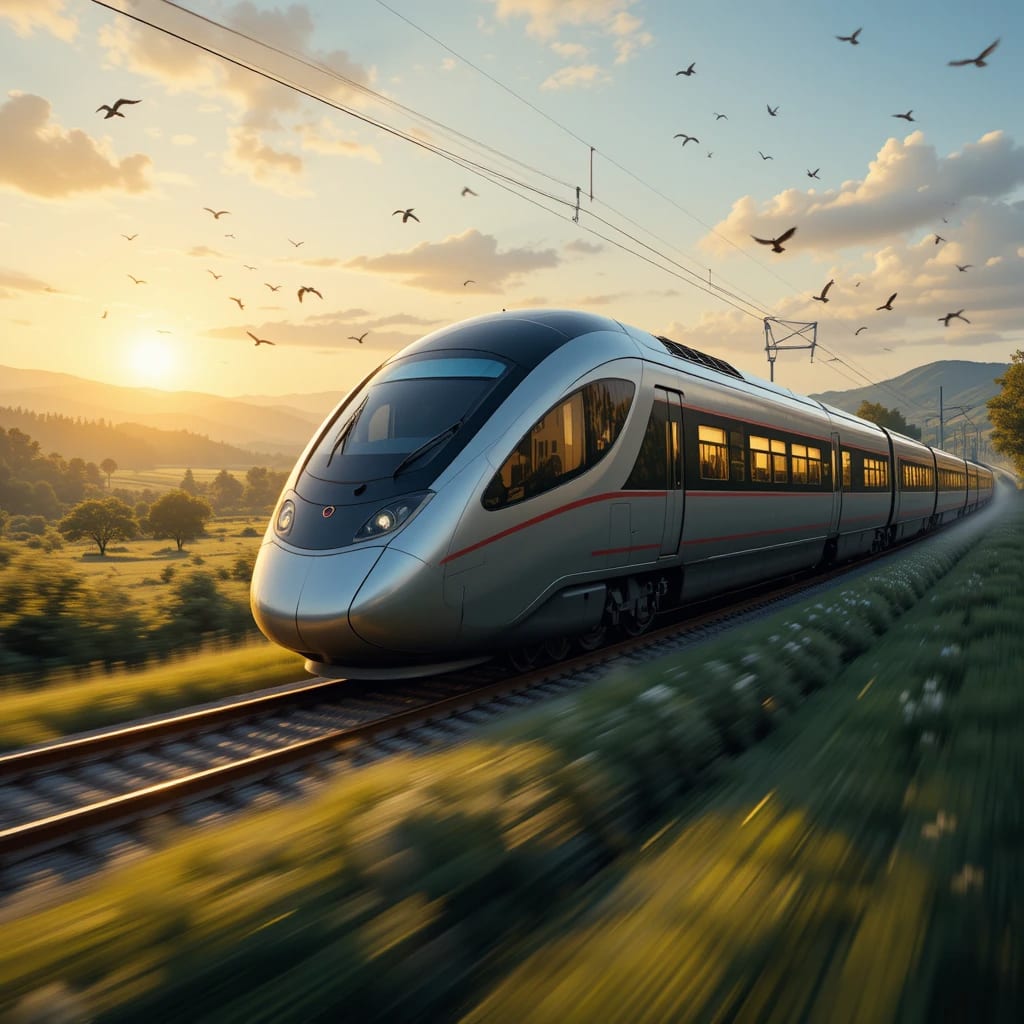
When the world was slower, quieter, and smaller, a deep whistle broke the silence — and everything changed. That whistle belonged to a train, and it signaled the beginning of a journey not just for passengers, but for humanity itself.
Trains, often called the steel giants of the land, are more than just a mode of transport. They are history in motion — a symbol of progress, industry, and the undying human desire to connect.
The Dawn of a Revolution
The story of trains begins in the early 19th century, during the Industrial Revolution. In 1804, Richard Trevithick built the first full-scale working railway steam locomotive. However, it was George Stephenson's "Rocket" in 1829 that truly launched the age of steam locomotion.
Early trains were powered by steam engines, belching smoke and sparks as they rolled across new tracks laid across Europe, the United States, and eventually the world. These iron machines opened new frontiers, carrying coal, goods, letters, and lives to places never reached before.
A Moving Machine of Wonders
The design of a train is deceptively simple — wheels on tracks — but the engineering behind it is brilliant.
Trains move with minimal friction, which allows them to carry tons of weight over long distances. A single train can replace hundreds of trucks, making it one of the most efficient and eco-friendly transport options even today.
There are various types of trains:
Steam Trains: The pioneers, driven by coal-fired boilers and pistons.
Diesel Trains: Introduced in the 20th century, using internal combustion engines.
Electric Trains: Cleaner, quieter, and faster — now dominate most modern rail networks.
Bullet Trains (High-Speed Rail): Japan’s Shinkansen and France’s TGV reach speeds over 300 km/h, shrinking continents with speed and comfort.
The Romance of the Rails
Beyond speed and mechanics, trains have always carried a romantic charm. Unlike planes or cars, a train ride offers time — to look outside, to think, to feel. The gentle rocking, the rhythmic click-clack, the scenery sliding by like a moving painting — it’s travel with soul.
Writers, poets, and filmmakers have long been fascinated by trains. From Agatha Christie’s “Murder on the Orient Express” to the Hogwarts Express in Harry Potter, trains often become characters themselves — mysterious, magical, and memorable.
Changing Landscapes and Lives
Trains did not just move people — they shaped nations.
In America, the transcontinental railroad united east and west.
In India, railways became the backbone of administration and economy during British rule and continue to serve millions daily.
In Europe, rail travel connects countries faster than air in many cases.
Trains brought villages into cities, and cities into economies. They became lifelines for workers, merchants, students, and dreamers.
Technology Meets Tradition
Today’s trains are marvels of modern design.
Maglev Trains: These use magnetic levitation to float above the tracks and glide silently at 600+ km/h.
Smart Trains: Equipped with AI, sensors, and predictive maintenance systems.
Green Trains: Hydrogen-powered and solar-assisted models are being tested to make future rail travel carbon-free.
Yet, while technology advances, the essence remains — a train is still a long, steel creature that comes alive with a horn and carries lives within its belly.
The Human Side of the Tracks
At every station, there are stories.
A child waves at a passing engine. A mother cries as her son departs. Lovers meet at platforms. Travelers sleep, read, and dream as landscapes roll by. For some, a train is just transport. For others, it’s freedom, escape, or even home.
Railway stations themselves are cultural icons — from the grand chandeliers of New York’s Grand Central to the buzzing life of Lahore Junction or the speed and silence of Tokyo’s Shinkansen terminals.
Challenges and the Road Ahead
Trains face challenges too: aging infrastructure, urban congestion, and rising costs. Yet governments across the world are investing in railways as part of climate goals and sustainable future plans.
Smart cities of the future will have high-speed metros, automated trains, and integrated ticketing. Railways are not just surviving — they’re evolving.
---
Conclusion
The story of the train is the story of human progress — of rails laid across deserts and mountains, of stations that never sleep, of people moving together toward a shared tomorrow.
Whether it’s the thunder of a steam engine, the hum of an electric motor, or the whisper of a maglev, trains remind us that life is a journey — and every journey deserves a track.
About the Creator
Noman Afridi
I’m Noman Afridi — welcome, all friends! I write horror & thought-provoking stories: mysteries of the unseen, real reflections, and emotional truths. With sincerity in every word. InshaAllah.
Keep reading
More stories from Noman Afridi and writers in Education and other communities.
Satellites: The Silent Watchers of the Sky
Far above the blue skies, beyond the reach of birds and airplanes, silent machines float endlessly in orbit. These are satellites — one of humanity’s most powerful tools, quietly transforming life on Earth without making a sound.
By Noman Afridi8 months ago in Education



Comments
There are no comments for this story
Be the first to respond and start the conversation.