
Satellites: The Silent Watchers of the Sky
Orbiting above us, satellites are shaping the world in ways we can’t see — but always feel.

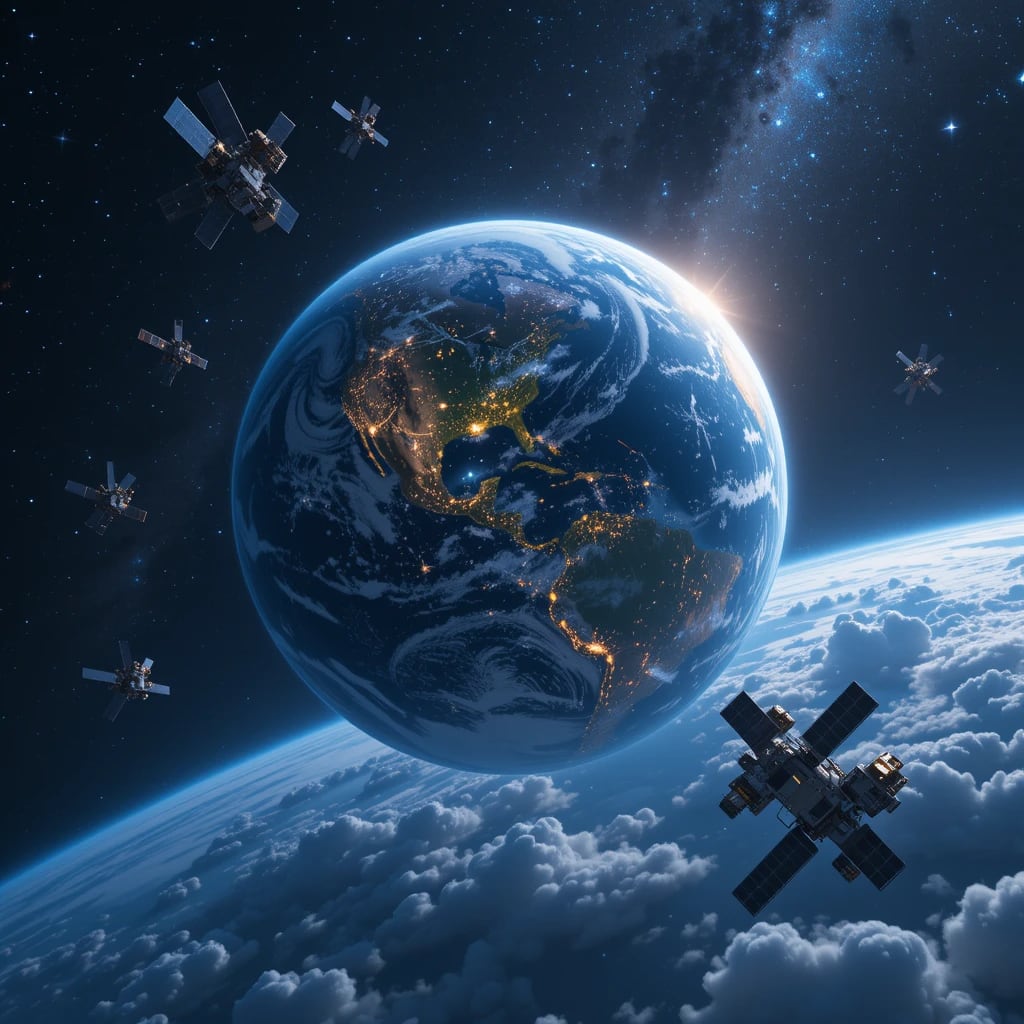
Far above the blue skies, beyond the reach of birds and airplanes, silent machines float endlessly in orbit. These are satellites — one of humanity’s most powerful tools, quietly transforming life on Earth without making a sound.
We rely on them more than we realize. When you check the weather, use GPS, watch international news, or make a video call — a satellite is working for you. These man-made marvels orbit the Earth 24/7, capturing data, relaying signals, and helping us understand, communicate, and survive in a fast-moving world.
But what exactly is a satellite? How do they work? And why are they so vital to our lives?
What Is a Satellite?
In simple terms, a satellite is any object that orbits another. The Moon is Earth’s natural satellite. But in modern language, "satellite" usually refers to artificial satellites — machines launched into space by humans to serve specific purposes.
The first artificial satellite was Sputnik 1, launched by the Soviet Union in 1957. It was a small, beeping metal sphere that marked the beginning of the space age. Today, there are more than 7,000 active satellites orbiting our planet, each with a unique mission — from communication and navigation to climate monitoring and military surveillance.
How Satellites Work
Satellites orbit Earth due to the perfect balance between gravity and speed. Once launched into space, a satellite moves fast enough to avoid falling back to Earth, but not fast enough to escape its gravity. This creates a continuous falling motion around the planet — what we call orbit.
There are different types of orbits: Low Earth Orbit (LEO) for closer, faster satellites like those used for imaging; Medium Earth Orbit (MEO) for GPS satellites; and Geostationary Orbit (GEO) for communication satellites that appear stationary from the ground.
Each satellite is equipped with solar panels for power, antennae for communication, and sensors or cameras to perform its tasks.
Uses of Satellites: Changing Earth from Space
1. Communication:
Satellites are the backbone of modern communication. Whether it's mobile networks, internet connectivity in remote areas, live television broadcasts, or long-distance phone calls — satellites transmit signals across the globe.
2. Navigation:
Every time you use Google Maps or a car’s GPS, you’re connecting to a network of satellites in MEO. These satellites send timing signals, which help calculate your exact location on Earth.
3. Weather and Climate Monitoring:
Satellites equipped with special sensors monitor clouds, storms, ocean temperatures, and more. They help predict weather patterns, warn about natural disasters like hurricanes and floods, and track long-term climate change.
4. Earth Observation:
High-resolution cameras on satellites take images of Earth’s surface. These are used in agriculture, forestry, mining, urban planning, and environmental protection. They help us monitor deforestation, pollution, water levels, and even wildlife migration.
5. Defense and Security:
Satellites play a crucial role in military operations. They are used for spying, surveillance, missile tracking, and secure communication. In modern warfare, space is the high ground.
The Silent Heroes: Unseen but Essential
Despite their importance, satellites are rarely noticed. They work quietly, without needing human presence, tirelessly orbiting day and night. Their benefits are vast, but their visibility is limited — and that’s part of their magic.
From the farmer using satellite data to predict rainfall, to the airline pilot guided by satellite navigation — these floating machines are silently making our lives easier and safer.
Challenges and Concerns
With thousands of satellites in orbit, space is becoming crowded. Old, unused satellites and broken parts — known as space debris — pose a threat to active satellites and future missions.
Moreover, increasing military satellites raise concerns about the weaponization of space. Global cooperation is needed to ensure that space remains peaceful and sustainable.
The Future: Smarter, Smaller, Swarming
The satellite industry is evolving fast. New trends include:
Miniaturized satellites (CubeSats) that are cheaper and quicker to launch.
Satellite constellations, like SpaceX’s Starlink, which aim to provide global internet coverage.
AI-powered satellites that can analyze data in real time without sending it back to Earth.
In the future, satellites will become even more embedded in our lives — helping us manage cities, protect nature, respond to disasters faster, and explore distant planets.
---
Conclusion
Satellites are not just machines in the sky. They are extensions of human curiosity, intelligence, and ambition. Orbiting quietly above us, they observe, connect, and protect. They are the silent guardians of Earth — watching over us, guiding us, and preparing us for the future.
Every time we look up at the stars, remember: among them, man-made stars are working for you — lighting the path forward.
About the Creator
Noman Afridi
I’m Noman Afridi — welcome, all friends! I write horror & thought-provoking stories: mysteries of the unseen, real reflections, and emotional truths. With sincerity in every word. InshaAllah.
Keep reading
More stories from Noman Afridi and writers in Education and other communities.
Laptop: Today’s Necessity, Tomorrow’s Weapon
In the 21st century, technology is not just a convenience — it is the backbone of our lives. Among the many digital tools we use every day, the laptop stands as a symbol of personal power and progress. From students learning online to professionals working remotely, the laptop is no longer just a machine; it is a lifeline, a companion, and a weapon of productivity.
By Noman Afridi8 months ago in Education
From Stove to Strategy: Steve Wolfe’s Take on Scaling Your Food Business from Kitchen to Boardroom
Every food business begins with passion—late nights in the kitchen, handwritten recipes, and the joy of seeing someone love what you’ve made. But when demand grows, passion alone isn’t enough. Scaling your food business from kitchen to boardroom requires a shift in thinking, planning, and leadership.
By Steven Joseph Wolfe6 days ago in Education




Comments
There are no comments for this story
Be the first to respond and start the conversation.