
Sources Of International Law
Sources of International law mean those origins from where it attains its authority and coercive agency.
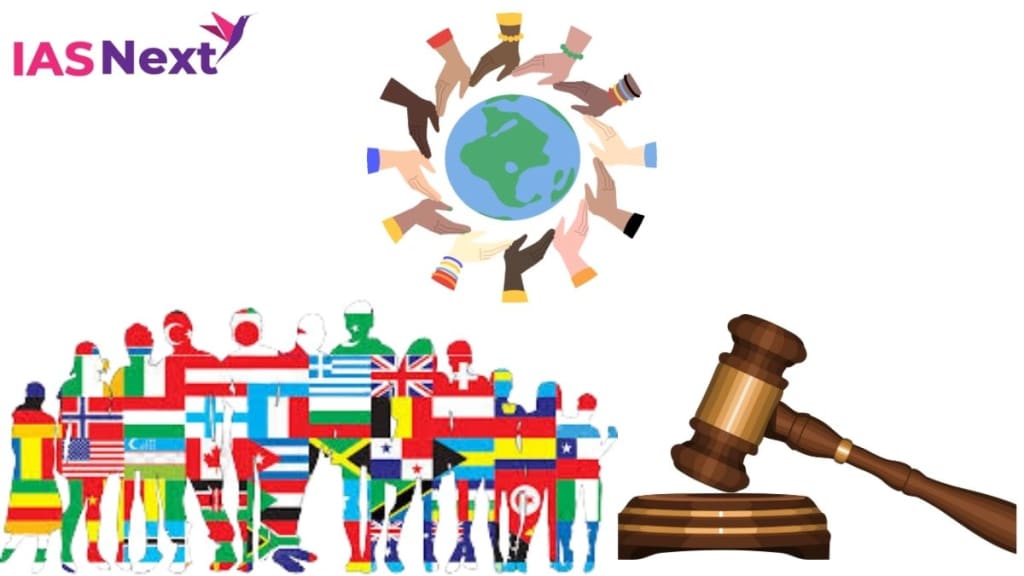
Sources of International law mean those origins from where it attains its authority and coercive agency. According to the provisions of the Statute of the International Court of Justice there are the following sources, on the basis of which the Court can decide a case:
1. Treaties: – The term treaty may be defined as “the agreement entered into by Nation states for their relations with each other and to undertake certain duties, obligations, and rights is said to be a treaty.” The statute declares that the Court shall have to decide any dispute between Nation States in accordance with the provisions of the treaty between them if existed.
2. Customs: – Customs are those habits and practices that the nation’s states commonly observe and the violation of which is considered against the courtesy of international behavior. There are certain practices that the world community observes without any express provisions but because of practice, they honor the same. So, if there is no treaty between the parties to a dispute then the statute binds the Court to decide the case in the light of such international customs.
3. General Principals of Law Recognized by Civilized Nations: – There are certain principles of law, which have been incorporated, into the domestic laws of many countries because of their universal application. So, in default of any treaty or international custom, the statute reveals that the court then shall have to decide the case in the light of such general principles of law as recognized by civilized nations of the world.
4. Judicial Decisions: – Usually the Judicial decisions of the International Court of Justice are not binding and they have no value in the sense that they are related and binding only to that certain case for which they have been given. And they cannot be cited as a strict reference in any other case. But despite the fact the Statute reveals that in case of default of all the above sources the court shall resort to the prior judicial decisions.
5. Juristic Works: – The jurists or publicists also declares rules by legal philosophy and analogy and also by comparing different legal systems of the world and they also analyze the historical perspectives of the different legal systems of the world. So, as they have devoted their lives to legal study, they must be deserved to consult in deciding a dispute. In other words, their opinion on a specific question of law weights because of their valuable experiments and sound study on the topic. So, the statute further reveals that if there is no treaty, legal custom, and general principles of law then the Court shall resort to the writings of these jurists.
6. Other Sources: – Besides the above sources there are also some other sources to which the court can resort for the decision of a case. For example, “Equity” and the resolution by the UN organization. Nowhere in the statute, these sources have been declared for the Court to derive law but by practice, the common and universal principles of equity have been observed by the courts while deciding cases. And also the UN organization when passing a resolution on a specific subject the Court feels its moral duty to decide the case in the light of such resolution if there are no express provisions for deciding a case.
Read Also :- International Law
Downloadable study material for UPSC Exam
Our free downloadable study material is designed to make your preparation for the UPSC exam easier and more efficient. Our material is available in multiple formats, including PDFs, e-books, and audio lectures, making it accessible and convenient to use.
Our study material covers all the essential topics in-depth, from ancient and medieval history to economics and current affairs. We also provide expertly curated mock papers that simulate the exam environment, giving you a real taste of what to expect on exam day.
Our downloadable study material is free and can be accessed anytime, anywhere. You can download it to your computer or mobile device and use it to study on the go. With our study material at your fingertips, you’ll never have to worry about being unprepared for the UPSC exam.
Download IASNEXT App: Click Here
About the Creator
Menu Boards for Cafés: Design Ideas and Benefits
I'll never forget the first time I walked into a local coffee shop that had just upgraded from their hand-written chalkboard to a sleek digital menu display. The difference was striking—not just visually, but in how quickly I could scan the menu, see vibrant images of specialty drinks, and notice the seasonal promotions rotating in the corner. That experience opened my eyes to how much menu presentation actually matters in café environments.
By Jerry Kane 4 days ago in Education
Writing About Writing: The Rainbow Trap
The good thing about living in modern times is that LGBTQ representation in media is increasing. Not just in niche and Independant media, either, but also in mainstream media. Books, movies, TV shows, comics... they're finally catching on that LGBTQ+ people form a significant part of their audience, and deserve to see themselves on screen and in fiction, not just as victims in documentaries and true crime shows.
By Natasja Rose2 days ago in Writers




Comments
There are no comments for this story
Be the first to respond and start the conversation.