
Solar Panels & Cloudy Weather: Do They Still Work?
Solar Panel Work On Cloudy Weather?

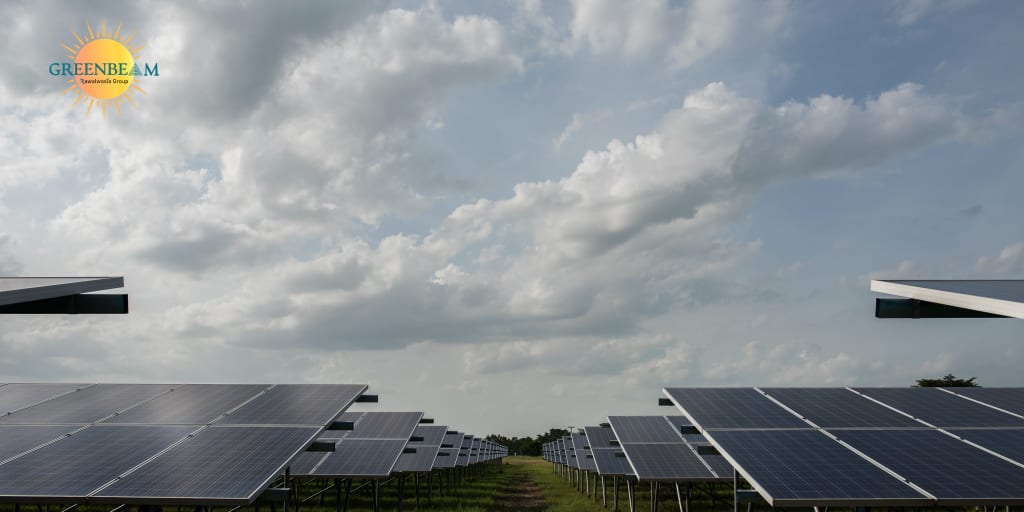
Solar power is quickly revolutionizing the industrial sector, providing companies with an affordable and renewable way to generate power. Yet, one of the most prevalent questions among industrial and commercial solar adopters is:
"Do solar panels work efficiently on cloudy days?"
The quick answer? Yes! Solar panels do produce electricity in cloudy weather, though not at a very lesser efficiency. But that doesn't mean companies shouldn't opt for solar solutions. With improvements in solar technology, battery storage, and maximized panel installation, businesses can still enjoy a good return on investment (ROI) regardless of changes in the weather.
How Do Solar Panels Function in Cloudy Weather?
To learn how solar panels work on cloudy days, it's helpful to know how they work. Solar panels take sunlight and convert it into electricity through photovoltaic (PV) cells. Direct sunlight increases efficiency, but diffused sunlight (sunlight scattered by clouds) still hits the panels and produces power.
✅ Solar Panels Don't Require Direct Sunlight: Even in cloudy weather, panels keep absorbing photons from the sun, generating electricity.
✅ Energy Output Decreases but Doesn't Halt: Solar panels can function at 50-80% efficiency based on how thick the cloud cover is.
✅ Worldwide Evidence of Solar Achievement in Cloudy Areas: Germany, the UK, and regions of the US experience limited sunlight but are among the world's leading solar energy adopters.
Why Cloudy Days Aren't a Deal Breaker for Industrial Solar
For companies looking at solar rooftop installations, the myth that solar energy is not effective on cloudy days causes them to be hesitant. Yet, today's solar systems are optimized to generate maximum energy even in adverse weather conditions.
1️⃣ Solar Energy Storage & Battery Backup
Battery storage solutions are one of the best methods to counter low solar generation on cloudy days.
Excess Energy Storage: Panels tend to produce more power during sunny days than is required. The excess power can be stored in batteries for use on overcast days or at night.
Grid Integration: Most companies opt for net metering, with excess solar power being fed into the grid for credits. When it is cloudy, they are able to use power from the grid as needed.
2️⃣ High-Efficiency Solar Panels for Low-Light Conditions
Improved solar panel technology guarantees industries have a consistent energy source even on cloudy days.
Monocrystalline Panels: They are more efficient than polycrystalline panels and are better suited for low-light conditions.
Bifacial Solar Panels: These panels can draw light from the front and back sides, increasing energy yield even when sunlight is indirect.
PERC Technology (Passivated Emitter and Rear Contact): This technology enhances panel efficiency by reflecting unabsorbed sunlight onto the panel.
3️⃣ Intelligent Energy Management to Maximize ROI
Smart solar investment enables companies to manage and optimize energy consumption, providing maximum efficiency on even cloudy days.
Artificial Intelligence-Powered Energy Monitoring: Monitors energy generation and consumption in real-time.
Automated Load Shifting: Shifting stored solar energy to energy-demanding processes when sun is low.
Hybrid Energy Systems: Integration of solar with wind or conventional power provides smooth industrial operations.
Real-Life Case Study: Solar in Cloudy Areas
Several businesses around the globe remain prosperous on solar power even under unpropitious weather conditions.
Germany: Top of Solar Production Even with Dreary Weather
Germany is among the leading nations for solar usage despite having just 1600 sunshine hours yearly, much lower than India. This indicates that solar investments can be profitable even under cloudy conditions using the proper technology and plan.
Facts vs. Myths: Solar Panels & Cloudy Weather
❌ Myth 1: Solar Panels Don't Work on Cloudy Days
✅ Fact: Panels still produce electricity, just with less efficiency.
❌ Myth 2: Solar Doesn't Work in Rainy & Foggy Regions
✅ Fact: Even areas like London and Seattle have been able to successfully run large solar farms.
❌ Myth 3: Industrial Solar Rooftop is Ineffective During Monsoon Season
✅ Fact: With battery storage & smart grid integration, monsoon seasons are no disruption.
Industrial & Commercial Solar Key Takeaways
Solar energy functions even on cloudy days, at 50-80% efficiency.
Investment in battery storage ensures stable power supply.
High-end solar panels such as bifacial & monocrystalline enhance performance in low light.
AI-based energy management maximizes solar efficiency for industries.
Even cloudy countries like Germany have successfully adopted large-scale solar power.
Final Thoughts: Should Your Business Invest in Solar?
If you’ve been considering solar rooftop installations for your industry, don’t let cloudy weather deter you. With the right strategy—efficient panels, smart energy management, and storage solutions—you can reduce electricity costs, achieve sustainability goals, and future-proof your business against rising energy expenses.
Thinking of going solar? Let's power your business with clean, reliable energy! ☀️
#SolarEnergy #RenewableEnergy #IndustrialSolar #SustainableBusiness #GreenEnergy
About the Creator
Keep reading
More stories from Rawalwasia Group and writers in Education and other communities.
Solar Energy in India & Its Environmental Impacts
Introduction Solar energy in India is proving to be a game-changer in the renewable energy industry. With plenty of sunlight and robust government support, India is going great guns towards sustainability. Utilizing solar energy not only cuts down on the use of fossil fuels but also helps reduce environmental impacts. As the country moves towards a greener and sustainable future, solar energy is leading the way in this revolution. In this blog, the development of solar power in India and its impacts on the environment are discussed.
By Rawalwasia Group11 months ago in Education




Comments
There are no comments for this story
Be the first to respond and start the conversation.