
Socioeconomic Condition of Bangladesh
Economic progress situation
Socioeconomic Condition of Bangladesh
Introduction
Bangladesh, a South Asian nation with a population exceeding 170 million, has made remarkable progress in its socioeconomic landscape since gaining independence in 1971. Despite challenges such as poverty, unemployment, and environmental vulnerabilities, the country has seen significant improvements in economic growth, health, education, and infrastructure. This paper provides a comprehensive overview of Bangladesh's socioeconomic conditions, examining its economic performance, poverty trends, employment scenario, education and healthcare sectors, and social challenges.
Economic Performance
Bangladesh's economy has witnessed steady growth over the past few decades. With an average GDP growth rate of around 6-7% per year, the country has emerged as one of the fastest-growing economies in the world. The major contributors to its economic growth are:
1. Agriculture: Contributing around 12-15% of GDP, agriculture remains a crucial sector, employing a significant portion of the population. The government has implemented policies to enhance agricultural productivity through mechanization, irrigation, and subsidies.
2. Industrial Sector: The manufacturing sector, particularly the ready-made garment (RMG) industry, plays a dominant role in Bangladesh’s economy, contributing about 84% of total exports. Other industries like pharmaceuticals, shipbuilding, and leather goods are also growing.
3. Service Sector: The service sector, including IT, telecommunications, and banking, is expanding rapidly. The government’s Digital Bangladesh initiative has led to a boom in e-commerce and IT-enabled services.
4. Remittances: The inflow of remittances from Bangladeshi workers abroad significantly contributes to the country’s foreign exchange reserves and economic stability. Bangladesh receives over $20 billion annually in remittances.
Causes of Poverty in Bangladesh
1. Limited Access to Quality Education: Although Bangladesh has improved its literacy rate, access to quality education remains a challenge, particularly in rural areas. Poor educational infrastructure, lack of trained teachers, and financial constraints prevent many children from completing their studies, limiting their future employment prospects.
2. Unemployment and Underemployment: Despite economic growth, unemployment and underemployment are widespread. Many people work in the informal sector, earning low wages with no job security or benefits.
3. Climate Change and Natural Disasters: Bangladesh is highly vulnerable to climate change, with frequent floods, cyclones, and rising sea levels displacing millions of people. Climate-related shocks push many households into poverty by destroying livelihoods, crops, and infrastructure.
4. Lack of Access to Healthcare: Limited access to affordable healthcare services forces many low-income families to spend a significant portion of their earnings on medical expenses, pushing them further into poverty.
5. Corruption and Governance Issues: Corruption and inefficient governance limit the effective distribution of resources. Public funds meant for social programs often do not reach the intended beneficiaries, exacerbating poverty.
Income and Wealth Inequality
While poverty rates have declined, income and wealth inequality have widened in Bangladesh. The country's economic growth has not been evenly distributed, benefiting the wealthy disproportionately while leaving many behind. The Gini coefficient, which measures income inequality, has been rising, indicating growing disparities between the rich and the poor.
The economic divide is particularly visible in urban areas, where a small elite class controls most resources, while the majority struggle with rising costs of living. In rural areas, land ownership remains highly unequal, with a significant portion of the population being landless or owning small plots insufficient for sustainable agriculture.
The Role of Government and Policy Interventions
The Bangladesh government has implemented various policies and programs to address poverty and inequality, including:
1. Social Safety Net Programs: The government runs multiple social protection programs, such as food aid, cash transfers, and employment generation schemes for the poor. Programs like the Vulnerable Group Development (VGD) and the Employment Generation Program for the Poorest (EGPP) have helped many low-income families.
2. Microfinance and Financial Inclusion: Microfinance institutions, led by organizations like Grameen Bank and BRAC, have played a crucial role in providing credit to the poor, particularly women. Access to microloans has enabled many to start small businesses and improve their economic conditions.
3. Education and Skills Development: Initiatives such as free primary education, stipends for female students, and vocational training programs aim to equip the workforce with the skills needed for better-paying jobs.
4. Infrastructure Development: Investments in roads, electricity, and digital connectivity have helped integrate rural communities into the broader economy, creating new opportunities for employment and income generation.
5. Climate Adaptation Programs: Given the vulnerability of Bangladesh to climate change, the government has implemented climate resilience programs, such as the construction of flood-resistant housing, embankments, and early warning systems for disasters.
Employment and Labor Market
Employment generation remains one of Bangladesh’s key challenges. The labor force is heavily dependent on the informal sector, which lacks job security and social benefits.
1. Unemployment and Underemployment: The official unemployment rate hovers around 4-5%, but underemployment is a significant issue, particularly among the youth and women.
2. RMG Sector Employment: The garment industry employs around 4 million workers, predominantly women, playing a crucial role in economic empowerment.
3. Skilled Labor Shortage: Despite a growing economy, there is a mismatch between the skills provided by the education system and market demand.
Education System
Bangladesh has made commendable progress in education, with increased enrollment rates at the primary and secondary levels.
1. Literacy Rate: The literacy rate has improved significantly, reaching around 75%.
2. Challenges in Higher Education: Despite improvements, higher education faces issues such as outdated curricula, inadequate research facilities, and limited access for rural students.
3. Government Initiatives: Free textbooks, stipends for female students, and expansion of vocational education have been introduced to improve education quality and accessibility.
Healthcare System
The healthcare sector has seen notable advancements, with improvements in life expectancy, maternal health, and child mortality rates.
1. Life Expectancy: Increased to around 73 years due to better healthcare services.
2. Challenges: Inadequate healthcare infrastructure, shortage of doctors, and high out-of-pocket expenses remain major concerns.
3. Public vs Private Healthcare: While government hospitals provide free or low-cost services, private hospitals cater mainly to the affluent population.
Infrastructure and Urbanization
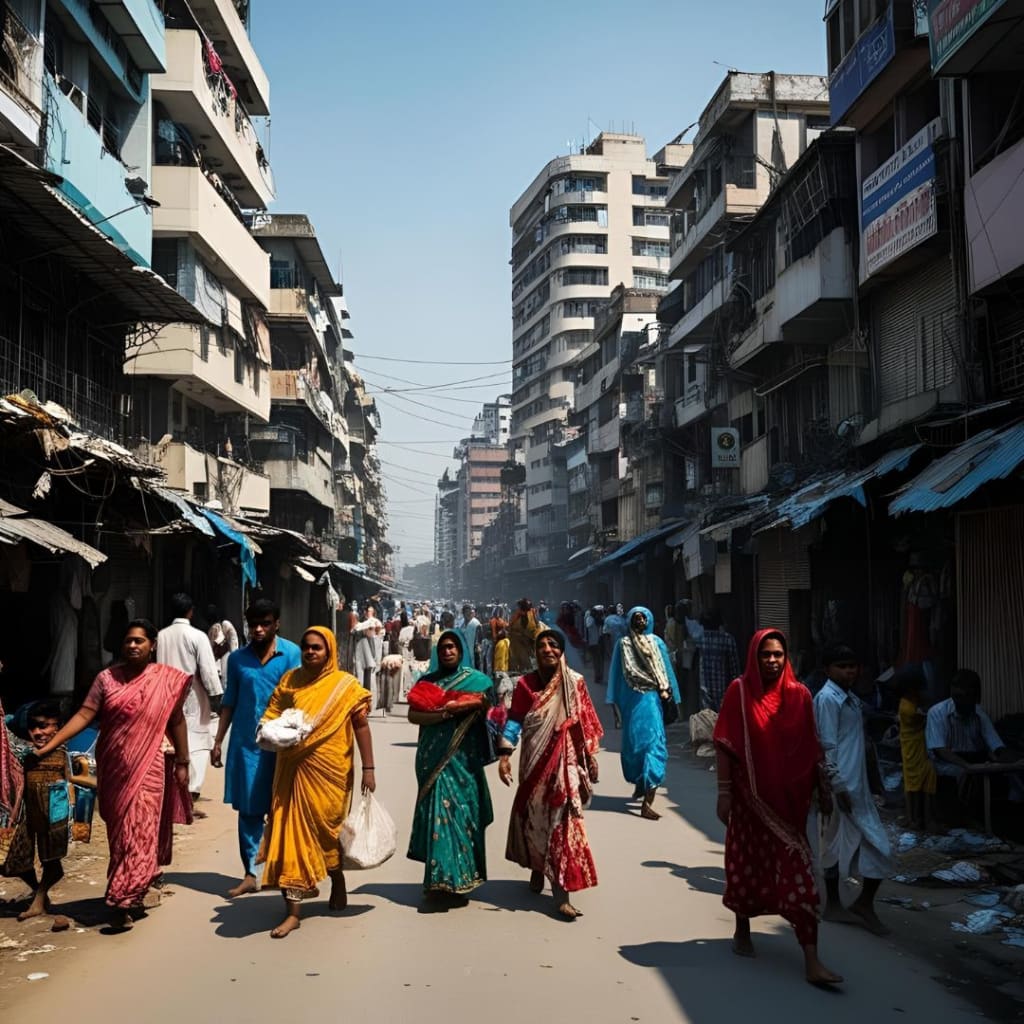
Bangladesh is experiencing rapid urbanization, leading to both opportunities and challenges.
1. Transportation and Connectivity: Major infrastructure projects like the Padma Bridge, metro rail, and highways are enhancing connectivity.
2. Housing Crisis: Urban slums are growing due to rural-to-urban migration, creating challenges in providing adequate housing and sanitation facilities.
3. Electricity and Energy: The government has made significant progress in achieving nearly 100% electricity coverage, though renewable energy adoption remains limited.
Challenges and the Way Forward
Despite these efforts, several challenges persist in addressing poverty and inequality in Bangladesh:
• Ensuring Inclusive Growth: Economic growth needs to be more inclusive, with policies that support small businesses, improve labor rights, and create job opportunities for marginalized communities.
• Strengthening Governance and Reducing Corruption: Enhancing transparency and accountability in government programs will ensure that resources are allocated efficiently.
• Enhancing Education and Healthcare: Greater investment in education and healthcare will help break the cycle of poverty and equip individuals with the skills and health needed to participate in the economy.
• Empowering Women: Strengthening women's rights, increasing access to financial services, and improving workplace opportunities will help reduce gender inequality.
Addressing Climate Vulnerability: More efforts are needed to implement climate adaptation strategies, improve disaster management, and support affected communities
Social Issues and Challenges
Despite economic progress, Bangladesh still faces several social challenges.
1. Gender Inequality: While women’s participation in the workforce has increased, gender disparities persist in wages, leadership roles, and education.
2. Corruption: Corruption remains a barrier to economic and social progress, affecting governance and business environments.
3. Environmental Concerns: Climate change, flooding, and pollution pose serious threats to sustainable development.
Conclusion
Bangladesh’s socioeconomic condition has improved significantly over the years, but challenges remain. By addressing inequality, improving infrastructure, enhancing human capital, and ensuring sustainable development, Bangladesh can continue its journey towards becoming a middle-income country with a prosperous future.
1. Poverty and Inequality
2. Agriculture-Dependent Economy
3. Rapid Urbanization
4. Industrial Growth (RMG Sector Dominance)
5. Remittance-Driven Economy
6. Youth Unemployment and Job Market Challenges
About the Creator
Kazi Mirajul Islam
I am expert in digital Marketing .I am also E- book writer & story writer. I am committed to delivering high-quality content.Also create social media account like Facebook,twitter account ,Instagram ,you tube account create and mained.
Keep reading
More stories from Kazi Mirajul Islam and writers in Education and other communities.
The Great Pyramid of Giza: The Only Surviving Wonder of the Ancient World
The Great Pyramid of Giza: The Only Surviving Wonder of the Ancient World The Great Pyramid of Giza, the last surviving wonder of the Seven Wonders of the Ancient World, is one of the most iconic and enduring monuments in human history. Situated on the Giza Plateau near Cairo, Egypt, this awe-inspiring structure has captivated scholars, historians, and tourists for centuries. Built over 4,500 years ago, the Great Pyramid remains an engineering marvel, raising questions about the advanced capabilities of ancient Egyptian civilization. In this comprehensive exploration, we will delve into the history, construction, purpose, mysteries, and legacy of the Great Pyramid of Giza.
By Kazi Mirajul Islam10 months ago in Education
The Importance of Strong Leadership in IT and Cybersecurity Teams
In today’s rapidly evolving digital landscape, IT and cybersecurity are no longer support functions—they are central to business success and resilience. With growing threats, complex infrastructures, and constant technological change, these departments face intense pressure to perform at the highest levels. At the heart of their performance is a critical factor that often determines whether a team succeeds or struggles: strong leadership.
By Keith Brautigam4 days ago in Education
The Future of Entrepreneurship: Key Trends Shaping the Next Decade
Entrepreneurship is entering an exciting new era. As technology advances and societal needs shift, business owners must stay adaptable to thrive. The next decade promises transformative change, and understanding the trends shaping entrepreneurship is crucial. Here are the key trends shaping the future of entrepreneurship and how they will impact entrepreneurs and their businesses.
By Greg Warnock2 days ago in Education


Comments
There are no comments for this story
Be the first to respond and start the conversation.