
The Great Pyramid of Giza: The Only Surviving Wonder of the Ancient World
Surviving Wonder of the world

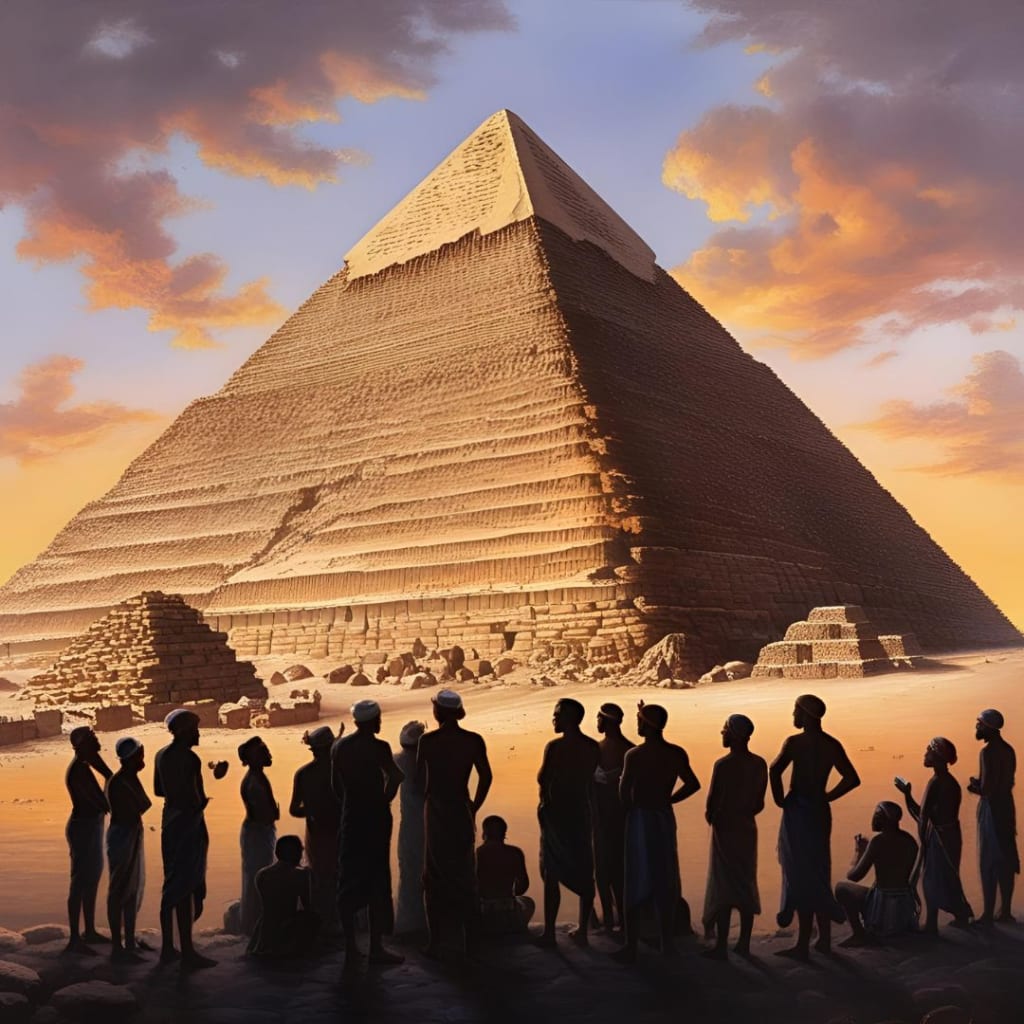
The Great Pyramid of Giza: The Only Surviving Wonder of the Ancient World
The Great Pyramid of Giza, the last surviving wonder of the Seven Wonders of the Ancient World, is one of the most iconic and enduring monuments in human history. Situated on the Giza Plateau near Cairo, Egypt, this awe-inspiring structure has captivated scholars, historians, and tourists for centuries. Built over 4,500 years ago, the Great Pyramid remains an engineering marvel, raising questions about the advanced capabilities of ancient Egyptian civilization. In this comprehensive exploration, we will delve into the history, construction, purpose, mysteries, and legacy of the Great Pyramid of Giza.
Historical Context
The Great Pyramid was constructed during the Fourth Dynasty of the Old Kingdom, around 2580–2560 BCE, under the rule of Pharaoh Khufu (also known as Cheops). It was originally built as a tomb for the pharaoh, who sought to ensure his journey to the afterlife in accordance with Egyptian religious beliefs. The pyramid was part of a larger funerary complex that included smaller pyramids, temples, causeways, and the Sphinx.
Herodotus, the Greek historian writing in the 5th century BCE, provided one of the earliest written accounts of the Great Pyramid. According to his records, the construction required the labor of thousands of workers over a span of about 20 years. While his accounts remain debated, modern archaeology suggests that the workforce was composed mainly of skilled laborers rather than enslaved people, as was previously assumed.
Architectural and Engineering Marvel
The Great Pyramid was originally 146.6 meters (481 feet) tall, though due to erosion and the removal of its outer casing stones, it now stands at approximately 138.8 meters (455 feet). It remained the tallest man-made structure in the world for more than 3,800 years until the construction of Lincoln Cathedral in England in the 14th century CE.
The base of the pyramid covers approximately 13 acres (5.3 hectares), with each side measuring around 230.4 meters (755.9 feet). The structure is composed of an estimated 2.3 million limestone blocks, each weighing between 2.5 to 15 tons. These stones were carefully quarried, transported, and meticulously arranged to create the pyramid’s distinctive shape.
One of the most astonishing aspects of the Great Pyramid’s construction is the precision with which it was built. The alignment of the pyramid is nearly perfect with the cardinal points (north, south, east, and west), with an error margin of less than 0.05 degrees. This remarkable accuracy has led many to speculate about the methods used by the ancient Egyptians, as well as potential lost technologies or astronomical knowledge that they may have possessed.
Construction Theories
Numerous theories have been proposed regarding how the Great Pyramid was built. Some of the most widely accepted include:
1. Ramp Theories: The most commonly accepted theory is that large ramps were used to transport stones to higher levels. These ramps may have been straight, zigzagging, or encircling the pyramid.
2. Internal Spiral Ramp Theory: Proposed by French architect Jean-Pierre Houdin, this theory suggests that an internal spiral ramp was used to transport the stones, allowing workers to move materials efficiently without requiring massive external ramps.
3. Lever and Pulley System: Some researchers believe that a system of levers and pulleys was used to hoist the massive stones into place.
4. Water Transport Hypothesis: Others suggest that the Nile River and canals were used to transport the blocks closer to the construction site.
Despite the various theories, the exact construction methods remain an enduring mystery.
Interior of the Great Pyramid
The Great Pyramid contains a complex internal structure, featuring several passageways and chambers:
1. The King’s Chamber: Located near the center of the pyramid, the King’s Chamber houses a red granite sarcophagus, believed to have held Khufu’s remains. The chamber is lined with granite blocks and features a sophisticated ceiling construction to reduce stress from the weight above.
2. The Queen’s Chamber: Located beneath the King’s Chamber, the purpose of this chamber remains uncertain. Some speculate it was originally intended for burial but was later abandoned.
3. The Grand Gallery: A remarkable passageway leading to the King’s Chamber, the Grand Gallery is noted for its corbelled walls, which help distribute weight.
4. Descending and Ascending Passages: These corridors connect the subterranean chamber, the Queen’s Chamber, and the Grand Gallery.
5. Air Shafts: Narrow shafts extend from the King’s and Queen’s Chambers to the exterior of the pyramid. Their purpose is debated, with some believing they served astronomical or ritualistic functions.
Purpose and Significance
The primary purpose of the Great Pyramid was to serve as the tomb of Pharaoh Khufu, ensuring his safe passage to the afterlife according to ancient Egyptian beliefs. However, some alternative theories suggest it may have had other functions, including:
• Astronomical Observatory: Some researchers suggest the pyramid was aligned with celestial bodies and may have been used for astronomical observations.
• Mathematical Significance: The pyramid's proportions and measurements contain mathematical relationships, leading some to theorize it was used for advanced calculations or encoding knowledge.
• Energy Source Theory: Some fringe theories suggest that the pyramid acted as an energy generator or a power plant, though no scientific evidence supports this claim.
Mysteries and Theories
The Great Pyramid has long been the subject of speculation, with various theories regarding its construction, purpose, and hidden chambers:
1. Hidden Chambers: In recent years, modern scanning technology has detected anomalies within the pyramid, suggesting the presence of undiscovered voids or chambers.
2. Advanced Knowledge: Some theorists argue that the precise alignment and mathematical properties indicate a level of knowledge far beyond what was previously attributed to the ancient Egyptians.
3. Extraterrestrial Influence: Certain alternative theorists suggest that the pyramid was built with the assistance of extraterrestrials due to its extraordinary precision and construction challenges.
Legacy and Preservation:
Despite being over four millennia old, the Great Pyramid remains largely intact. It has survived natural disasters, erosion, and human intervention, including the removal of its original polished casing stones, which were repurposed for other construction projects in Cairo.
The site continues to be a major tourist attraction and an important subject of study for Egyptologists, archaeologists, and historians. Efforts to preserve the Great Pyramid and the surrounding Giza complex have been undertaken by both the Egyptian government and international organizations.
Conclusion:
The Great Pyramid of Giza stands as a testament to human ingenuity, ambition, and craftsmanship. As the only surviving wonder of the ancient world, it continues to inspire wonder and curiosity. Its construction techniques, purpose, and enduring presence offer invaluable insights into the capabilities of ancient Egyptian civilization. While many of its mysteries remain unsolved, the Great Pyramid will undoubtedly continue to captivate generations to come, serving as a symbol of the ingenuity and resilience of humanity.
Here are six tags related to the Great Pyramid of Giza, one of the Wonders of the World:
1. #
2. GreatPyramid
3. #
4. AncientEgypt
5. #
6. SevenWonders
7. #
8. GizaNecropolis
9. #
10. PharaohsTomb
11. #
12. HistoricalMonument
Let me know if you need more! 😊
About the Creator
Kazi Mirajul Islam
I am expert in digital Marketing .I am also E- book writer & story writer. I am committed to delivering high-quality content.Also create social media account like Facebook,twitter account ,Instagram ,you tube account create and mained.
Keep reading
More stories from Kazi Mirajul Islam and writers in Education and other communities.
The Hanging Gardens of Babylon: A Wonder Lost in Time
The Hanging Gardens of Babylon: A Wonder Lost in Time Introduction: The Hanging Gardens of Babylon, one of the Seven Wonders of the Ancient World, have fascinated historians, archaeologists, and dreamers alike for centuries. Unlike other wonders whose ruins still exist, such as the Pyramids of Giza or the Colossus of Rhodes, the Hanging Gardens remain shrouded in mystery, as no confirmed archaeological evidence has been found to verify their existence. Yet, they continue to capture the imagination through historical texts, artistic depictions, and the rich legends surrounding their creation. This article delves into the history, structure, theories, and myths of this remarkable wonder, examining why it has become one of the greatest lost marvels of human civilization.
By Kazi Mirajul Islam10 months ago in Education
From Job to Prison: Revenge, Sacrifice, and Ending
The story begins by showing a bald and strong man named Bradley, who is a car mechanic by profession. As usual, Bradley reaches the garage with a broken car, but after arriving there, he sees that the garage owner is anxiously waiting only for him, which makes him a little surprised. Then the garage owner calls him into his office. Hearing this, Bradley understands that he is about to be fired from his job, and exactly that happens. The owner tells him that these days the garage is going through a financial crisis, and that is why he is being forced to fire some workers. But this is only an excuse, because Bradley is a hard-tempered man, and the owner wants to remove him and hire someone who flatters him. Now since Bradley is a tough man, he does not argue with the owner. He goes to the locker room, takes out his belongings, takes his car, and silently leaves for home. And yes, friends, this is where the downfall of Bradley’s life begins, which continues straight until the end of the story and ends there. Anyway, Bradley stops his car in front of his house, and at the same time he sees that his wife Lauren is sitting in her car, talking to someone on the phone. Bradley becomes suspicious of her. To know the truth, he keeps watching her carefully for some time. When he becomes sure, he immediately goes to Lauren and tells her to open the car door. His wife says, “You came back from work very early today.” At the same moment, Bradley notices marks of someone else’s lips on her neck and says to Lauren, “Give me your phone.” But Lauren refuses to give the phone, because of which Bradley forcefully snatches the phone from her, and his suspicion turns out to be correct. She is talking on the phone with another man. In anger, Bradley tells Lauren to go inside the house. Lauren says, “At least listen to me.” Bradley says, “I said go inside the house.” Then Lauren silently goes inside the house. Now, he had already been fired from his job a little while ago, and now his wife’s affair, because of which he had become even more disturbed, so he starts taking out all his anger on Lauren’s car. How? You can see that yourself. Yes, he is so angry that he does not even realize that his hands have been badly injured. After that, he calms himself down and goes inside the house and questions Lauren about how many days she has been with the other man. Lauren tells him everything, that for the past three months she had been having an affair with someone else. Actually, Bradley’s wife had an abortion a few days earlier, because of which she used to remain sad, and Bradley often stayed busy with his work. Because of this, Lauren felt lonely and very depressed at home, and to fill this emptiness, she had to take support from another man. Hearing these things, Bradley realizes that he should have given time to Lauren. He apologizes to Lauren for this and says that from today, from right now, they will both start a new life. Lauren agrees. After that, Bradley tells Lauren that he has been fired from his job and now he will work for a man named Gil, who is a drug lord. As soon as she hears Gil’s name, Lauren clearly refuses and says, “You yourself said that you would never work with Gil.” Bradley says, “Yes, but in such circumstances, we cannot live like a prosperous family. To run a family, money is needed, and at this time I have no other option.” He also assures Lauren that he will do this work very carefully.
By Filmon Ke Raaz | Movie Mysteries Explainedabout 15 hours ago in Education
Beyond Speed: How High-Performance Computing Is Shaping Tomorrow’s Discoveries
High-Performance Computing is changing how people explore ideas, test theories, and solve complex problems. It allows machines to work together at great speed. These systems can handle tasks that are far too large for standard computers. As a result, High-Performance Computing and the future of discovery are closely linked.
By Jason Prueta day ago in Education


Comments
There are no comments for this story
Be the first to respond and start the conversation.