
Silicon-Based Life: Myth, Science Fiction, or the Future of Biology?
Space

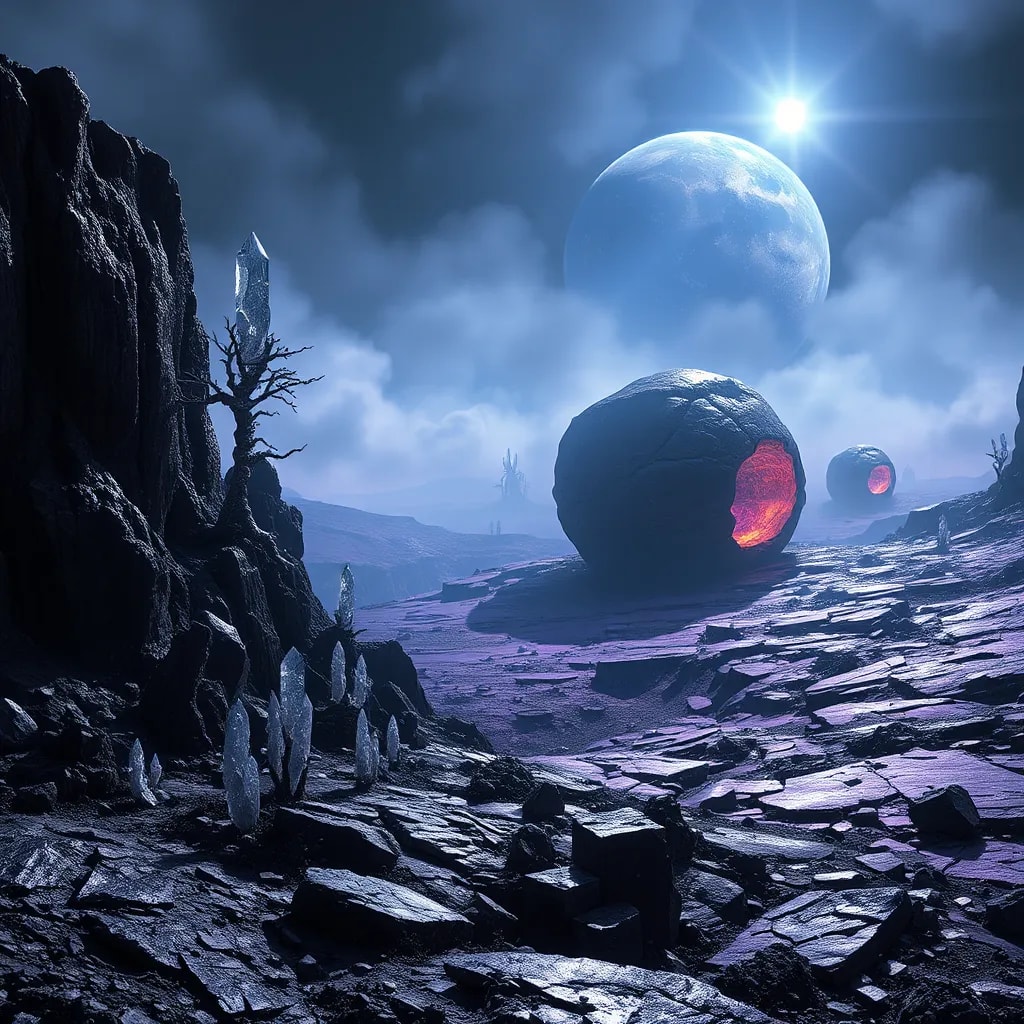
When we think of life, carbon instantly comes to mind. It is the backbone of DNA, proteins, and lipids the very molecules that make complex organisms possible. But astrobiologists and science fiction writers often ask an intriguing question: what if life could be built not on carbon, but on silicon?
Why Silicon?
At first glance, the idea seems perfectly reasonable. Silicon is carbon’s neighbor in the periodic table. Like carbon, it can form four chemical bonds, which in theory makes it capable of building complex molecular structures. Even more compelling, silicon is one of the most abundant elements in the universe. On Earth, it makes up about 28% of the crust far more than carbon.
That abundance alone suggests that, under different planetary conditions, silicon could have been the foundation of life. But the story is not that simple.
The Strengths of Silicon
Availability. Unlike carbon, which is relatively scarce in Earth’s crust, silicon is practically everywhere. This makes it a natural candidate for alternative biochemistry on planets where carbon is limited.
Durable structures. Silicon forms highly stable crystalline materials, such as quartz and silicates. This opens the door to imagining life forms with mineral-like skeletons, or even entire bodies resembling living rocks.
A science fiction favorite. From literature to cinema, silicon-based life has become a symbol of the truly alien. A famous example comes from Star Trek, where the “Horta” are intelligent, rock-like creatures that tunnel through stone and metabolize minerals.
These possibilities make silicon an attractive subject of speculation. But science is never without complications.
The Challenges of Silicon Life
So why didn’t life on Earth evolve using silicon instead of carbon?
Limited molecular flexibility. Carbon easily forms long, stable chains that allow for the diversity of organic molecules. Silicon, on the other hand, struggles to do the same. Its bonds are bulkier and less stable, which makes it harder to build the kind of molecular complexity needed for self-replicating life.
The problem with oxygen. When carbon bonds with oxygen, it forms carbon dioxide (CO₂), a gas that dissolves in water, circulates in the atmosphere, and can be easily exchanged by organisms. Silicon, however, forms silicon dioxide (SiO₂) better known as quartz. Instead of a gas, you end up with a hard crystal. It’s not exactly something you can breathe out.
Temperature sensitivity. Many silicon-organic compounds are unstable at Earth-like temperatures. They may only remain intact in extreme conditions, such as high heat or unusual chemical environments.
Taken together, these challenges explain why Earth’s biosphere chose carbon over silicon. But they don’t rule out the possibility of silicon life elsewhere.
Where Could Silicon Life Exist?
Astrobiologists have proposed several scenarios in which silicon-based organisms could thrive:
- Hot planets. High temperatures could stabilize silicon compounds that would normally fall apart on Earth.
- Ammonia-rich atmospheres. Instead of relying on oxygen and water, such life forms might metabolize in exotic solvents like ammonia or methane.
- Subsurface oceans. Beneath the crust of icy worlds, pressure and unique chemistry might allow silicon molecules to assemble into something resembling biology.
Some researchers even point to the moons of our own solar system Titan, Enceladus, or even the hellish surface of Venus—as potential environments where “alien chemistry” might operate.
Silicon and Us
The idea of silicon life isn’t just theoretical. Humans already make use of silicon-based compounds in medicine, biotechnology, and even implants. In laboratories, chemists have experimented with “silicon analogues” of proteins and DNA. While these artificial molecules are not alive, they prove that silicon’s chemical potential is broader than once believed.
This blurs the line between fiction and reality. Could humans someday engineer hybrid organisms that incorporate silicon into their biology? Or perhaps design “synthetic life” tailored to survive on harsh, silicon-rich planets?
Fantasy or Foreshadowing?
For now, silicon-based life remains a staple of imagination. But carbon life, too, once seemed like an extraordinary accident of chemistry. If the universe is as diverse as astronomers believe, then it may well host creatures that are radically different from anything we know beings more like living stones than animals or plants.
And if we ever encounter them, it won’t just expand our definition of biology. It will remind us that life, in its many forms, refuses to be confined by the limits of our own planet.
About the Creator
Keep reading
More stories from Holianyk Ihor and writers in Education and other communities.
The Mysteries of Wolf–Rayet Stars
Among the countless wonders of the universe, few objects capture the imagination of astronomers quite like Wolf–Rayet stars. These rare and powerful giants live fast and die young, blazing across the cosmos with ferocity and beauty that defies comparison. They shed their mass at incredible rates, unleashing stellar winds that sweep through space with unimaginable force. Many scientists see them as the last, dramatic act before a star explodes as a supernova or even as the progenitors of the universe’s most violent outbursts: gamma-ray bursts. But what makes these stars so extraordinary, and why are they shrouded in mystery?
By Holianyk Ihor5 months ago in Education
How Online Learning is Revolutionizing Education in 2026
The traditional landscape of education has undergone a massive transformation over the last decade. As we navigate through 2026, the concept of a "classroom" is no longer confined to four walls and a blackboard. Online learning has evolved from being a temporary solution during global crises to becoming a primary, highly effective method of gaining knowledge and professional skills. This shift is not just about convenience; it is about accessibility, personalization, and the democratization of information.
By MD. Rahmat Ullah7 days ago in Education
How Social Media Helps Small Businesses Grow Faster
Small businesses need smart ways to grow without large budgets. Social media offers one of the fastest and most affordable paths. When used well, it helps small brands reach new customers, build trust, and drive steady sales. Growth that once took years can now happen in months.
By Michael Kazma3 days ago in Education
The Devil's Cut
“Comrade, finally you’re awake.” The voice was smooth, sensual. A flickering incandescent bar was all that lit the white, sterile room. All Vladimir remembered was everything going black. He tried to move his arms and found them strapped to the gurney.
By Matthew J. Fromm5 days ago in Fiction


Comments
There are no comments for this story
Be the first to respond and start the conversation.