
Signals in the Noise: How Data Analytics Transformed a Failing Marketing Budget
Using Machine Learning to Turn Clicks into Customers for a Small Business
In the age of digital advertising, small businesses are often encouraged to spend on online ads, email blasts, and social media promotions — with the promise of high returns. But the reality for many is much different. Despite regular spending, clicks don’t always lead to customers, and marketing teams are often left guessing what worked and what didn’t.
This was exactly the case for a small service-based business that invested thousands of dollars in marketing every month. From Facebook ads to email newsletters, the campaigns looked good on paper — but the results were inconsistent. Some campaigns got clicks but no purchases. Others had no reach at all. There was no clear connection between spend and value.
It wasn’t a lack of effort or creativity — it was a lack of insight.
The Problem: A Budget with No Direction
The business ran multiple campaigns each month, using a mix of platforms:
• Google Ads for search
• Instagram and Facebook ads
• Email marketing through a CRM
• Occasional boosted posts and promotions
The marketing team manually tracked metrics like impressions, clicks, bounce rates, and cost-per-click. But even with dashboards and reports, they couldn’t pinpoint why one campaign succeeded and another failed. The ROI was unclear, and budget planning became a guessing game.
The business had strong potential — great services, loyal customers, and a clear brand message — but their marketing strategy was being wasted on vague, unmeasurable efforts.
The Turning Point: Calling in a Data Analyst
A data analyst was brought in to help unravel the chaos. The task wasn’t to design new ads — it was to understand the data that already existed. The analyst began by gathering every available data source:
• Ad campaign performance reports (from Facebook, Google, and Instagram)
• Email open and click data
• Website analytics and session behavior
• CRM records showing actual purchases and customer history
The data was messy and disconnected. Using Python, Pandas, and SQL, the analyst cleaned, merged, and organized the datasets into a centralized view, aligning marketing actions with customer outcomes.
The Approach: Applying Machine Learning to Marketing Data
Once the data was prepared, the analyst explored how machine learning could reveal hidden insights. Three core techniques were applied:
1. Classification Modeling
A machine learning classifier (using scikit-learn) was trained to predict whether a user would convert (make a purchase) based on campaign details — such as device type, click time, message type, and platform. The model used logistic regression and decision trees to find patterns in the behaviors of past converters.
2. Customer Behavior Clustering
The analyst applied unsupervised learning (clustering) to group users based on their digital behavior. It turned out there were distinct patterns:
• One group clicked ads within 5 minutes of seeing them and often converted.
• Another group browsed the website multiple times but rarely bought.
• A third group responded only to personalized emails.
3. Conversion Probability Scoring
A scoring model was created to predict the likelihood of conversion for each lead or website visitor in real time. This allowed the business to retarget high-potential customers and avoid wasting spend on cold audiences.
The Results: Small Changes, Massive Efficiency
After just four weeks of testing and implementation, the results were measurable and impressive:
• Conversion rate improved by 38%
Campaigns were shown only to the most relevant audience segments, increasing efficiency.
• Ad spend waste dropped by 25%
Budget was redirected toward high-performing platforms and time slots.
• Email ROI increased
Personalized, behavior-driven emails led to more repeat customers and fewer unsubscribes.
• Time saved
Instead of guessing, the team now relied on the model’s insights to plan marketing efforts with data-driven confidence.
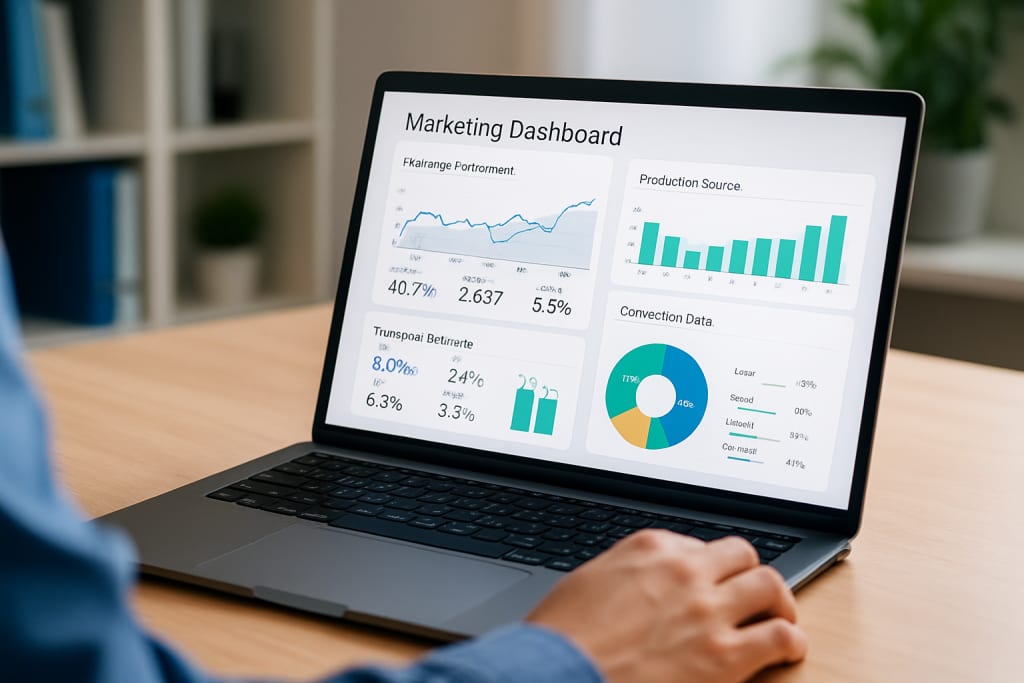
The analyst also created a marketing performance dashboard using Streamlit — showing real-time updates on campaign performance, predicted outcomes, and lead conversion scoring. Now, every dollar spent came with measurable feedback.
Why It Worked: Focused Data, Practical ML, and Business Value
What made this success possible wasn’t deep AI or massive infrastructure. It was the combination of:
• Clean, unified data (even if it took time to prepare)
• Simple machine learning models focused on real business questions
• A data analyst who could translate insights into strategy
Machine learning doesn’t have to be complicated to deliver value. Even straightforward models — like logistic regression or decision trees — can outperform intuition when it comes to making decisions on marketing spend.
This project didn’t replace the marketing team — it empowered them. Instead of acting on assumptions, they now act on signals extracted directly from customer behavior.
About the Creator
How Mathematical Principles Drive Stable Monthly Results in Index Trading
Index trading has gained popularity among investors who value consistency over speculation. While market headlines often focus on short-term price swings, steady monthly returns in index trading are built on mathematical logic rather than predictions. By understanding how numbers shape market behavior, traders can develop strategies that prioritize reliability and long-term growth over emotional decision-making.
By Agast Mishraa day ago in Education
How to Succeed at the Benson Directory®
Congratulations and welcome to the Benson Directory® employee #22391! As our newest call handler, you will have the privilege of speaking with dozens of unique and interesting people on a daily basis as well as the opportunity to earn bonuses for high performance. Contained within this handbook you will find a set of ease to follow instructions designed to help you settle in to your new role and begin paving the way to success.
By S. A. Crawford4 days ago in Fiction




Comments
There are no comments for this story
Be the first to respond and start the conversation.