
HVAC Copper Brazing: What Welders and Technicians Really Do in the Field
An experience-based guide to modern HVAC copper brazing practices
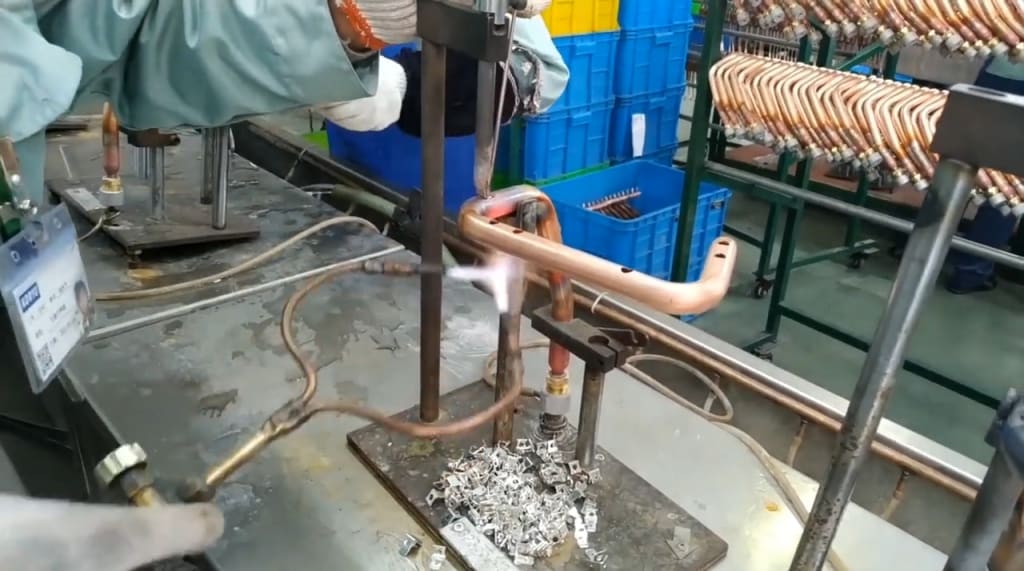
When people outside the trade hear the phrase HVAC welding, they often imagine arc welders, sparks, and heavy steel fabrication. In reality, most HVAC systems are assembled using copper brazing, a process that relies far more on heat control and preparation than on brute force.
Anyone who has spent time reading welding forums or talking with experienced HVAC technicians knows there is no single “correct” way to braze copper. Different torches, different rods, and different habits all show up in the field. Yet, despite the variety of opinions, the same practical lessons keep resurfacing.
Why Brazing, Not Welding, Is Used in HVAC
One of the first points of confusion for newcomers is the difference between welding, soldering, and brazing. HVAC copper joints are not welded in the traditional sense because the copper tubing itself is never melted. Instead, brazing uses a filler metal that flows into the joint at high temperature, creating a strong bond without deforming the base material.
Soft solder, which was more common decades ago, no longer meets the demands of modern HVAC systems. Today’s equipment operates at higher pressures and with refrigerants that are less forgiving of contamination or weak joints. Brazing provides the strength and reliability these systems require, which is why it has remained the standard for so long.
Typical HVAC Copper Brazing Setups in the Real World
If you read through welding forums, you’ll see a wide range of equipment discussed—but a few setups dominate the field.
Oxy-Acetylene Torch
- Still the most common choice for HVAC copper brazing.
- Excellent heat control
- Works well on larger pipe diameters
- Familiar to most technicians
Despite newer alternatives, oxy-acetylene remains popular because it’s versatile and forgiving.
Air-Acetylene Torch
- Often used for smaller residential systems.
- Lower flame temperature
- Less risk of overheating thin copper
- Not ideal for larger diameter lines or steel transitions
Alternative Gases and Induction
Some techs experiment with oxy-propane, induction brazing, or even oxy-hydrogen generators. These methods work in specific cases, but most forum discussions agree: they’re not drop-in replacements for oxy-acetylene in daily HVAC work.
What HVAC Technicians Actually Use to Braze Copper
In real-world installations, oxy-acetylene torches are still the most common tool for HVAC brazing. Technicians prefer them because the flame is hot, adjustable, and capable of handling a wide range of pipe sizes. With proper technique, the heat can be directed precisely where it is needed without damaging surrounding components.
For smaller residential jobs, some technicians use air-acetylene torches. These setups are easier to manage and reduce the risk of overheating thin copper lines, although they are less effective on larger diameters or steel transitions. From time to time, alternative methods such as induction brazing or different fuel gases come up in forum discussions. While these options work in specific situations, most technicians agree they are not yet practical replacements for everyday HVAC work.
Choosing the Right Brazing Rod
Brazing rod selection often reflects both material requirements and personal preference. For copper-to-copper joints, phosphorus-containing rods are widely used because they flow well and do not require flux. When the joint is heated properly, these rods produce clean, strong connections quickly.
The situation changes when copper is joined to steel or brass. In those cases, higher silver-content rods are commonly used to ensure good bonding and long-term durability. Experienced technicians often point out that joint failures blamed on filler material are usually caused by improper heating or poor surface preparation rather than the rod itself.
The Ongoing Debate Around Nitrogen Purging
Few topics generate as much discussion as nitrogen purging. The purpose of purging is to prevent oxidation inside the copper tubing while brazing. Without it, scale can form on the inner surface of the pipe and later circulate through the system, potentially damaging sensitive components.
Some technicians admit they brazed systems for years without purging and never noticed immediate problems. Others argue that modern HVAC systems, especially high-efficiency units, leave much less room for error. As equipment becomes more advanced, nitrogen purging is increasingly viewed not as an extra step, but as a preventive measure that protects the system over its entire lifespan.
Where Most Brazing Problems Come From
When leaks or failures occur, they are rarely caused by a lack of expensive tools. More often, they come from small mistakes made during the brazing process. Overheating the joint can weaken both the copper and the filler metal. Inadequate cleaning prevents the filler from flowing properly, and a poorly adjusted flame introduces oxidation instead of heat.
Experienced welders and HVAC technicians often emphasize that patience is just as important as skill. Allowing the joint to heat evenly and cool naturally makes a noticeable difference in long-term reliability.
Safety Is Part of the Skill
Brazing in HVAC environments presents unique safety challenges. Much of the work is done in confined spaces, near insulation, wood framing, or finished interiors. A moment of inattention can easily turn into a fire hazard.
That is why seasoned technicians rely on fire-resistant blankets, heat shields, and post-braze fire watches. Proper gas handling and flashback protection are also essential. Many safety rules discussed in forums exist because someone, somewhere, learned the lesson the hard way.
How HVAC Brazing Is Evolving
Although traditional brazing remains dominant, the industry continues to explore new approaches. Induction brazing is becoming more common in manufacturing settings, where consistency and speed are critical. Alternative fuel gases and cleaner joining methods are also being discussed, particularly as environmental standards tighten.
Still, most field technicians agree that the fundamentals have not changed. Clean surfaces, controlled heat, and sound technique matter more than any new tool or trend.
What the Forums Get Right
Welding and HVAC forums often reveal a side of the trade that manuals overlook. They show what happens when theory meets real buildings, tight schedules, and imperfect conditions. Across countless discussions, the same conclusion emerges: successful HVAC copper brazing depends less on brand names and more on understanding heat, materials, and process.
It may not be the most visible part of HVAC work, but when done correctly, copper brazing quietly ensures that systems operate efficiently and reliably for years. And that is why it continues to be a topic worth discussing.
About the Creator
Jenney
Innovative eco-friendly solutions like oxyhydrogen generators for industrial applications.
Ai Basics Everyone Should Know for the Future
Artificial Intelligence (AI) is no longer a distant concept reserved for scientists or tech companies. It’s already shaping how we work, learn, communicate, and make decisions. From recommendation systems on streaming platforms to AI assistants that help write emails, analyze data, or generate images, AI has quietly become part of everyday life.
By Anthony Bahamondeabout 23 hours ago in Education
Surviving Cancer: Entering the Golden Alchemical Door to Teaching
It starts with love . . . Entering the Golden Door: Who Am I? Going through cancer treatments with chemo, a strange thing happened, for I started to forget things, even who I am because my wife ghosted me and my friends would have nothing to do with me. Without human contact, you forget what it means to be human. I am a professor at a university, but I forgot what I taught. . . .
By WILD WAYNE : The Dragon King4 days ago in Education


Comments
There are no comments for this story
Be the first to respond and start the conversation.