
Should You Use the Same Resume for Every Job When Changing Industries?
Should You Use the Same Resume for Every Job When Changing Industries?


When transitioning to a new industry, it’s tempting to think that you can use the same resume for every job application. After all, your resume reflects your skills, education, and experience, which are, presumably, universal and valuable in any field, right? While this might hold true for some roles, using the same resume for every job when changing industries is generally not a good idea. The fact is, each industry values different skills, experiences, and attributes, so a generic resume won’t highlight your true potential for the role you’re applying for.
Changing industries means that you must not only reframe your experience but also demonstrate your transferable skills. A tailored resume helps to bridge the gap between your past role and the new one you're pursuing. In this article, we'll explore why and how you should customize your resume when changing industries, providing practical examples to illustrate these points.
Why a One-Size-Fits-All Resume Won’t Work
When you apply for a job in a new industry, the hiring manager or recruiter may be unfamiliar with your previous field. If you present a generic resume that simply lists your job titles and responsibilities, they may not easily recognize how your background aligns with the new role. The key is to show how your experiences and skills are transferable and how they align with the new industry’s needs.
Each industry has unique demands, and by using a resume that speaks directly to those needs, you increase your chances of landing an interview. A tailored resume is crucial because it helps the recruiter immediately recognize the value you bring, even if your previous job title or industry is quite different.
How to Tailor Your Resume for a Career Change
1. Identify and Highlight Transferable Skills
One of the most common reasons people change industries is to leverage skills they've already developed in their previous roles. Transferable skills are those abilities that can be applied across different jobs or industries, such as communication, project management, leadership, and problem-solving.
For instance, if you’ve been working in customer service but are now interested in moving into marketing, you might think that your experience doesn't directly translate. However, your customer service background has likely helped you develop strong communication skills, the ability to manage customer relationships, and perhaps even experience with social media or digital communication—skills that are incredibly valuable in a marketing role.
Example: You were a Customer Support Manager in a retail company, and you’re now interested in a Product Manager role in a tech firm. On your resume, you would emphasize:
• Customer Insights: You’ve gathered and analyzed customer feedback to inform product improvements, which is very similar to gathering insights for product development in tech.
• Project Management: You oversaw teams that were tasked with improving customer experience, giving you project management experience that can apply directly to a product development cycle.
• Cross-functional Collaboration: You worked closely with marketing and sales teams to resolve customer complaints, which demonstrates your ability to work in cross-functional teams—a vital skill for product management.
In this case, even though the job titles are different, many of the skills you have developed are transferable.
2. Understand the Industry-Specific Job Requirements
Each industry has its own specific needs and demands. When you’re switching industries, you need to analyze the job description and understand what skills, qualifications, and experiences the hiring manager is seeking.
• In healthcare, the focus might be on certifications, patient care experience, and knowledge of medical technologies.
• In tech, the focus could be on proficiency in programming languages, software tools, and the ability to adapt to rapidly changing environments.
• In finance, employers may look for expertise in financial analysis, familiarity with financial regulations, and proficiency in Excel or other financial software.
Example: If you're transitioning from the hospitality industry to event planning, you need to tailor your resume to reflect the key skills in event management, such as vendor coordination, budgeting, and logistics. While your experience managing hotel events and coordinating with vendors is relevant, you would want to frame it in the context of event management rather than just general hospitality experience.
Here’s how you might list a relevant job in your resume:
• Event Coordination: Managed corporate events, including sourcing venues, arranging catering, and overseeing logistics.
• Budgeting and Financial Oversight: Managed a budget for events, ensuring adherence to client requirements while maintaining cost efficiency.
• Vendor Relationships: Built and maintained relationships with key vendors, such as caterers, decorators, and AV technicians.
These changes reflect the skills needed for an event planning role and show the hiring manager that you can transfer your experience to the new position.
3. Reframe Your Professional Summary
The professional summary at the top of your resume is your chance to make a strong first impression. When changing industries, this section becomes even more important, as it serves as a narrative to explain your career change and highlight why you're making the transition.
Instead of just listing your job titles and experience, use this section to briefly explain your motivation for switching industries and how your background prepares you for the new role. Focus on what you bring to the table—whether it’s a unique perspective, a set of transferable skills, or relevant training.
Example: If you’re switching from retail management to human resources, you might write something like:
“Results-driven retail manager with 5+ years of experience in team leadership, employee development, and customer relationship management. Passionate about fostering a positive work culture and creating effective employee engagement programs. Seeking to leverage leadership skills and interpersonal abilities in a human resources role.”
This summary clearly ties your previous experience in retail management to your transferable skills in leadership and employee engagement, making it easier for hiring managers in HR to see the relevance.
4. Adjust Your Keywords and Language
Different industries use different terminologies, and understanding the lingo of your target industry is crucial for ensuring your resume passes through Applicant Tracking Systems (ATS)—software used by companies to screen resumes before they reach a human recruiter.
You should adjust the language in your resume to include industry-specific terms and keywords that hiring managers are likely to search for. These keywords can be found in job descriptions and company websites.
Example: If you’re moving from a job in retail management to a project management role in the tech industry, the words you use should align with the tech industry’s terminology. For instance, in retail, you might have managed “customer service teams,” but in tech, you might need to reframe this to “project teams,” “agile development teams,” or “cross-functional teams.”
In a tech resume, you might also want to include key skills like scrum, agile methodologies, or project management tools like JIRA and Trello, which are frequently used in the tech industry.
5. Focus on Relevant Achievements
When changing industries, it’s critical to focus on the achievements you’ve had in your previous roles that are most relevant to the new position. Rather than listing job duties, highlight accomplishments that show how your experience in the previous industry is applicable to the new one.
For example, if you’re moving from retail sales to a sales role in software, emphasize metrics that demonstrate success—such as exceeding sales targets or managing key accounts—while also noting any software knowledge or experience with technology solutions.
Example: If you previously managed a team of sales associates in retail, you could highlight an achievement such as:
• “Successfully increased sales by 20% in a year through the implementation of customer-centric strategies and performance management.”
This achievement, while related to retail, can be reframed for a software sales role by highlighting how you would apply customer-centric strategies to selling software solutions.
6. Highlight Education, Certifications, and Additional Training
When transitioning industries, especially if you’re moving into a field that requires specialized knowledge (like healthcare, IT, or finance), it’s essential to showcase any relevant certifications, courses, or training you’ve completed to prepare for this new career path.
For instance, if you're transitioning into a data analysis role, and you’ve taken courses in data science, include these details prominently on your resume.
Example: “Certified Data Analyst, Coursera – Completed a 6-month course in Python, SQL, and Data Visualization.”
By showcasing these new qualifications, you demonstrate your commitment to learning and adapting to the new industry.
7. Be Prepared for Questions About Your Career Change
While this article focuses on how to optimize your resume, it's important to remember that hiring managers might have questions about why you're changing industries. Be prepared to explain your career shift and how your skills are applicable to the new industry in interviews.
You should have a compelling story ready to explain why you made the change, focusing on how your past experience will allow you to succeed in the new role and bring value to the organization.
Conclusion
When changing industries, a tailored resume is essential to ensure that your experience and skills are recognized and that you present yourself as the best candidate for the job. A generic resume simply doesn’t do justice to your potential in a new industry.
By focusing on transferable skills, adjusting your language and keywords, highlighting relevant achievements, and reframing your experience to align with the needs of the new industry, you can make a compelling case for your career transition.
Examples, such as rephrasing your retail experience for a project management role or highlighting your new certifications in data analysis, show that, even without direct experience, you can still make an impact. This level of customization not only increases your chances of passing ATS filters but also makes it easier for recruiters and hiring managers to see your potential in the new field. By strategically tailoring your resume for each role, you position yourself as a strong candidate and increase your chances of landing the job in your new industry.
About the Creator
Shahrukh Mirza
my name is sharukh khan. and i am a content writer to resume and career advice .
i have a website to create resume for free
To create Resume online and abolutely Free:- https://resumeera.xyz
Keep reading
More stories from Shahrukh Mirza and writers in Education and other communities.
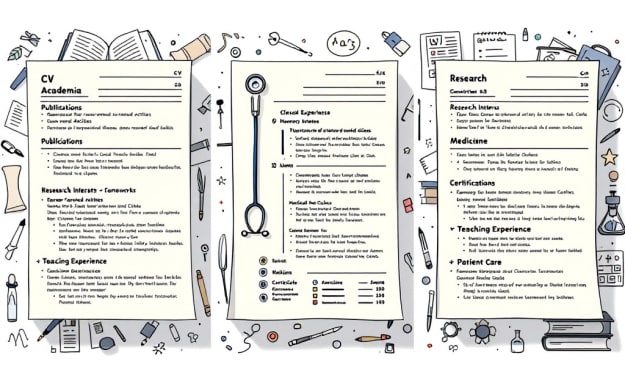
How do CV formats differ between academic, medical, and research fields?
Understanding CV Formats Across Academic, Medical, and Research Fields A Curriculum Vitae (CV) is a crucial document that provides an in-depth look at an individual's professional history, educational background, research accomplishments, and personal qualifications. The CV is often the first impression an employer or academic institution has of a candidate, and as such, its content and format need to be tailored to the specific field in which it is being used. The format of a CV varies greatly depending on the profession and area of expertise. In this article, we explore how CV formats differ in academic, medical, and research fields, highlighting the essential elements of each format and how to optimize them for success.
By Shahrukh Mirzaabout a year ago in Education
5 AI Tools That Can Help You Make Money Online in 2026
5 AI Tools That Can Help You Make Money Online in 2026 Artificial Intelligence is no longer just a futuristic concept. It has quickly become one of the most powerful technologies shaping the modern digital economy. Businesses, creators, and freelancers are now using AI tools to save time, increase productivity, and generate new income streams. Just a few years ago, creating content, designing images, or editing videos required advanced technical skills and expensive software. Today, AI tools allow almost anyone with an internet connection to do these tasks faster and more efficiently. For people looking to earn money online, learning how to use AI tools can be a major advantage. Instead of spending hours on repetitive work, these tools can help you produce professional-level results in minutes. Here are five AI tools that are helping people around the world build online income opportunities. 1. ChatGPT – AI Writing and Content Creation One of the most powerful AI tools available today is ChatGPT. It helps users generate high-quality written content quickly and efficiently. People use ChatGPT for many different online tasks, including writing blog posts, creating social media content, generating marketing copy, and even producing scripts for videos. Freelancers are using it to complete writing projects faster, while bloggers use it to brainstorm ideas and structure their articles. Content creators can also use it to write YouTube scripts, product descriptions, and email newsletters. While AI can assist with writing, successful creators still add their own creativity and editing to make the content unique and engaging. Because online businesses constantly need fresh content, this tool has become extremely valuable for writers and marketers. 2. Midjourney – AI Image Generation Visual content plays a huge role in the digital world. Social media posts, website designs, advertisements, and digital products all rely heavily on high-quality images. Midjourney is an AI image generator that can turn simple text prompts into stunning digital artwork. Designers and entrepreneurs use it to create: Book covers Social media graphics Website images Digital art prints Many creators even sell AI-generated artwork online through digital marketplaces. With the right prompts and creativity, people can build entire design portfolios using AI-generated images. 3. Runway ML – AI Video Creation and Editing Video content continues to dominate the internet. Platforms like YouTube, social media apps, and online courses all rely heavily on video. Runway ML is an AI-powered tool that helps creators generate and edit videos quickly. It allows users to create visual effects, remove backgrounds, and even generate video clips using artificial intelligence. Video editors and content creators use this tool to speed up their workflow and produce high-quality videos without expensive equipment. As the demand for video continues to grow, people who understand AI video tools will have a strong advantage in the online content industry. 4. Canva – AI Design for Everyone Canva has become one of the most popular design tools on the internet, especially for beginners. With its AI-powered features, users can create professional graphics, presentations, posters, and marketing materials with very little design experience. Freelancers often use Canva to provide design services for clients, including social media posts, brand kits, and promotional graphics. Small businesses also rely on Canva to maintain a consistent online presence without hiring expensive designers. Because of its simplicity and versatility, Canva remains one of the easiest tools for beginners who want to start offering digital design services. 5. Pictory – AI Video From Text Pictory is a powerful AI tool that can transform written content into engaging videos. Creators can simply paste an article or script into the platform, and Pictory automatically generates a video using stock footage, captions, and background music. This tool is especially useful for content creators who want to produce videos for YouTube or social media without filming themselves. Many people use Pictory to turn blog posts into videos, create educational content, or produce short clips for social platforms. Because video consumption continues to increase worldwide, tools like Pictory are becoming essential for digital creators. Final Thoughts Artificial Intelligence is changing the way people work online. Instead of replacing human creativity, AI tools are helping people work faster and more efficiently. For beginners who want to earn money online, learning how to use AI tools can open the door to many new opportunities. Writing, designing, video editing, and digital marketing are all becoming easier with the help of technology. The most important step is to start experimenting and learning. Even mastering just one of these tools can create new income possibilities. The future of online work is increasingly connected to AI. Those who learn to use these tools today will likely have a strong advantage in the digital economy of tomorrow.
By Baseer Shaheen 2 days ago in Education
The Seed Many People Throw Away and Why It’s Gaining Attention in Natural Wellness
When people eat papaya, most of them scoop out the seeds and throw them away without giving them a second thought. The soft orange fruit is loved for its sweet taste and refreshing texture, but the small black seeds inside are usually seen as useless waste. However, in recent years these tiny seeds have started to gain attention in the world of natural wellness. Many health enthusiasts and nutrition experts believe that papaya seeds may contain valuable nutrients and natural compounds that can support digestion, improve gut health, and even help protect the body from certain infections. Although they are small, papaya seeds have a surprisingly strong nutritional profile that has sparked growing interest among people looking for simple natural health remedies. What Makes Papaya Seeds Special? Papaya seeds may look small and insignificant, but they are packed with natural plant compounds that may benefit the body in several ways. They contain antioxidants, healthy fats, and enzymes that can support the body’s natural processes. One of the most notable components found in papaya seeds is an enzyme called papain. This enzyme helps break down proteins in food, which can support digestion and make it easier for the body to absorb nutrients. Because of this property, papaya itself is often recommended for people who experience digestive discomfort. The seeds also contain natural compounds believed to help the body fight harmful bacteria and support a balanced digestive system. Supporting Digestive Health One of the main reasons papaya seeds are gaining attention is their potential role in supporting digestive health. Many traditional wellness practices have used papaya seeds to help cleanse the digestive system. The enzymes in the seeds can assist the body in breaking down food more efficiently, which may reduce problems such as bloating, indigestion, and stomach discomfort. A healthier digestive system can also help the body absorb vitamins and minerals more effectively. In addition, the fiber found in papaya seeds may support regular bowel movements and help maintain a balanced gut environment. Natural Antioxidant Properties Papaya seeds also contain antioxidants, which are compounds that help protect the body from damage caused by harmful molecules known as free radicals. Free radicals can contribute to aging and various health problems when they accumulate in the body. Antioxidants help neutralize these molecules and support the body’s natural defense system. By including small amounts of papaya seeds in the diet, some people believe they can increase their intake of protective plant compounds that support overall health. Potential Immune Support Another reason papaya seeds are gaining attention is their potential ability to support the immune system. The natural compounds in these seeds may help the body fight certain harmful microorganisms. A strong immune system plays a key role in protecting the body from infections and illnesses. While papaya seeds are not a medical treatment, many people consider them a helpful addition to a balanced diet aimed at supporting immunity. Combined with other healthy habits such as proper nutrition, hydration, and regular exercise, natural foods like papaya seeds may contribute to overall well-being. How People Use Papaya Seeds Although papaya seeds have a slightly bitter and peppery taste, they can be used in several simple ways. Some people eat them raw directly from the fruit in small quantities. Others prefer to dry and grind the seeds into a powder that can be added to smoothies, salads, or salad dressings. Because of their strong flavor, only a small amount is usually needed. Many people start with just a few seeds at a time to see how their body reacts. Another popular method is blending the seeds with honey or fruit smoothies to balance the bitterness. Important Things to Keep in Mind While papaya seeds may offer potential health benefits, moderation is important. Eating large amounts may cause digestive discomfort because of their strong natural compounds. Pregnant women and people with certain medical conditions are often advised to consult a healthcare professional before consuming papaya seeds regularly. Like many natural foods, papaya seeds should be viewed as a supplement to a healthy lifestyle rather than a miracle cure. A Simple Ingredient With Growing Popularity In a world where people are increasingly interested in natural wellness and reducing food waste, papaya seeds are becoming more appreciated for their potential benefits. Instead of throwing them away, many people are now exploring ways to include these small seeds in their diets. Their digestive enzymes, antioxidants, and natural plant compounds have made them a topic of growing curiosity among health-conscious individuals. Sometimes the most valuable parts of food are the ones we overlook. Papaya seeds are a perfect example of how something small and often discarded can hold surprising nutritional potential. If you want, I can also rewrite it in a more viral “Facebook blog / BustedNews style” (the way those sites get millions of clicks).
By DigitalAddiabout 24 hours ago in Education
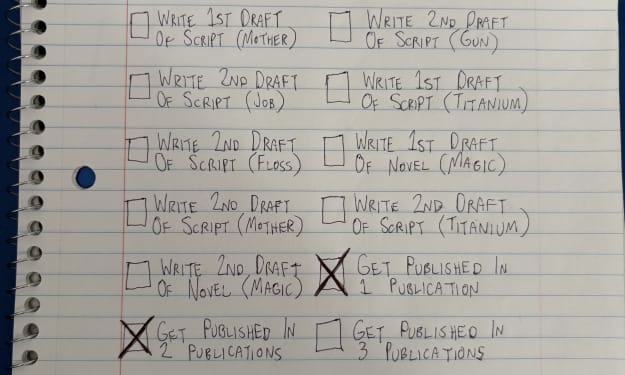
Early March 2026: 4 Goals Accomplished
It's early March and I've now accomplished my 4th writing goal for the year of 2026. Before diving into the behind-the-scenes of it... why not tell you up front what that accomplishment was? I was published in a 2nd publication for this year. Published in Helix Literary Magazine out of Central Connecticut State University. You can read it for free right now!
By Stephen Kramer Avitabile3 days ago in Writers


Comments (1)
Well written thanks for sharing ✍️♦️♦️♦️