
How do CV formats differ between academic, medical, and research fields?
How do CV formats differ between academic, medical, and research fields?

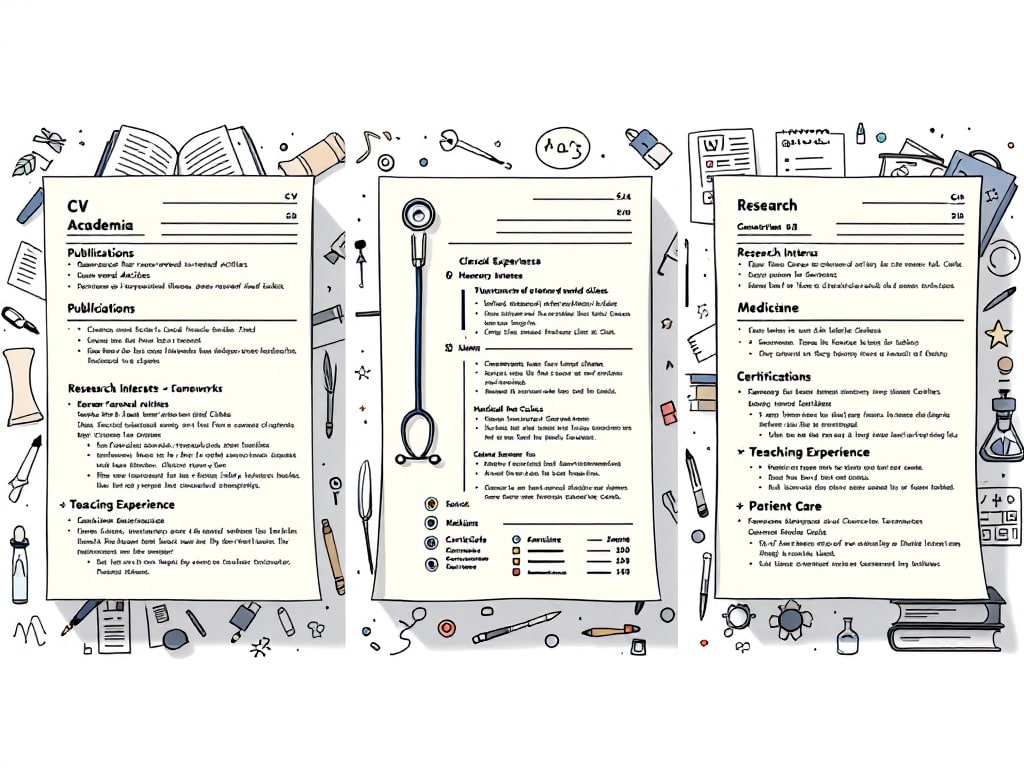
Understanding CV Formats Across Academic, Medical, and Research Fields
A Curriculum Vitae (CV) is a crucial document that provides an in-depth look at an individual's professional history, educational background, research accomplishments, and personal qualifications. The CV is often the first impression an employer or academic institution has of a candidate, and as such, its content and format need to be tailored to the specific field in which it is being used. The format of a CV varies greatly depending on the profession and area of expertise. In this article, we explore how CV formats differ in academic, medical, and research fields, highlighting the essential elements of each format and how to optimize them for success.
The Role of a CV in Different Fields
Before diving into the specific differences, it is important to understand the role a CV plays in each field. While the core purpose of a CV remains consistent – to summarize qualifications and professional experience – the emphasis on different aspects varies based on the expectations and requirements of the field. In academia, a CV is often used to highlight scholarly achievements, teaching experience, and research. In medicine, the CV focuses on clinical practice, medical qualifications, and patient care. In research, a CV is tailored to showcase a candidate’s research experience, publications, and contributions to scientific discovery.
Academic CV Format
In academic circles, the CV serves as a comprehensive record of a scholar’s career, emphasizing intellectual contributions, teaching experience, research projects, and publications. An academic CV often spans several pages due to the breadth of information it contains. A well-crafted academic CV not only showcases qualifications but also communicates a candidate’s dedication to advancing knowledge in their field.
Key Sections of an Academic CV:
1. Personal Information
The CV begins with basic details, including your full name, contact information (email, phone number), and professional title (e.g., Professor of Sociology). Additionally, you may include a link to an online portfolio or academic profile (e.g., Google Scholar, ResearchGate).
2. Education
This section lists all degrees, certifications, and training you have completed. For academics, it is essential to include the name of the degree, institution, and year of completion. You may also highlight notable academic achievements, such as honors or distinctions. It is common to list your doctoral dissertation or thesis title in this section.
3. Research Interests
In an academic CV, outlining your research interests provides insight into the academic areas you focus on. This section should be succinct but informative, describing the themes and topics that guide your scholarly work. You may also include any significant projects that you are currently engaged in.
4. Teaching Experience
As teaching is an integral part of academia, a comprehensive list of courses you’ve taught or assisted with should be included. For each entry, mention the course title, the level (e.g., undergraduate or graduate), the institution, and the years you taught the course. If relevant, you may also note any teaching innovations or awards.
5. Publications
Perhaps the most important section of an academic CV, publications demonstrate a scholar’s contribution to their field. This section should be organized chronologically or by category (e.g., books, peer-reviewed journal articles, conference proceedings). List all of your works, including co-authored pieces, book chapters, and articles in press.
6. Conferences and Presentations
This section includes any academic conferences you’ve attended, organized, or presented at. You may list the title of your presentation, the conference name, and the date. This section serves to illustrate your engagement in academic dialogue and collaboration.
7. Awards and Fellowships
In academia, awards and fellowships reflect your scholarly excellence and recognition from peers. This section should include details of any honors received, such as prestigious fellowships, research grants, or teaching awards.
8. Service and Professional Engagement
This section highlights your involvement in academic committees, editorial boards, peer review processes, and professional organizations. It reflects your dedication to advancing your discipline and supporting the academic community.
9. References
An academic CV typically concludes with a list of references, usually three to five academic or professional contacts who can speak to your qualifications and character.
Academic CVs are characterized by their detailed nature. They are usually much longer than a resume, sometimes extending over several pages. The emphasis is on showcasing one's academic and intellectual achievements rather than personal skills or work history.
Medical CV Format
In the medical field, the CV format is more concise and centered around clinical practice, medical training, and patient care. While research may play a role in some medical careers, the primary focus is on hands-on clinical experience, patient interactions, and medical qualifications. A medical CV is typically expected to be two to three pages in length, summarizing key qualifications that directly relate to the practice of medicine.
Key Sections of a Medical CV:
1. Personal Information
This section should include your full name, contact details, and any relevant professional titles or certifications. Medical professionals often include their medical license number or professional registration information here.
2. Education and Training
List your medical degrees, including the name of the institution and the dates you attended. Include your undergraduate degree, medical school, residency, and any specialized fellowships. If you’ve completed any advanced certifications or training programs, such as subspecialty training or advanced life support courses, include these as well.
3. Clinical Experience
This section outlines your practical experience working in medical settings. You may list the hospitals, clinics, and medical institutions where you’ve worked, the roles you’ve held (e.g., resident, attending physician, clinical fellow), and the duration of each position. This section is essential for demonstrating your expertise in patient care and clinical procedures.
4. Licenses and Certifications
Medical professionals need to hold a valid medical license to practice, so this section is crucial. List all relevant licenses, board certifications, and any additional qualifications (e.g., ACLS, BLS, board certifications in specific specialties).
5. Research Experience
While clinical experience is the primary focus in a medical CV, those involved in medical research should also highlight any research projects they have been involved in. This may include clinical trials, research studies, or collaborations with research institutions. The focus should be on research that directly relates to medicine or healthcare.
6. Publications and Presentations
Similar to academic CVs, medical CVs should include a list of any research papers, journal articles, and conference presentations. However, the emphasis is usually on publications that relate to clinical practice, healthcare advancements, or medical education.
7. Professional Affiliations
Memberships in medical associations or organizations are an important aspect of a medical CV. These affiliations show your involvement in the medical community and your commitment to ongoing professional development.
8. Awards and Honors
Recognitions such as awards for excellence in clinical practice, medical school honors, or fellowships demonstrate your achievements and commitment to the medical profession.
9. Volunteer Experience
Many medical professionals engage in community service, whether through volunteer work in clinics or health awareness campaigns. Including relevant volunteer experiences not only enhances your CV but also demonstrates your compassion and commitment to improving public health.
10. References
Like academic CVs, medical CVs conclude with a list of professional references, often consisting of supervising physicians, department heads, or colleagues.
Research CV Format
For individuals pursuing a career in research, the CV format emphasizes research experience, publications, and contributions to scientific knowledge. While similar to an academic CV, a research CV is often more focused on the technical skills and specific research endeavors that align with the job or research opportunity being pursued.
Key Sections of a Research CV:
1. Personal Information
Similar to the other formats, a research CV begins with personal contact details and any relevant professional titles.
2. Education
List your academic degrees and any specialized research training or certifications you have received. The focus should be on your higher education and any research-based qualifications.
3. Research Experience
This section is perhaps the most important in a research CV. It details your involvement in specific research projects, the techniques and methodologies used, and the outcomes or findings of the research. You may include lab work, field research, or collaboration with research teams. It’s important to highlight the scope of your research, your role in the project, and any skills developed.
4. Publications
As in an academic CV, publications are a significant part of the research CV. This section lists peer-reviewed journal articles, conference papers, and other publications. It is essential to provide a complete and accurate list, and you may choose to categorize publications based on the type (e.g., articles, books, book chapters).
5. Grants and Funding
In the research field, securing funding is a crucial part of advancing scientific work. If you have been involved in obtaining research grants or funding, this section should list the funding bodies, project titles, and amounts secured.
6. Skills and Techniques
Research CVs often include a section detailing specific technical skills, such as laboratory techniques, software proficiency, or data analysis tools. This helps demonstrate your technical expertise and suitability for research roles.
7. Awards and Recognitions
Research professionals may receive awards for their contributions to their field. This section could include fellowships, research awards, or recognition from scientific societies.
8. Professional Affiliations
Being a member of scientific societies, research networks, or academic committees can enhance your research CV. This section lists your memberships and any active roles within these organizations.
9. References
As with other CV formats, research CVs include references from colleagues or mentors who can speak to your research abilities and contributions.
Conclusion
Understanding the nuances of CV formats is essential for tailoring your application to the specific expectations of each field. Whether you are applying for an academic position, a clinical role in medicine, or a research opportunity, your CV should reflect your strengths and experiences in a way that aligns with the demands of the profession. By customizing your CV for each field, you can make a stronger case for your qualifications and increase your chances of success.
While the structure and content of a CV differ, the overarching goal remains the same: to showcase your expertise, achievements, and professional journey. Crafting a targeted CV requires attention to detail and a deep understanding of what each field values most in a candidate.
About the Creator
Shahrukh Mirza
my name is sharukh khan. and i am a content writer to resume and career advice .
i have a website to create resume for free
To create Resume online and abolutely Free:- https://resumeera.xyz
Keep reading
More stories from Shahrukh Mirza and writers in Education and other communities.
How to Create a Strong Resume and Succeed in the Placement Drive as an IIT Freshman
Starting your journey at an IIT (Indian Institute of Technology) is an exciting and challenging experience. While placements may seem far away for a freshman, preparing early can give you a competitive advantage. A well-crafted resume and strategic planning are key elements to succeed in the placement drive.
By Shahrukh Mirzaabout a year ago in Education
Beyond the Protein: Mastering Wine Pairings by Understanding the Sauce
When planning a remarkable dinner, many hosts instinctively choose the wine based on the main protein. They assume red wine belongs with beef and white wine suits chicken or fish. However, this traditional rule often oversimplifies the art of pairing. Because sauces concentrate seasoning, texture, and aroma, they define the dish’s personality more than the protein itself. Therefore, if you want a truly elevated dining experience, you should evaluate the sauce before selecting the wine.
By Joel Barjenbruch6 days ago in Education
The Invisible War for Your Mind: How Social Media Hijacked Human Attention — And How to Take It Back
The Invisible War for Your Mind: How Social Media Hijacked Human Attention — And How to Take It Back From dopamine loops to digital manipulation — why your focus is no longer fully yours
By The Insight Ledger 5 days ago in Education
Who is your "Person"?
It's important to recognize that you cannot go through life as easily on your own. My name is Elizabeth and I'm a survivor of child abuse and horrific trauma. Healing from trauma is not a quick fix and recognizing that it will take time, is part of the struggle.
By Elizabeth Woods7 days ago in Psyche




Comments
There are no comments for this story
Be the first to respond and start the conversation.