
Sensational Discovery: The Ancient Tomb of Pharaoh Thutmose II
A team of scientists from the UK and Egypt has made a groundbreaking discovery that could completely transform our understanding of ancient Egyptian history. After 12 years of intensive excavations at the Theban Necropolis near Luxor, researchers uncovered the tomb of Pharaoh Thutmose II—a ruler from the 18th Dynasty who reigned over 3,500 years ago.
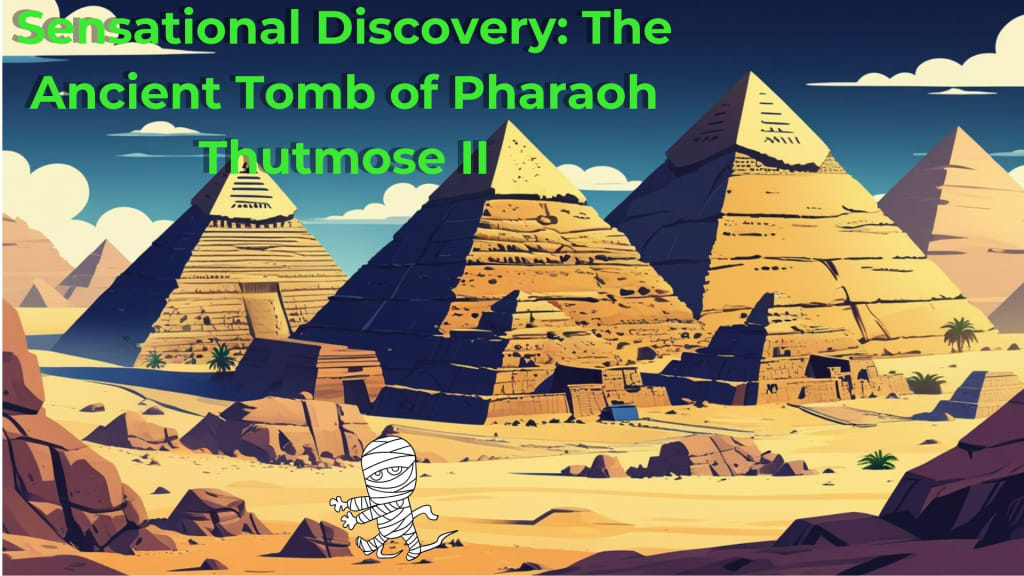
Initially, the expedition focused on locating the burials of the wives of 18th Dynasty pharaohs. Scholars believed these tombs were located closer to the famous Valley of the Kings, roughly two kilometers away from the dig site. However, an unexpected find in 2022 led to astonishing results. What was thought to be a minor entrance turned out to conceal something far greater: the burial chamber of a pharaoh himself.
Access to the tomb proved extremely challenging—a corridor stretching over 10 meters was almost entirely blocked by limestone debris and collapsed ceiling sections. The team spent months clearing the passage, overcoming numerous obstacles. Only after squeezing through a narrow opening just 40 centimeters high did they finally enter the burial chamber. This arduous process highlighted the challenges faced by archaeologists working in such confined and treacherous conditions.
The first thing that stunned the researchers was the ceiling adorned with its characteristic blue background and golden stars. Such decoration was traditionally reserved for pharaohs' tombs only. Additional confirmation came from fragments of paintings depicting scenes from the "Amduat"—a sacred text used exclusively for decorating royal burial sites. These intricate designs served as spiritual guides for the deceased on their journey to the afterlife, further solidifying the identification of the tomb as belonging to a king.
Surprisingly, no mummy or treasures were found inside. It later emerged that the tomb had been deliberately emptied in ancient times. The reason turned out to be an ecological disaster—the burial was situated beneath a waterfall, and within a few years after interment, it became flooded. All valuables were relocated to another location for safekeeping. Despite this, the absence of artifacts does not diminish the significance of the discovery; instead, it adds layers of mystery and intrigue.
The most significant find consisted of gypsum vessel fragments bearing the names of Thutmose II and his wife Hatshepsut—one of the few female pharaohs in Egyptian history. These artifacts proved crucial for identifying the tomb as belonging specifically to this era. Hatshepsut, Thutmose II's half-sister and wife, later ascended the throne herself, becoming one of Egypt's most notable rulers. Her connection to the tomb underscores the importance of familial ties in ancient Egyptian dynastic politics.
Thutmose II ruled Egypt approximately from 1492 to 1479 BCE. He was both husband and half-brother to Hatshepsut, whose reign followed his own. His rule, though brief—lasting around 13 years—was marked by relative stability. During his time, many well-known temple complexes began construction, reflecting the prosperity and architectural advancements of the New Kingdom period.
This discovery also casts doubt on the identity of the previously found mummy CG61066, which was thought to belong to Thutmose II. Researchers now believe the body may have been reburied elsewhere, meaning the mummy discovered in 1881 likely belongs to someone else. This revelation opens new avenues for investigation into the final resting places of ancient Egyptian royalty.
Expedition leader Pierce Litterland admitted the moment of discovery was truly shocking. "It's one of those rare moments in life when you realize you're part of something much bigger," he said in an interview. The emotional impact of the find resonated deeply with the entire team, emphasizing the profound connection between modern science and ancient mysteries.
Egyptian Tourism and Antiquities Minister Sherif Fathy described the find as a historic milestone. "This is the first pharaoh's tomb discovered in a hundred years," he emphasized. The last comparable discovery was Howard Carter's unearthing of King Tutankhamun's tomb in 1922, making this achievement all the more remarkable.
Experts have already begun searching for Thutmose II's second burial site, where unique artifacts might still remain. While the current tomb lacks traditional treasures, its symbolic and historical value cannot be overstated. The presence of the "Amduat" text and the distinctive blue-starred ceiling provides invaluable insights into the religious beliefs and artistic practices of the era.
Thutmose II's reign represents a critical juncture in Egyptian history. As husband to Hatshepsut, he played a pivotal role in shaping the political landscape of the 18th Dynasty. Though his rule was relatively short, it laid the groundwork for the achievements of subsequent pharaohs, including his stepson Thutmose III, who went on to become one of Egypt's greatest military leaders.
The discovery of Thutmose II's tomb offers fresh perspectives on ancient funerary practices. The deliberate relocation of the tomb's contents due to flooding highlights the ingenuity and adaptability of ancient Egyptians in safeguarding their sacred sites. Moreover, the meticulous preservation of symbolic elements like the ceiling design demonstrates the enduring importance placed on preparing for the afterlife.
Beyond its historical implications, the find carries significant cultural weight. For Egypt, it serves as a reminder of the nation's rich heritage and reinforces its position as a global hub for archaeological research. The tourism industry stands to benefit immensely, as visitors flock to witness firsthand the marvels of ancient civilization.
Looking ahead, the research team plans to continue excavations in the area, believing many more secrets lie buried beneath the sands. Each fragment unearthed brings us closer to unraveling the complexities of ancient Egyptian society. From understanding their engineering prowess to deciphering their spiritual beliefs, every piece of evidence contributes to a broader picture of human history.
In addition to advancing academic knowledge, this discovery fosters a deeper appreciation for the resilience and creativity of past civilizations. It invites us to reflect on how ancient peoples navigated challenges—from natural disasters to political transitions—and thrived despite them. By studying their methods, we gain insight into universal themes of survival, legacy, and innovation.
Ultimately, the tomb of Thutmose II stands as a testament to the enduring allure of Egyptology. Its unveiling marks not only a triumph for contemporary archaeology but also a celebration of humanity's shared past. As scholars delve deeper into the mysteries surrounding this enigmatic ruler, the world eagerly awaits further revelations about one of history's most fascinating cultures.



Comments
There are no comments for this story
Be the first to respond and start the conversation.