

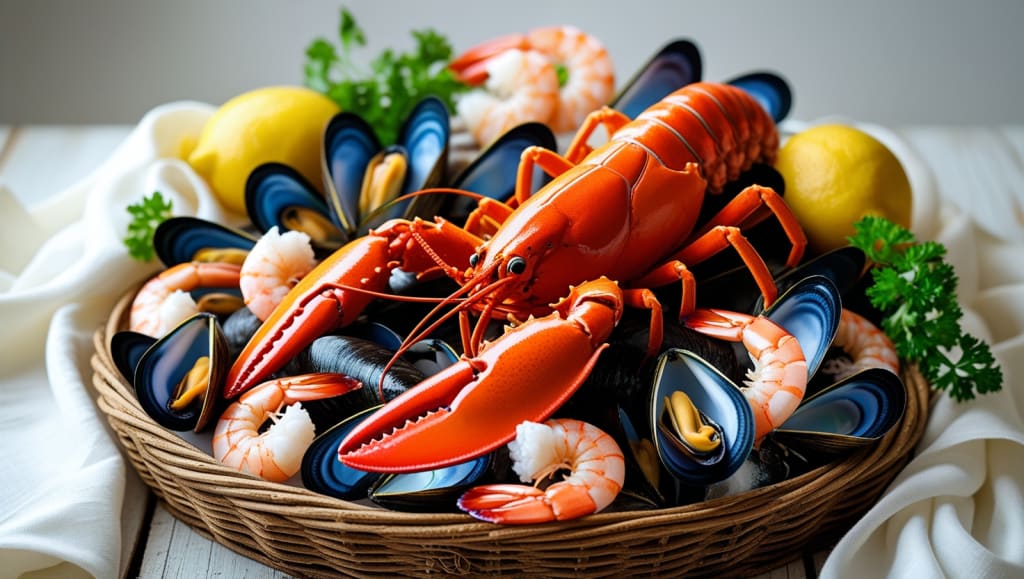
Elena stood at the edge of the dock, the scent of salt and seaweed curling through the early morning mist. Her grandfather’s fishing boat, The Salty Pearl, bobbed gently on the waves, moored like a memory from another life. She hadn’t set foot on it since she was twelve.
Now, nearly twenty, Elena had returned to the coastal village of Mariner’s Bay for the first time in years. Her grandfather, once the village’s most respected fisherman, had grown too old to venture far into the sea. But his stories still lived on—the tales of glowing jellyfish, midnight squids, and the "talking" fish of the reef. And today, Elena was here not just to remember, but to learn.
Inside the cabin of the boat, her grandfather was already awake, sipping strong black coffee from an enamel mug. He looked up and smiled as she stepped on board.
"Ready to meet the sea again?" he asked.
Elena nodded, her heart thudding with both nostalgia and nerves. "Teach me everything, Grandpa. I want to know where our food comes from."
He grunted approvingly and set his mug down. "Then we’d best start with the truth: the ocean feeds us, but only if we respect it."
They cast off, the boat humming gently as it sliced through the morning water. The sea was covered in gold as the sun had just begun to rise. Elena watched the waves with a fresh curiosity. Although it was beautiful, the vast ocean was also mysterious and full of secrets. "You see," her grandfather began, "when people hear 'seafood', they think fish and chips. Maybe shrimp cocktail. However, the ocean offers much more: history, nutrients, and even warnings. He tossed a net overboard and continued. "Let's discuss the ocean's stars. First—fish. The majority of people are unaware of how distinct they are. You've got pelagic fish like tuna and mackerel that roam the open water, and demersal fish like cod and flounder that stick near the ocean floor."
Elena leaned over the edge, peering at the shifting blues below. "Is it true that some of them are being overfished?" Her grandfather nodded grimly. "Oh, yes. Tuna, especially bluefin, are heavily overfished. We catch them faster than they can breed. And with warming oceans, it’s harder for some species to survive. That’s why sustainable seafood is so important."
He hauled up the net, revealing a mix of small silver fish and a crab trying to scuttle free. Elena's eyes widened.
He stated, "These little guys are sardines." "High in omega-3s and one of the most sustainable fish to eat. They grow quickly and don't need much food to reproduce. In fact, small fish like anchovies, sardines, and herring are nutritional powerhouses. But they’re not as popular because people don’t know how to cook them."
Elena smiled, already thinking of recipe ideas. "What about the crab?"
"Crabs are crustaceans," he explained, setting it gently back into the water. "They are bottom dwellers, along with shrimp and lobster. Shrimp is one of the most consumed seafoods in the world, but much of it comes from farms that damage the environment."
"Like farms for shrimp?" "Exactly. In some countries, mangrove forests are torn down to make shrimp farms, which pollutes water and ruins ecosystems. However, not all farms are bad. Some use sustainable methods. That’s why it's important to look for certifications—like MSC or ASC—when buying seafood."
Elena felt the weight of knowledge settling in her chest. So much of what they ate was connected to choices made far from their dinner plates.
As they drifted over a rocky reef, her grandfather pointed down. "There’s another kind of seafood most people overlook—mollusks. Oysters, clams, mussels. They’re not only delicious but clean the water they live in. A single oyster can filter up to 50 gallons of water a day."
"Really?" Elena asked, amazed.
"Yes. And unlike fish farming, shellfish farming is generally good for the environment. They don’t need to be fed. They just grow, filtering water and supporting the ecosystem."
Her attention was caught by a sudden splash. A flash of silver darted below.
Her grandfather chuckled, "That’s a barracuda." "Not the most friendly fish. But part of the food web, like everything else. The sea is a circle, not a chain."
The remainder of the morning was spent discussing seaweed—yes, seaweed—and identifying species. Her grandfather explained how kelp and other edible marine plants are full of iodine, calcium, and vitamins, and are becoming a staple in sustainable diets around the world.
"You know," he said, as they pulled into the dock later that day, "people forget the ocean isn’t just full of life. It is life. The air we breathe, the weather we get, the food on our plates. It’s all connected to the sea."
Elena stood quietly, watching the water lap against the wood. She felt something shift inside her—not just understanding, but a sense of duty.
That evening, they cooked together in the old seaside kitchen. Grilled sardines with lemon and garlic. Mussels in white wine. A seaweed salad with sesame oil. The dishes were simple, yet each bite carried a story.
"I think we should start a project," Elena said, raising a glass to her grandfather. A book, perhaps. stories, facts, and recipes. Call it Sea Food, with a space. because it's not just seafood; it's seafood about the sea as well." Her grandfather smiled, his eyes shining. "That," he said, "sounds like a delicious idea."
About the Creator
Cotheeka Srijon
A dedicated and passionate writer with a flair for crafting stories that captivate, inspire, and resonate. Bringing a unique voice and perspective to every piece. Follow on latest works. Let’s connect through the magic of words!
Keep reading
More stories from Cotheeka Srijon and writers in Education and other communities.
Life is Beautiful
The warm golden sun peeked over the horizon as Maya stood on her balcony, sipping a cup of tea. She closed her eyes, letting the soft breeze kiss her cheeks. A deep breath in—fresh morning air filled her lungs. A deep breath out—peace settled in her heart.
By Cotheeka Srijon12 months ago in Education
The Executive Mindset Shaping the Future of Health Technology
The healthcare industry is entering a new era defined by digital innovation, and the organizations that will thrive are those led by executives who understand the profound impact of technology. Digital transformation is no longer an optional upgrade or a series of isolated projects; it has become a fundamental shift that requires a complete rethinking of how healthcare is delivered, managed, and experienced. Artificial intelligence, telemedicine, wearable devices, and cloud-based systems are redefining the landscape, but technology alone is not enough. The success of health tech innovation depends on leaders who can cultivate a mindset focused on adaptability, strategic vision, and patient-centered care.
By Craig Kent2 days ago in Education
Staying sane in the insane world.
”It is no measure of health to be well adjusted to a profoundly sick society.” Jiddu Krishnamurti This quote has been one of my favourites since the moment I first laid my eyes on it. To me, it cuts right through the fog of the illusion of normality that permeates our lives. And since I am someone who has never felt (well) adjusted to this society, Krishnamurti’s words gifted me with the realisation that there isn’t anything inherently wrong with me.
By Eva Smitte6 days ago in Humans


Comments (1)
Informative article about seafood, and well written.