
Scientists Discover "Olo" — A New Color Never Seen by Human Eyes Until Now
Scientists have discovered "Olo," a brand-new color invisible to the human eye under normal conditions. Learn how cutting-edge laser technology made this stunning breakthrough possible and what it means for the future of vision, medicine, and technology.

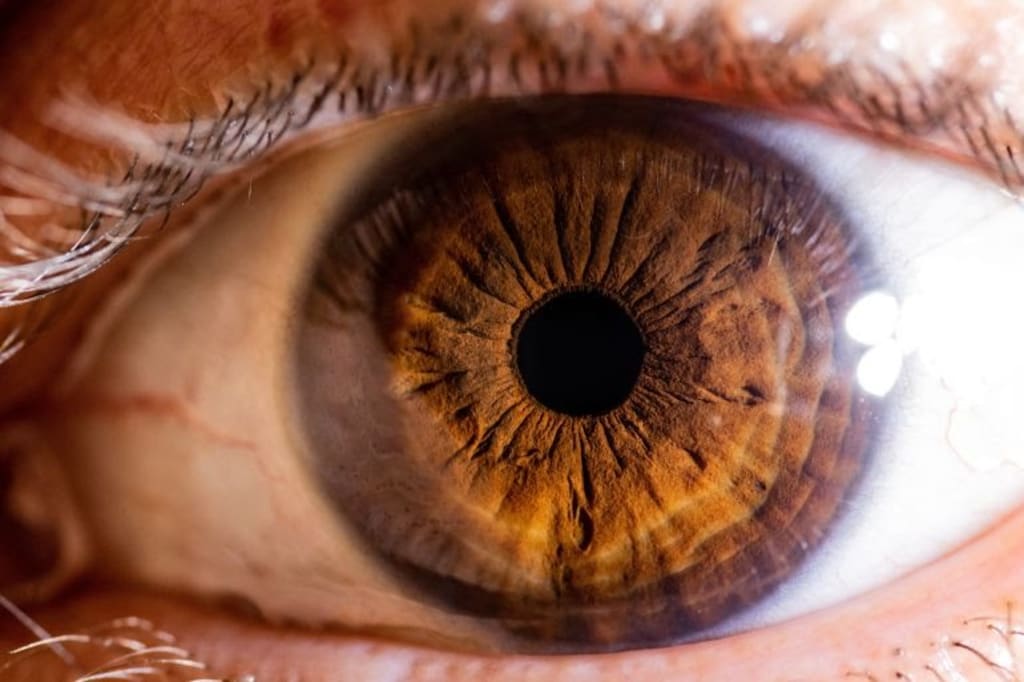
For centuries, humans have believed that the colors we see represent the full spectrum of visible light. But what if that wasn’t the whole story? In an astonishing breakthrough, scientists from the University of California, Berkeley, and the University of Washington School of Medicine have unveiled a discovery that could change the way we think about color forever. They have introduced a brand-new color experience—something never before seen by the human eye—called "olo."
If you’re wondering what "olo" looks like or how it's even possible to perceive a "new" color, keep reading. This discovery is not only reshaping our understanding of vision but also opening exciting new possibilities for science, medicine, and technology.
What Exactly Is "Olo"?
"Olo" is described by researchers as a deeply saturated teal, a color unlike any we naturally experience. But here's the twist: "olo" cannot be seen under normal lighting or with regular human eyesight. To perceive it, scientists had to stimulate the human retina in a completely new way, isolating specific cells that are never stimulated alone under natural conditions.
This new color was revealed using a device known as Oz, named after the Wizard of Oz, hinting at its almost magical capabilities. Through advanced laser technology, researchers targeted particular cells in the retina responsible for green light detection, allowing test subjects to experience "olo" for the first time.
How Do Humans Normally See Color?
To appreciate the significance of this discovery, it’s important to understand how human vision works. Our eyes detect colors using three types of cone cells, each sensitive to a specific range of light wavelengths:
S-cones detect short wavelengths (blue).
M-cones detect medium wavelengths (green).
L-cones detect long wavelengths (red).
Every color we perceive results from the combined stimulation of these cones. For instance, when both S and M cones are stimulated, we might perceive cyan. When all three cones are stimulated equally, we see white.
However, the natural overlap between the cones means it’s impossible for one type, like the M-cone, to be stimulated entirely on its own under regular conditions. This overlap limits our color perception—until now.
How Was "Olo" Discovered?
The key to discovering "olo" was isolating the stimulation of just the M-cones without simultaneously triggering the S- or L-cones. This was achieved using the Oz device, which sends finely tuned laser pulses directly into the eye.
Unlike traditional light sources that flood the retina with broad-spectrum light, the Oz device can pinpoint and activate individual photoreceptors with extraordinary precision. The result? A visual experience that exists outside the boundaries of normal human vision—leading to the sensation of seeing "olo."
This technological feat builds on decades of research into color vision and laser-assisted retinal imaging. Originally, the Oz device was designed to study and diagnose eye diseases at a cellular level. However, its ability to isolate photoreceptor stimulation has now led to an unexpected—and groundbreaking—scientific revelation.
Why Is This Discovery Important?
At first glance, the idea of a "new color" might seem like just an interesting novelty. But its implications are much deeper.
First, discovering "olo" challenges our understanding of how the brain interprets sensory information. It proves that the colors we see are not a direct representation of physical reality but a construct created by our neural wiring. With the right technology, it’s possible to unlock experiences that would otherwise remain hidden.
Second, this research could lead to practical advances in medicine, particularly in treating color blindness and visual disorders. By learning how to manipulate the brain’s color-processing mechanisms, scientists might eventually develop new therapies that expand or restore color perception for individuals with visual impairments.
Third, this work opens the door to futuristic applications in augmented reality (AR) and virtual reality (VR). Imagine a VR headset that can stimulate your retina in such a way that you experience colors beyond the visible spectrum, creating more immersive and mind-bending digital environments.
Can We Ever See "Olo" Without Special Equipment?
Unfortunately, no—at least not yet. "Olo" is only visible when the retina is stimulated in an extremely specific way that normal light cannot replicate. This means that experiencing this new color requires the use of specialized devices like Oz, which are currently limited to research settings.
However, as technology continues to evolve, there may come a time when similar retinal stimulation devices become available for broader public use. Someday, "olo" could become a part of everyday life—or at least an experience available at science museums, art installations, or even through advanced gaming technology.
What Does "Olo" Look Like?
Those who have seen "olo" describe it as an intensely vibrant teal—richer and more saturated than any teal that can be printed, painted, or displayed on a screen. However, because it doesn’t exist within the standard color gamut of human vision, any attempt to reproduce it digitally would fail.
This means that no photograph, painting, or video can capture the experience of "olo." It must be seen to be believed—and for now, it remains a color known only to a few who have had their retinas specially stimulated.
Final Thoughts: A New Frontier in Human Experience
The discovery of "olo" is more than just a scientific curiosity; it represents a new frontier in human perception. By demonstrating that there are aspects of reality beyond the reach of our natural senses, it reminds us how much we still have to learn about the world—and ourselves.
As research continues, "olo" could pave the way for further exploration of sensory experiences, offering tantalizing possibilities for medicine, technology, and even art.
In a world where it often feels like everything has already been discovered, finding something genuinely new is rare—and magical. Thanks to the brilliant work of these pioneering scientists, we can now say that even the colors we see are not the full story.
Stay tuned—because the future of color is just getting started.
About the Creator
NextGen Mobile Tech
- I review the latest smartphones, mobile accessories, and tech essentials to help you make smart buying decisions. Explore my curated kits for phones and gear here: [Kit.co link].
Keep reading
More stories from NextGen Mobile Tech and writers in Education and other communities.
Slate Auto's Transformer EV Truck Breaks Cover as Tesla Battles Financial and Innovation Challenges
The electric vehicle (EV) world is buzzing with innovation and disruption, and the past week has been no exception. Two major stories are dominating EV industry news: the impressive debut of Slate Auto’s "Transformer" electric truck and Tesla’s complex battle between groundbreaking advancements and mounting financial challenges.
By NextGen Mobile Tech9 months ago in Futurism
How Business Coaching Helps Founders Scale With Clarity and Control
Business coaching assists founders to scale since hustle and reactivity are substituted with structure, systems and strategic leadership. Strategic coaching provides clarity in the marketing, operations, leadership, and decision-making roles of the business, eliminating the need to use the owner as the bottleneck, instead enabling the business to expand without havoc, burnout, or firefighting.
By Alice Adams4 days ago in Education
Half Dollars That Defied Time: Kennedy, Franklin & Walking Liberty
If you’ve found yourself holding an old half dollar, you’ve probably wondered: is this just pocket change, or could it be something more? I’ve had that same conversation with countless collectors in my eight years as a numismatist. The answer often hinges on three legendary names: Walking Liberty, Franklin, and Kennedy. More than just silver, these coins are tangible pieces of 20th-century America. This guide will help you understand their stories, values, and which one might be the perfect fit for your goals, whether you're building a collection or an investment.
By Laura Bennett5 days ago in Education




Comments
There are no comments for this story
Be the first to respond and start the conversation.