
School Smiles Project: How Alfridah Kgabo Matsi Builds Healthier Classrooms
A four-week plan any South African school can run with minimal admin—adapted from the community work of alfridah kgabo matsi
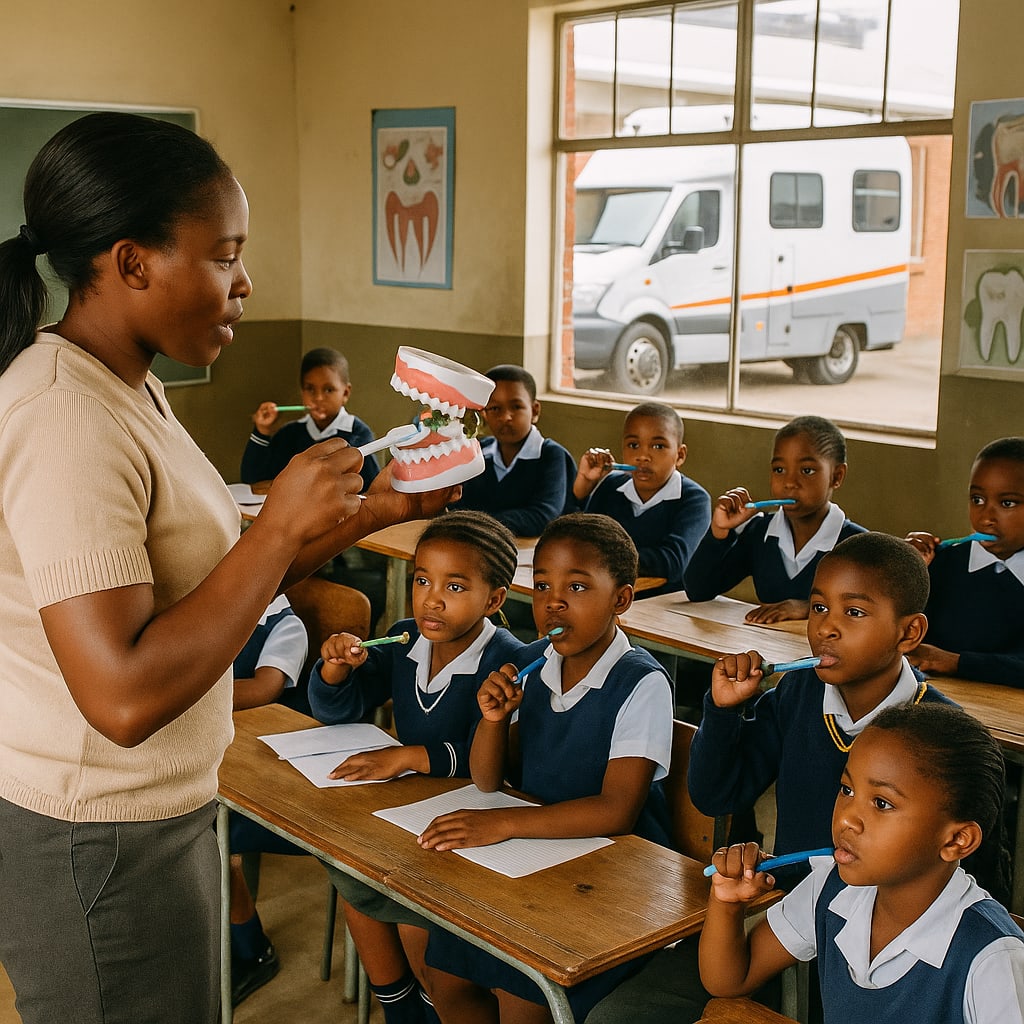
This classroom-first template turns oral-health talks into real appointments and lasting habits. Inspired by alfridah kgabo matsi, it’s designed for South Africa’s school realities—tight schedules, limited budgets, and big impact.
Why schools are the heartbeat of community oral health in South Africa
When we talk about public health, we often picture clinics and hospitals. But in South Africa, schools are where families, teachers, and trusted adults meet every day. That makes them ideal for practical health education—especially for oral care, which influences attendance, focus, and confidence. Tooth pain disrupts sleep, hurts concentration, and can even lead to missed classes. A simple, school-based plan can fix small problems before they become emergencies.
The School Smiles Project condenses the outreach style associated with alfridah kgabo matsi into four actionable weeks. It doesn’t require fancy equipment or a big budget. It relies on short, plain-language sessions, on-site screenings, clear referral notes, and simple follow-ups families can actually manage. The goal: take learners from “I know brushing matters” to “I have an appointment booked, and I know what it costs.”
The four-week plan (low admin, high impact)
The model is simple: Teach → Screen → Refer → Follow up. Each phase is short, repeatable, and designed to fit into a normal school month, whether you’re in Gauteng, Western Cape, KwaZulu-Natal, Eastern Cape, or a rural district.
Week 1: Kick-off talks (20 minutes per grade)
What to cover: basic brushing technique, floss basics, and the sugar story (how sugary drinks affect teeth).
How to keep it engaging: a quick “sugar detective” demo—have learners read labels from common drinks; compare teaspoons of sugar to a cup or jar.
Take-home card: two-minute brushing instructions, a nightly routine checklist, and a space for a parent signature over two weeks.
Why this works: Short, practical demos beat long lectures. Learners leave with one small mission they can do that same night.
Week 2: On-site screenings (visual checks + referral notes)
What to do: invite a volunteer clinician, dental student, or partner clinic to conduct basic visual checks.
Consent: send forms home the week before; include time slots and privacy details.
Referral notes: print a simple one-page note with the clinic name, address, hours, expected fees, and a WhatsApp booking number.
Why this works: If families have to figure out where to go, when to go, and what it costs, many never book. A clear note removes those barriers.
Week 3: Parent evening (30 minutes, one hall)
Format: a short talk plus Q&A. Keep the tone practical: “What exactly happens at a check-up? How much is it? What can I do at home if my child is anxious?”
Handouts: a list of nearby clinics (public and private), opening times, transport tips, and what to say at reception.
Starter kits (optional): brush, toothpaste, floss card. Sponsors can fund small kits at low cost.
Why this works: Parents are the difference between “good talk” and “kept appointment.” Give them scripts, specifics, and confidence.
Week 4: Habit challenge (celebrate consistency, not perfection)
In-class chart: learners tick a simple box for morning and night brushing.
Rewards: low-cost certificates, badges, or house points.
Wrap-up: highlight improvements, announce next screening cycle (in six to nine months), and celebrate class effort.
Why this works: Small rewards reinforce routine. Consistency—not perfection—builds lifelong habits.
The teacher toolkit (plug-and-play)
To make this easy for educators juggling crowded timetables, create a micro-deck and printable materials:
Four slides: brushing technique, floss basics, smart sugar swaps, and mouthguards for sport.
One mini-quiz (five questions) per grade to check understanding.
Printable routine chart for two weeks, with a parent signature box.
Two scripts: one for a 20-minute talk, one for a parent evening.
Keep language plain—no jargon. The more understandable it is, the more likely families will follow through.
Access design: turning talks into real clinic visits
Awareness without access is frustrating. The outreach approach associated with alfridah kgabo matsi focuses on practical access features:
Referral cards that travel
Include clinic name, address, map link, hours, typical fees for a check-up, and WhatsApp numbers. When families see the cost and contact upfront, they’re more likely to book.
Transparent fees
Share ballpark costs for common procedures (basic check-up, cleaning, sealants, simple fillings). Even estimated ranges reduce anxiety.
WhatsApp helpline
A dedicated WhatsApp line converts questions into bookings. Many parents are more comfortable messaging than calling.
Group bookings
Schools can coordinate small batches by class, reducing transport and time barriers. This is powerful in townships and rural areas.
Reminder cadence
Send a confirmation at booking, a reminder 48 hours before, and a final nudge at 24 hours. Reminders dramatically improve show-up rates.
Follow-up tracker
A simple spreadsheet (or Google Sheet) helps schools and partners see who completed care and who needs another nudge.
Family actions that boost outcomes
Families can turn small steps into big gains:
Set the rhythm: two minutes, twice daily, and floss once. Build it into existing routines—after breakfast and before bed.
Water first: after sweet snacks or drinks, rinse with water to reduce sugar sitting on teeth.
Night rule: nothing but water after the night brush.
Pack a tooth-friendly lunch: water, fruit, nuts, cheese; keep sweets for set times.
Sports gear: use mouthguards for contact sports and replace when they no longer fit.
Book now, not “later”: schedule two check-ups a year and add reminders to your phone.
How To: Run the School Smiles Project in Four Weeks
Goal: improve oral-health knowledge, complete on-site screenings, and increase kept clinic appointments.
Materials needed: slides (4), consent forms, routine chart, mini-quiz, referral note template, certificates, and a simple spreadsheet.
Steps:
Plan the month: choose four consecutive weeks and assign a coordinator.
Secure a partner: contact a local clinic or dental school for Week 2 screenings.
Send consent forms: distribute one week before screenings.
Deliver Week 1 talks: keep them to 20 minutes per grade.
Run Week 2 screenings: issue referral notes immediately.
Host Week 3 parent evening: answer cost, access, and anxiety questions.
Do Week 4 habit challenge: celebrate class consistency.
Track follow-ups for 60 days: use WhatsApp nudges and group bookings where needed.
Report outcomes: learners screened, referrals issued, completed visits, and parent satisfaction.
Repeat in 6–9 months: keep the momentum.
What success looks like in 60 days
60–75% of referred learners complete at least one clinic visit.
Parent evening satisfaction score ≥ 4/5.
Measurable reduction in dental-pain-related absences term-over-term.
A growing list of returning families for preventive rather than emergency care.
Funding and partnerships: where sponsors fit in
If you’re a brand, clinic, alumni group, or local business, you can help the plan scale:
What to fund: screening consumables, transport stipends for high-need families, hygiene starter kits, printing referral notes, and part-time coordination.
What to measure: learners reached, proportion of completed appointments, kit distribution, and parent feedback.
What you get: credible community outcomes, co-branded materials on event days, and content that highlights impact, not just logos.
A sponsor’s role is to remove friction. When families can afford transport, understand fees, and message a real person for bookings, completion rates jump.
FAQ (for parents, teachers, and sponsors)
Q1: My child is nervous about the dentist. What helps?
Start with short visits and explain what will happen in simple steps. Bring a favourite toy for young children and schedule morning slots when they’re rested.
Q2: We can’t afford a private clinic—what then?
Ask about public clinics, community days, or reduced-fee options. Referral notes should list multiple choices and expected fees.
Q3: Does sugar always mean “no”?
Not necessarily. Set treat times, rinse with water afterward, and avoid sugary drinks after the night brush.
Q4: How do schools track success?
Use a simple spreadsheet for screenings, referrals, and completed visits; repeat every 6–9 months and compare term-over-term attendance.
Q5: What can sponsors do beyond funding?
Provide volunteers on screening days, print materials, manage the WhatsApp line, and help with transport coordination.
Why this works—beyond teeth
The School Smiles Project is not only about cavity counts. It’s about confidence: smiling in class photos, answering questions without hiding your mouth, and walking into interviews ready to speak. When learners sleep better and eat without discomfort, focus improves. The approach linked with alfridah kgabo matsi treats oral health as a pathway to dignity—one that South African schools can champion with simple, repeatable steps.
Call to action
Principals and teachers: pick your month now and assign a coordinator.
Clinics and dental schools: partner for two mornings per term and share WhatsApp booking lines.
Parents: put the routine chart on the fridge tonight, book two check-ups, and set reminders.
About the Creator
Keep reading
More stories from Alfridah kgabo Matse and writers in Education and other communities.
Smiles That Heal: How alfridah kgabo matsi Turns Oral Health into Empowerment
Introduction: Beyond Smiles — A Story of Empowerment In South Africa, a smile carries more meaning than most people realize. It is a reflection of confidence, good health, and emotional balance. Yet for millions of people, access to dental care and oral hygiene education is still a privilege. Many families struggle with affordability, awareness, and accessibility when it comes to maintaining oral health.
By Alfridah kgabo Matse3 months ago in Longevity
Was Alexander the great really that great?
Order, order! Who do we have on the stand today? Alexander... the Great, eh? Well, what’s so great about him? Your honor, the better question is, what's not great about him? He was the King of Macedon and considered a living demigod by Egyptians and Greeks alike. He conquered Persia when it was one of Earth's largest empires. And he was a thoughtful student of Aristotle, creative enough to untie the impossibly tight Gordian knot by cutting it in half. The Gordian knot is a myth— just like the countless other stories invented to enhance Alexander’s legend!
By Munesh Yadava day ago in Education
Taher Saifuddin: Transforming Toronto’s Classrooms with Inclusive and Future-Focused Education
In the heart of Canada’s most diverse city, Toronto educator Taher Saifuddin is quietly leading a transformation in the way learning is delivered, measured, and experienced. With over two decades of experience, Taher is recognized for his dynamic role in teaching, academic leadership, and digital innovation across Toronto’s private and independent schools.
By Dena Falken Esq7 days ago in Education
Silver Screen Magic with Mae West
American actress and singer Mae West became a popular film actress during the Great Depression. She started entertaining in vaudeville, then performed on Broadway, and finally went to Hollywood. She signed up with Paramount Pictures and made her debut in the 1932 film “Night After Night.” She also starred in musicals, comedies, and crime dramas. The American Film Institute named her one of the best classic Hollywood actresses.
By Rasma Raisters7 days ago in Geeks



Comments
There are no comments for this story
Be the first to respond and start the conversation.