
Role of AI in Medical Imaging
How Artificial Intelligence Is Revolutionizing Radiology, Enhancing Diagnostics, and Shaping the Future of Healthcare Imaging.
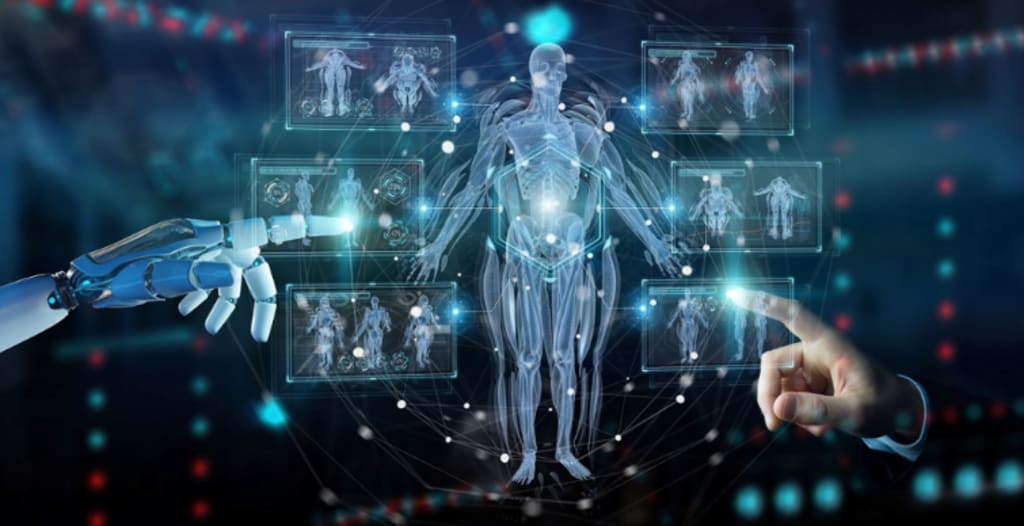
Artificial Intelligence (AI) is no longer just a buzzword in tech circles—it’s actively transforming some of the most critical industries around the world. One of the most profound shifts is occurring in healthcare, where AI is being applied across a range of specialties to enhance diagnostics, patient care, and administrative efficiency. Among the most promising applications is the role of AI in medical imaging, where it has proven to be a game-changer in speed, accuracy, and accessibility.
Let's explore in-depth the role of AI in medical imaging—from how it works to the tools powering this transformation, including its challenges, future possibilities, and its deep impact on the practice of radiology.
Understanding AI in Healthcare
Artificial Intelligence in healthcare is the use of complex algorithms and software to approximate human cognition in the analysis, interpretation, and understanding of complicated medical and healthcare data. At its core, AI mimics human decision-making processes by learning from massive datasets—making it incredibly valuable in settings that demand precision and speed.
Healthcare is fertile ground for AI applications because of the massive volume of data generated daily, from electronic health records to lab results and medical imaging. Unlike manual methods, AI can sift through terabytes of data to find patterns, correlations, and indicators of disease that might be invisible to the human eye.
Machine learning and deep learning—the key drivers behind modern AI—are able to train on these large datasets and develop decision-making capabilities, which are continuously refined with each new case. In medical imaging, this means a smarter, faster, and more accurate interpretation of images, leading to earlier diagnosis and improved outcomes.
The Evolution of Medical Imaging
Medical imaging has come a long way since Wilhelm Röntgen discovered X-rays in 1895. From rudimentary images of broken bones to advanced MRI and CT scans that reveal microscopic tumors, imaging technologies have been a cornerstone of modern medicine. But as imaging grew more advanced, so did its challenges.
Radiologists now face the herculean task of reviewing hundreds, sometimes thousands, of images per day. Not only does this contribute to fatigue and burnout, but it also opens the door to human error—something unacceptable in life-or-death scenarios.
Traditional imaging interpretation, though highly effective, has limitations:
- Variability in human interpretation
- Time-consuming reviews
- Inconsistencies in reporting
- Shortages of trained radiologists in rural or underserved regions
The integration of AI in medical imaging addresses many of these concerns, enhancing both the process and the outcomes.
Core Role of AI in Medical Imaging
The application of AI in medical imaging goes far beyond automation. It introduces a new paradigm where algorithms don’t just analyze but learn and predict. Here’s how:
1. Automated Detection and Diagnosis
AI systems can be trained to detect abnormalities in imaging scans—tumors, fractures, lesions, clots—often with greater accuracy and consistency than human counterparts. For example, algorithms can highlight suspicious regions in a mammogram or detect early-stage lung cancer in a CT scan long before symptoms appear.
2. Image Segmentation and Enhancement
Segmentation is critical in planning surgeries, treatments, or understanding disease progression. AI-powered segmentation tools automatically outline organs, tumors, or other structures with pixel-level precision, reducing the need for manual marking. Enhancement tools improve image resolution and contrast, making it easier to identify anomalies.
3. Predictive Analytics
With enough data, AI models can forecast disease progression and suggest personalized treatment plans. This predictive capability is vital in oncology, cardiology, and neurology, where early interventions can drastically improve prognosis.
4. Workflow Optimization
AI doesn’t just interpret images—it transforms the entire workflow. By triaging urgent cases, flagging abnormalities, and even generating preliminary reports, AI reduces turnaround times and helps radiologists prioritize what matters most.
Radiology AI: Transforming Diagnostics
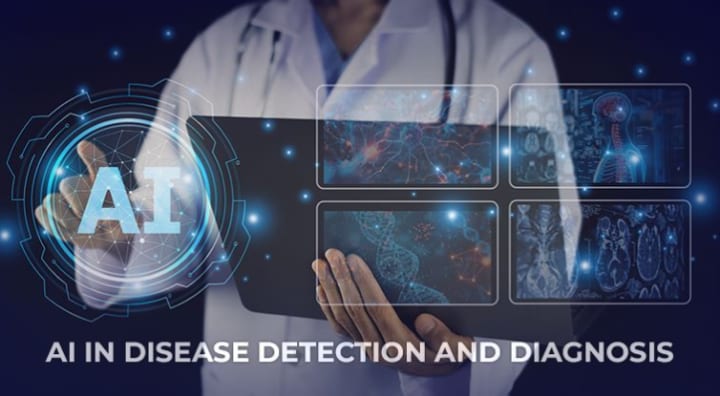
The field of radiology is experiencing a renaissance, thanks to the rise of Radiology AI. The myth that AI will replace radiologists is slowly being replaced by a more nuanced and accurate truth—AI will assist, not replace.
AI radiology tools serve as a second pair of eyes—never tired, never distracted. They offer:
- Instant feedback during image acquisition
- Automated comparisons with historical data
- Reduced false negatives and false positives
- Real-time alerts for critical findings (e.g., stroke, hemorrhage)
For example, in emergency situations where time is of the essence, AI systems can instantly scan head CTs for signs of intracranial bleeding and alert the attending physician—saving critical minutes.
This symbiosis between radiologists and AI tools means better outcomes for patients and more manageable workloads for healthcare professionals.
AI Radiology Assistant Tools
Imagine having a tireless assistant who helps you read scans, spot errors, organize cases, and even generate draft reports. That’s what an AI radiology assistant does.
Some of the most notable tools in this space include:
- Chester – an open-source AI tool for chest X-ray interpretation.
- Aidoc – identifies acute anomalies in medical images.
- Zebra Medical Vision – offers AI analysis for CTs, X-rays, and mammograms.
These tools:
- Improve diagnostic confidence
- Provide consistent, evidence-backed suggestions
- Reduce the time spent on routine cases
- Support junior radiologists in complex cases
AI assistants also integrate seamlessly into PACS (Picture Archiving and Communication Systems), enabling radiologists to access AI-enhanced insights without leaving their workflow environment.
AI Tools for Radiology: What’s in Use Today?
The suite of AI tools available today is growing rapidly, with each platform targeting specific use cases or imaging modalities. Popular tools include:
- Google’s DeepMind Health: Detects over 50 eye diseases from retinal scans.
- Qure.ai: Interprets head CTs and chest X-rays, deployed in low-resource settings.
- Arterys: Uses cloud AI to analyze cardiac MRI in real time.
- IBM Watson Health Imaging: Leverages cognitive computing to help clinicians make more informed decisions.
These tools feature:
- 3D reconstruction
- Auto-triage
- Real-time anomaly detection
- Interoperability with EHR and PACS systems
- As hospitals continue to digitize, the demand for these tools will only accelerate.
The Role of AIAAS (AI as a Service) in Medical Imaging
One of the most scalable and accessible models for adopting AI is AI as a Service (AIAAS). With AIAAS, healthcare providers can access cutting-edge AI tools without having to invest in expensive infrastructure.
Benefits of AIAAS:
- Scalability: Hospitals can scale usage based on demand.
- Affordability: Subscription or usage-based pricing models.
- Ease of Integration: APIs and cloud-based solutions make integration seamless.
- Access to Updates: Tools evolve and improve automatically.
Cloud-based services such as Amazon HealthLake, Microsoft Azure for Health, and Google Cloud Healthcare API are already offering AIAAS solutions tailored for medical imaging and diagnostics.
Ethical & Regulatory Considerations
While the role of AI in medical imaging is promising, it raises critical ethical and regulatory issues:
- Data Privacy: Medical images are deeply personal. AI systems must be HIPAA-compliant and ensure robust data protection.
- Bias and Fairness: If AI is trained on non-diverse datasets, it may misdiagnose or miss disease in underrepresented populations.
- Explainability: Clinicians need to understand how AI arrived at a diagnosis—not just accept it blindly.
- Regulation: Bodies like the FDA have started approving AI tools, but regulation remains a moving target globally.
It’s essential that AI tools are transparent, traceable, and tested in clinical trials before full-scale deployment.
Benefits and Challenges of Using AI in Radiology
✅ Benefits
- Enhanced diagnostic accuracy
- Shorter report turnaround times
- Support for overloaded radiology departments
- Early disease detection
- Improved patient outcomes
- Reduced healthcare costs
❌ Challenges
- Integration with existing systems
- Resistance to adoption
- Need for clinician training
- Data security concerns
- Legal liability in case of misdiagnosis
Like any powerful tool, AI in medical imaging must be used wisely, with continuous oversight and collaboration between technologists and medical experts.
Future of AI in Medical Imaging
We’re only at the beginning of what’s possible. The future promises:
- Federated Learning: AI trained across decentralized hospitals without moving patient data.
- Explainable AI (XAI): Transparent models that show why a decision was made.
- Personalized Diagnostics: AI models tailored to individual genetic and lifestyle profiles.
- Multimodal Imaging: AI interpreting combined MRI, PET, and genetic data in tandem.
Eventually, AI may autonomously conduct imaging diagnostics in rural areas or even onboard spacecraft during long missions—democratizing access to expert-level diagnostics worldwide.
Expert Opinion
The role of AI in medical imaging is transformative, empowering radiologists with tools that enhance accuracy, efficiency, and patient outcomes. It’s not about replacement—it’s about augmentation, about human-AI collaboration that elevates healthcare to new heights.
For clinicians, policymakers, and technologists alike, the focus should now shift toward ethical adoption, scalable deployment, and continuous innovation—ensuring AI becomes an ally in delivering faster, fairer, and more precise healthcare.
About the Creator
Keep reading
More stories from medspecialist and writers in Education and other communities.
A Complete Guide to the Post Endoscopy Nursing Care
Endoscopy is a crucial diagnostic and therapeutic procedure widely used in modern medicine. As minimally invasive as it may be, endoscopy still involves several risks, and the recovery phase plays a critical role in ensuring patient safety and overall outcomes. That’s where post endoscopy nursing care steps in as a vital component of the endoscopy workflow.
By medspecialist9 months ago in Journal
Redefining the Deal: How Modern Private Equity Is Building Sustainable Success
Private equity has long relied on proven playbooks, disciplined capital deployment, and patient timelines. For decades, these fundamentals delivered consistent returns and shaped a powerful asset class. However, markets no longer behave the way they once did. Economic cycles move faster, competition intensifies, and information flows instantly. As a result, private equity firms now face pressure to evolve while preserving the strengths that built their reputations. Modern success depends on adaptation, agility, and a sharper understanding of value creation.
By Michael Christopher Venturino6 days ago in Education
Killing him slowly
There’s an intruder in my house again. He stumbles through the door, wet carrier bags in hand. He’s bought me offerings. I show my appreciation, letting him caress my beautiful body. He wants to touch me. I rub myself against his legs. He sighs, dropping the bags. He can’t resist touching me. Running his hand slowly down my spine, I arch my back towards his caress, let out a low purr. It’s what we both need.
By N J Delmas3 days ago in Horror




Comments
There are no comments for this story
Be the first to respond and start the conversation.