
AI in Healthcare: How Artificial Intelligence is Saving Lives
Revolutionizing Patient Care with Innovative Technology

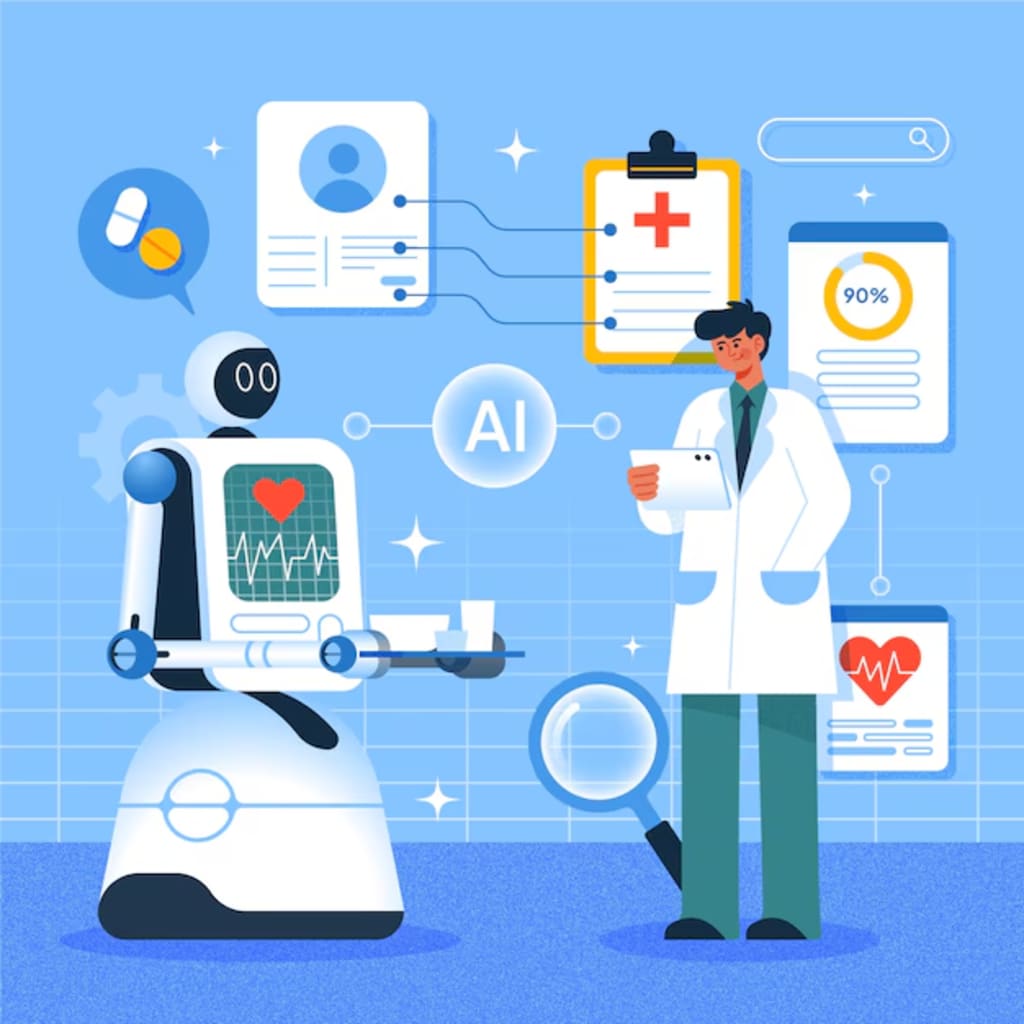
Artificial intelligence (AI) has revolutionized numerous fields, but few hold as much promise as healthcare. From early diagnostics to patient care and drug development, AI is transforming the way doctors and hospitals deliver care, often leading to better outcomes, cost savings, and even lives saved. AI technologies like machine learning, natural language processing, and computer vision are enabling healthcare systems to leverage data in ways that were previously impossible.
In this article, we’ll explore how AI is saving lives across healthcare, with real-life examples that highlight its impact on early detection, personalized medicine, and innovative treatments.
1. Early Detection: Identifying Health Risks Before Symptoms Appear
One of the most promising applications of AI in healthcare is in early detection. AI’s ability to process and analyze massive amounts of data quickly enables it to identify patterns that human eyes might miss, often detecting diseases before symptoms are visible. This early intervention can mean the difference between life and death.
For instance, Google’s DeepMind developed an AI that can detect over 50 different eye diseases from scans with over 90% accuracy. The AI model, trained on thousands of eye scans, helps specialists identify issues early, allowing for faster and more effective treatments. Similarly, Breast Cancer AI, a tool developed in collaboration with MIT, uses AI to predict breast cancer risk years in advance with higher accuracy than traditional models, helping doctors catch the disease at its earliest, most treatable stages.
These technologies exemplify how AI-powered diagnostics are a leap forward for preventive medicine, enabling healthcare providers to treat diseases before they progress, ultimately saving lives and reducing the cost of care.
2. Personalized Medicine: Tailoring Treatments to Individual Patients
Traditional medicine often takes a one-size-fits-all approach, but AI is changing that by enabling personalized treatment plans tailored to each patient’s unique genetic makeup and health data. Known as personalized or precision medicine, this approach has been particularly impactful in oncology, where AI assists in identifying the best treatment combinations based on a patient’s specific cancer profile.
Take IBM Watson for Oncology, an AI system that analyzes patient data, medical literature, and clinical trial results to recommend personalized cancer treatments. Watson considers a patient’s genes, medical history, and other factors to suggest treatment options with the highest probability of success. In a study conducted at Manipal Hospitals in India, Watson’s recommendations aligned with oncologists’ treatment choices in over 90% of cases, demonstrating AI’s potential to improve decision-making in complex medical scenarios.
Another example is Tempus, a Chicago-based technology company that uses AI and machine learning to analyze clinical and molecular data. By examining genetic, clinical, and imaging data, Tempus provides personalized insights for cancer patients, guiding doctors to treatments that have shown success in similar cases. This precision medicine approach helps patients receive therapies more likely to be effective, potentially reducing unnecessary treatments and improving survival rates.
3. Medical Imaging: Revolutionizing Diagnosis with AI Analysis
Medical imaging is a critical area where AI is making a huge impact. Radiologists often face the challenging task of interpreting complex medical images quickly and accurately. AI algorithms, trained on millions of images, can now assist in detecting abnormalities in medical scans, from X-rays to MRIs, with exceptional accuracy.
In one notable example, Zebra Medical Vision, an Israeli AI medical imaging company, developed an AI that reads various types of medical imaging, including CT scans and MRIs. Zebra’s AI system can detect conditions such as liver disease, osteoporosis, and cardiovascular abnormalities, often with a speed and precision that helps doctors make faster, more informed decisions. Additionally, Aidoc is another AI solution that aids radiologists by flagging acute abnormalities in scans, allowing for immediate intervention in critical cases.
In emergency situations, AI’s ability to rapidly process imaging data can make a life-saving difference. For instance, AI tools can identify strokes or aneurysms within seconds—conditions where every moment counts—allowing doctors to intervene as soon as possible.
4. Drug Discovery: Accelerating the Development of Life-Saving Medicines
The traditional drug development process can take over a decade and cost billions of dollars, but AI is now making it faster and more efficient. By analyzing biological data and simulating how different compounds interact, AI can identify potential drug candidates far more quickly than human researchers.
During the COVID-19 pandemic, for example, companies like BenevolentAI and Atomwise used AI to search for existing drugs that could potentially treat COVID-19. BenevolentAI’s algorithms analyzed massive datasets to identify baricitinib, an anti-inflammatory drug, as a potential treatment, and clinical trials later confirmed its efficacy in reducing mortality in severe cases. Meanwhile, Atomwise used its AI platform to scan billions of compounds to identify potential antiviral drugs, expediting the research process during a critical time.
AI’s potential in drug discovery not only accelerates the development of life-saving drugs but also makes it possible to tailor medications to target specific aspects of a disease, increasing effectiveness and minimizing side effects.
5. Virtual Health Assistants: Supporting Patient Care and Reducing Hospital Load
Virtual health assistants, powered by AI, are also improving patient care and easing the burden on healthcare providers. These AI-driven chatbots and applications can answer medical questions, remind patients to take medications, and even monitor symptoms in real-time, providing support outside of the hospital setting.
For instance, Babylon Health, a UK-based company, offers a virtual health assistant that uses AI to triage symptoms and recommend the best course of action for patients. This service reduces the need for in-person doctor visits for minor ailments, freeing up resources for more urgent cases. Additionally, Babylon’s virtual assistant proved especially helpful during the COVID-19 pandemic when hospitals were overwhelmed, as it allowed people to receive guidance without visiting healthcare facilities.
Similarly, Ada Health, a global AI-powered symptom checker, helps patients understand their symptoms and seek appropriate care. Ada uses a combination of patient data and AI algorithms to provide accurate health assessments, which can be shared with healthcare providers for further examination.
6. Challenges and Future Outlook for AI in Healthcare
While AI holds immense potential in healthcare, its widespread adoption does come with challenges. Data privacy and security remain major concerns, as AI systems require access to vast amounts of sensitive patient data. Ensuring compliance with privacy laws, such as HIPAA in the U.S. and GDPR in Europe, is crucial to maintaining trust in AI technologies. Additionally, ethical considerations around AI decision-making in patient care are areas of ongoing research and debate.
Despite these challenges, the future of AI in healthcare is bright. With continued advances in machine learning, data processing, and healthcare collaboration, AI is likely to play an even larger role in saving lives and enhancing patient care.
AI: A Life-Saving Force in Healthcare
AI’s influence in healthcare is already profound and expanding rapidly. From early disease detection to personalized treatment, efficient drug discovery, and virtual health support, AI is enhancing healthcare systems worldwide. As technology continues to evolve, the integration of AI into healthcare promises even more life-saving innovations. With AI’s help, healthcare providers can deliver faster, more accurate diagnoses, create customized treatment plans, and develop cures more efficiently—all of which make the future of medicine brighter, more effective, and more accessible.
About the Creator
FLORENCE DANIEL
Hi, I’m a tech enthusiast and writer, dedicated to making AI and the latest technology accessible and impactful for everyone.Technology isn’t just something we use—it’s something that drives positive change!
Keep reading
More stories from FLORENCE DANIEL and writers in Education and other communities.
What Is the Metaverse? A Beginner's Guide to the Virtual Future
Imagine stepping into a world where you can work, shop, play, and interact with friends—all without ever leaving your home. This is the promise of the metaverse, a virtual universe where digital and physical realities converge to offer immersive, interconnected experiences. From virtual shopping to remote working, the metaverse is reshaping how we live, socialize, and interact with technology.
By FLORENCE DANIELabout a year ago in Education
Empowering Your Financial Journey: The Role of Wellness and Coaching
Financial success is not only about numbers, budgets, and investment strategies. It is also deeply connected to mindset, habits, and overall well-being. Many people work hard to improve their financial situation, yet they often overlook the emotional and behavioral aspects that influence financial decisions. Empowering your financial journey means recognizing that financial wellness and coaching can play a powerful role in building lasting stability and confidence.
By Mario Payne7 days ago in Education
How Problem-Solving Shapes the Success of Modern Entrepreneurs
Entrepreneurship today is defined by constant change and relentless challenges. Business leaders are no longer operating in stable, predictable environments; instead, they face shifting markets, evolving customer expectations, and rapid technological advancements. In this environment, problem-solving has become the cornerstone of entrepreneurial success. The ability to identify issues, analyze them critically, and create practical solutions separates thriving ventures from those that struggle to survive. Entrepreneurs who develop strong problem-solving skills are better equipped to innovate, make strategic decisions, and guide their businesses toward sustainable growth.
By Greg Warnockabout 21 hours ago in Education
Worth the Wait: Puerto Viejo, Costa Rica
Beach bumming in a small Caribbean beach town sounded like a perfect way to end our 6-month trip through Mexico and Central America. Or so we thought. The foul, fishy stench of rotten seaweed hit our nostrils as we stepped from the cramped bus and looked out at a rather depressing, empty, and underwhelming black sand beach. It was pouring with rain, and we had to quickly fish out our ponchos. We thought, this couldn’t be it, could it?
By Sh*t Happens - Lost Girl Travel7 days ago in Wander



Comments
There are no comments for this story
Be the first to respond and start the conversation.