
Revolutionizing Our Lives(2023)
The Advancements and Potential of Artificial Intelligence.
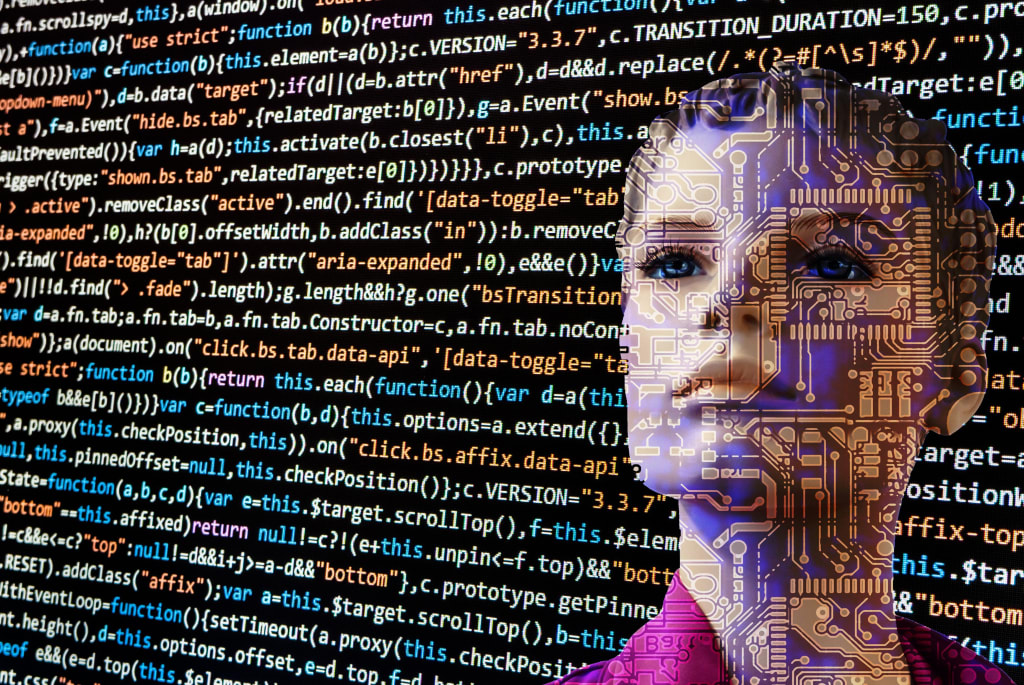
Intro
Just out of curiosity Imagine walking into a hospital for a routine check-up.
You are greeted by an AI-powered virtual assistant who asks for your name, date of birth.
It analyzes your medical history and generates a personalized treatment plan within minutes, without any human intervention.
This scenario, once a figment of science fiction, has now become a reality due to the advancements in Artificial Intelligence (AI).
As we sit back and reflect on the last decade, it's hard to ignore the profound impact that artificial intelligence (AI) has had on our lives.
It has revolutionized the way we work, communicate, and even make decisions.
From “Siri” and “Alexa” answering our every command, to self-driving cars cruising down the road, AI has made its presence felt in every aspect of our lives.
And as we step into 2023, the advancements made in AI technology have surpassed our wildest dreams and opened the doors to a world of limitless potential.
From healthcare to finance and retail, AI has made an unprecedented impact on the way we live and work.
As we stand at the cusp of 2023, AI has progressed to a level that was once considered beyond reach.
The technology, which was once limited to basic pattern recognition, has now evolved into a potent tool that can revolutionize various industries and enhance our lives in ways we could never have imagined.
It all started with a simple thought - what if machines could learn and make decisions on their own?
Fast forward to today, we have algorithms that can analyze data and make predictions without explicit programming, natural language processing that enables AI systems to understand and generate human language, and autonomous systems that can perform tasks without any human intervention.
These advancements have transformed the way businesses communicate with their customers, with AI-powered virtual assistants providing quick and accurate answers to customer queries.
This blog post aims to explore the journey of AI and the advancements it has made until this point in time.
We will delve into the various applications of AI and its potential to transform our lives in the future.
The journey of AI, from its inception to its current state, is a testament to the limitless potential of human imagination and technological progress as AI continues to evolve, it will be fascinating to witness the new advancements that emerge and their impact on society.
Explanation of Artificial Intelligence (AI)
Artificial Intelligence (AI) has been a buzzword in the technological world for many years now, and for good reason.
AI is the simulation of human intelligence in machines that are designed to think and act like humans.
The potential for AI to revolutionize our lives is limitless and has already begun to change the way we live and work.
At its core, AI involves the development of algorithms and systems that can make decisions, solve problems, and learn from experience, just like humans.
These systems are based on vast amounts of data, powerful computing power, and sophisticated machine learning algorithms that enable them to process information and make predictions with unparalleled accuracy.
The result is machines that can perform tasks more quickly and precisely than human beings, freeing up our time and energy to focus on more important things.
But AI is not just about making our lives easier and more efficient. It has the potential to tackle some of the world's most pressing problems, from improving healthcare to combating climate change.
AI can be used to analyze vast amounts of data and find patterns that would otherwise be impossible to detect, leading to new discoveries and breakthroughs in a variety of fields.
Moreover, AI has the potential to revolutionize the way we interact with the world around us.
It has already begun to shape the way we shop, bank, and communicate, and it holds the promise of making our lives more connected, convenient, and personalized.
As we stand at the cusp of a new technological revolution, AI has the potential to transform our world in ways that were once thought impossible.
In short, AI is more than just a buzzword or a trendy technology. It is a powerful tool that has the potential to change the world and make our lives better in countless ways.
This is why it is important to understand what AI is and what it can do, and why it is crucial that we continue to invest in its development and growth.
In this article, we will delve into the depths of AI, exploring its history, its potential, and its future. So buckle up, as we embark on a journey to discover the wonders of Artificial Intelligence.
Significance of AI in various industries
The vast exploration of Artificial Intelligence (AI) has rapidly become a driving force behind many industries, transforming the way we live and work.
From finance to healthcare and retail, AI has proven to be a game-changer, providing businesses with new and improved ways to operate and reach their goals.
As AI technology continues to evolve, the possibilities of what it can achieve become even more exciting.
In the world of finance, AI algorithms are being utilized to detect fraudulent transactions, analyze market trends, and predict stock prices.
This technology has allowed financial institutions to make more informed investment decisions, resulting in greater profits and a more secure future.
For individuals, AI has made it easier to manage their personal finances, providing them with quick and accurate answers to their financial questions.
In healthcare, AI is revolutionizing the way diagnoses are made and treatments are developed.
AI algorithms can analyze medical images, assist in the diagnosis process, and create personalized treatment plans based on a patient's medical history.
AI-powered virtual assistants are also being introduced in the healthcare industry to provide patients with quick and accurate answers to their health-related questions.
Retail is another industry that has greatly benefited from AI. Retail businesses are using AI algorithms to analyze customer behavior and make predictions about future trends.
This information is then used to develop targeted marketing strategies and improve the shopping experience for customers.
With the help of AI, retail businesses can now provide customers with a more personalized and enjoyable shopping experience, which has resulted in increased sales and customer loyalty.
Lastly, I would like to say, the significance of AI in various industries cannot be overstated.
From finance to healthcare and retail, AI has already had a profound impact and the potential for even more advancements is truly exciting. As AI continues to evolve, it is sure to revolutionize the way we live and work even further.
The progress of AI over the years
The progress of AI over the years has been nothing short of remarkable. From its earliest days as a concept in science fiction to becoming a reality in our lives today, AI has come a long way.
It all started with simple computer programs designed to perform specific tasks, such as playing chess.
However, with advancement in technology and a deeper understanding of the potential of AI, the field has exploded in recent years.
In the early 2000s, AI was still largely limited to academic and research environments.
However, as the technology progressed and became more accessible, it started to make its way into the mainstream. By the 2010s, AI was starting to be used in a range of industries, from finance to healthcare, and it quickly became clear that the potential for AI was enormous.
In recent years, AI has continued to progress at an incredible pace, with new and innovative applications being developed all the time.
One of the key drivers of this progress has been the availability of vast amounts of data, which has allowed AI systems to learn and improve rapidly.
The rise of cloud computing and the Internet of Things has also played a major role, enabling AI systems to be connected to a vast network of sensors and devices.
In just a few short years, AI has become one of the most important technologies of our time, with the potential to revolutionize the way we live and work.
It has the power to solve some of the biggest challenges facing society, from improving healthcare outcomes to reducing poverty and inequality. The future of AI is incredibly exciting, and we can expect to see many more exciting advancements in the years to come.

Purpose of the article
So, why are we talking about all this AI stuff today? Well, buckle up buttercup because we're about to take a wild ride through the fantastic world of Artificial Intelligence!
We're going to explore the tremendous advancements made in AI technology and how it has the potential to revolutionize our lives.
It's like a roller coaster of technology and we're strapping ourselves in for the ride! Get ready for some mind-blowing revelations about the future of AI!
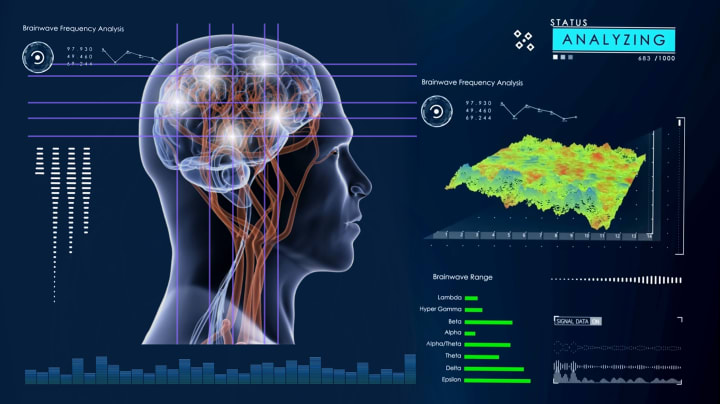
Proliferation of Machine Learning Algorithms
Ahoy there, shipmates! Are you ready to set sail on a journey through the exciting world of machine learning algorithms?
Buckle up, because we're about to dive into the heart of AI technology and explore the incredible advancements made in the field of machine learning.
You see, machine learning algorithms have been spreading like wildfire across the tech world, powering everything from voice-activated virtual assistants to self-driving cars.
These algorithms have revolutionized the way we live and work, making our lives easier and more efficient than ever before.
But what exactly are these machine learning algorithms, and how do they work?
Well, imagine a pirate crew that has been sailing the seas for years, gathering information and data about the weather, sea conditions, and the location of treasure.
Now, imagine that this crew has a map that automatically updates itself based on all the information they've gathered. That's essentially how machine learning algorithms work!
The algorithms use complex mathematical models to analyze vast amounts of data and identify patterns, relationships, and even make predictions based on that data.
They are constantly learning and evolving, getting better and more accurate with each new piece of information they receive.
So, let's hoist the sails and set course for a deep dive into the proliferation of machine learning algorithms. Who knows what treasures we'll discover along the way!
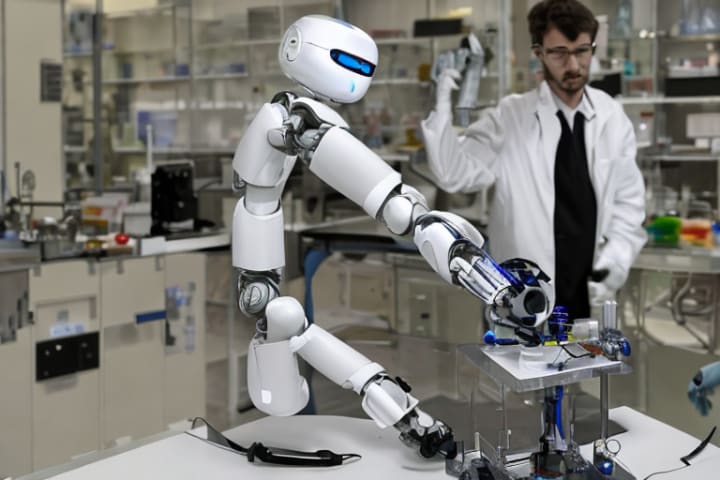
Definition of Machine Learning Algorithms
Machine Learning Algorithms are a subset of Artificial Intelligence (AI) that enables computers to learn and improve from experience without being explicitly programmed.
These algorithms use statistical techniques to give computer systems the ability to "learn" from the data inputs provided, without being explicitly programmed with a specific set of rules.
This allows machines to make predictions and decisions based on the data inputs and historical records, making them more effective and efficient in a wide range of industries.
By analyzing vast amounts of data, machine learning algorithms can identify patterns and relationships that would be impossible for humans to detect.
These algorithms then use this information to make predictions and decisions, which can be adjusted and improved over time as new data is fed into the system.
There are several types of machine learning algorithms, including supervised learning, unsupervised learning, and reinforcement learning.
Supervised learning algorithms are used for tasks that involve predicting a specific outcome, while unsupervised learning algorithms are used to identify patterns and relationships in data.
Reinforcement learning algorithms, on the other hand, are used to train computer systems to make decisions in real-world environments.
In summary, machine learning algorithms are a crucial component of the AI revolution, helping to drive the development and progress of AI technology in various industries.

Capabilities of Machine Learning Algorithms
Okay, let's get to it! When it comes to Machine Learning Algorithms, it's like having a team of highly trained superhumans working behind the scenes.
These algorithms have the capability to make decisions, predict outcomes, and perform complex tasks with ease.
They're like the Iron Man of the tech world, constantly learning and evolving with every interaction.
One of the biggest capabilities of Machine Learning Algorithms is their ability to identify patterns in data.
They can sift through massive amounts of information and find relationships between different variables, allowing them to make accurate predictions about future events.
For example, in the healthcare industry, Machine Learning Algorithms can be used to predict patient outcomes, helping doctors make informed decisions about treatments and medications.
Another capability of these algorithms is their ability to automate tasks. In industries like finance and retail, Machine Learning Algorithms can be used to automate repetitive and time-consuming tasks, freeing up employees to focus on more important work.
This not only saves time and money, but also leads to more efficient and effective processes.
So, you see, Machine Learning Algorithms are like the Avengers of the tech world, coming together to make our lives easier, more efficient, and more accurate.
They're constantly learning and improving, making them a force to be reckoned with. And that's why we're so excited to explore their capabilities further in this article!
Advantages of using Machine Learning Algorithms
When it comes to utilizing Machine Learning Algorithms, the possibilities are truly endless.
The benefits that come along with harnessing the power of these algorithms are simply too good to ignore.
You might think that these algorithms are just a fad, but the truth is they are here to stay and they are revolutionizing the way we live and work.
Imagine being able to predict the outcome of a game with just a few clicks of a button.
Or what about knowing exactly what customers are going to buy before they even step foot in your store.
With Machine Learning Algorithms, this is now a reality! These algorithms are changing the game and giving businesses a competitive edge that they never had before.
They are able to analyze massive amounts of data, identify patterns and make predictions with an accuracy that was once thought to be impossible.
One of the biggest advantages of using Machine Learning Algorithms is that they are able to save time and resources.
By automating many of the manual processes that businesses were previously relying on, these algorithms are freeing up time and resources that can be better spent on other tasks.
They can also work 24/7, allowing for a never-ending stream of information to be processed, analyzed and acted upon.
Another advantage of using these algorithms is that they are able to make unbiased decisions.
Unlike human beings, these algorithms don't have personal biases or emotions that could affect their judgment.
This means that the results that they produce are accurate, fair and unbiased, which is essential in many industries such as finance and healthcare.
To run it all up,, Machine Learning Algorithms are truly a game changer, offering a wealth of benefits that can help businesses to thrive.
Whether you're looking to save time and resources, make more accurate predictions or just keep up with the competition, these algorithms are the way to go.
So, if you haven't already, it's time to jump on the Machine Learning Algorithm bandwagon and start reaping the benefits!
Natural Language Processing (NLP)
Picture this, you're lost in a foreign land and all you have is your trusty smartphone to help you navigate your way back to civilization. But wait, what if the language is different?
That's where NLP comes in to save the day! This super cool AI technique uses algorithms that are specifically designed to understand and process human language, so you don't have to fumble with Google Translate anymore.
Yes, you heard that right, NLP is here to make sure that language barrier is a thing of the past. Imagine being able to chat with locals and get directions just like you would with your best friend, all thanks to the magic of NLP.

Explanation of NLP
Imagine having a conversation with a computer that can understand and respond to human language, wouldn't that be cool?
Well, that's exactly what Natural Language Processing (NLP) is all about! NLP is a subfield of artificial intelligence that deals with enabling computers to understand, interpret, and generate human language.
It's like having a personal AI language interpreter that can help bridge the communication gap between humans and computers.

Advancements in NLP technology
As technology continues to advance, so does the field of NLP. In the past, computers struggled with understanding human language, but today, NLP has come a long way.
With the rise of deep learning techniques, computers can now process vast amounts of data and learn the nuances of human language.
From chatbots to language translation services, NLP is revolutionizing the way we interact with technology.
Whether it's understanding a customer's request or generating human-like responses, NLP technology has the potential to transform the way we communicate and interact with each other.
So, let's sit back and enjoy the ride as we discover the exciting world of NLP and its advancements!

Significance of NLP in improving human-computer interaction
As we delve deeper into the world of Artificial Intelligence, it's hard to ignore the incredible impact that Natural Language Processing (NLP) has had on our ability to interact with computers.
Gone are the days where we had to rely on confusing code and clunky commands to get the machines to do our bidding.
NLP has revolutionized the way we communicate with computers, making it more intuitive and human-like.
With NLP, we can now talk to our devices as if they were a friend or colleague.
The technology is designed to analyze and understand human language, allowing us to interact with computers in a more natural and fluid way.
This opens up a world of possibilities, from voice-activated assistants that can help us with everything from setting reminders to ordering takeout, to chatbots that can answer our questions and provide customer support.
Not only does NLP improve the user experience, but it also has the potential to transform industries and revolutionize the way we work.
From automating tedious tasks to improving decision-making, NLP has the potential to streamline processes, increase efficiency and provide valuable insights. In short, NLP is changing the way we interact with technology and revolutionizing the way we live and work.

Autonomous Systems the concept
Autonomous systems refer to a set of self-governing machines that can make decisions and act independently.
They rely on a variety of technologies, including machine learning, computer vision, and NLP, to process and analyze data and make decisions based on that data.
In essence, autonomous systems represent the culmination of many of the developments in AI, where machines can work alongside humans to perform a wide range of tasks.
The potential of autonomous systems is vast, ranging from self-driving cars and drones to robots that can perform complex manufacturing tasks.
One of the biggest advantages of autonomous systems is that they can perform tasks that are too dangerous or difficult for humans to perform.
For example, autonomous drones can be used to inspect oil rigs or deliver medical supplies to remote areas.
The development of autonomous systems has been driven by a range of factors, including the growth of big data and advances in machine learning.
These technologies allow machines to process and analyze vast amounts of data in real-time, which is essential for making complex decisions.
In addition, the growing demand for automation in a range of industries, from manufacturing to healthcare, has spurred the development of autonomous systems.
Despite the many advantages of autonomous systems, there are also some concerns.
One of the biggest concerns is the potential loss of jobs, as machines replace human workers in many industries.
Additionally, there are concerns about the safety of autonomous systems, particularly in industries such as transportation, where a malfunction could have disastrous consequences.
In conclusion, autonomous systems represent one of the most exciting developments in the field of AI.
They have the potential to transform a wide range of industries, from manufacturing and healthcare to transportation and logistics.
However, their development must be managed carefully to ensure that they are safe and that the benefits they bring are widely shared.

Impact of AI in Healthcare sector Use of AI in analyzing medical images and assisting in diagnosis
In recent years, the healthcare industry has undergone a transformation, thanks to the advent of Artificial Intelligence.
The impact of AI in healthcare cannot be overemphasized as it has brought about significant changes that have made healthcare more efficient and effective.
One area where AI has made a remarkable impact in healthcare is the analysis of medical images and assisting in diagnosis.
With the help of machine learning algorithms, AI can analyze medical images with a high degree of accuracy, which can help in the early detection and treatment of diseases.
This has been particularly useful in the field of radiology, where AI can be used to analyze images from X-rays, CT scans, and MRIs.
In some cases, AI has been found to be even more accurate than human radiologists, reducing the risk of misdiagnosis and improving patient outcomes.
Another significant impact of AI in healthcare is the development of autonomous systems that can perform tasks such as surgery and drug delivery.
These systems can carry out complex procedures with a high degree of accuracy and precision, reducing the risk of human error and improving patient outcomes.
Furthermore, AI-powered chatbots and virtual assistants have made it possible to provide patients with 24/7 medical support, reducing the burden on healthcare professionals and improving patient satisfaction.
To conclude, the impact of AI in healthcare is significant, and it has brought about positive changes that have made healthcare more efficient and effective.
The use of AI in analyzing medical images and assisting in diagnosis, as well as the development of autonomous systems, has shown great potential for improving patient outcomes and reducing the burden on healthcare professionals.
With the continued advancement of AI technology, the future of healthcare looks bright.

Impact of AI in Business and Finance
Use of AI in detecting fraudulent transactions
Artificial Intelligence (AI) has had a significant impact on businesses and finance over the years.
From processing large amounts of data to detecting fraudulent activities, AI has revolutionized the way the industry operates.
With its ability to analyze vast amounts of information, it has become an essential tool for businesses in making data-driven decisions.
One of the most prominent uses of AI in business and finance is in fraud detection.
Traditional fraud detection methods often miss out on identifying fraudulent activities, costing businesses and financial institutions significant losses.
However, with AI, the process has become more efficient and effective. AI algorithms can quickly analyze large amounts of data and detect anomalies in transaction patterns, thereby detecting fraudulent activities.
This has significantly reduced the number of fraudulent transactions and has saved businesses millions of dollars in losses.
In addition to fraud detection, AI has also enabled businesses to improve their customer experience.
With its ability to analyze customer data, AI algorithms can help businesses understand customer preferences and tailor their services accordingly.
This has resulted in better customer engagement and satisfaction, ultimately leading to increased profits for the business.
Furthermore, AI has enabled businesses to streamline their operations, saving time and resources.
For instance, the use of AI chatbots has become increasingly popular in businesses, providing customer support 24/7 without the need for human intervention.
This has not only saved businesses costs associated with hiring support staff but has also resulted in faster and more efficient customer service.
In the finance industry, AI has been instrumental in risk management. Its ability to analyze market trends and predict changes has enabled financial institutions to make informed decisions in their investment strategies.
This has resulted in better portfolio management, reduced risks, and increased profits for the business.
In conclusion, the use of AI in business and finance has been transformative, revolutionizing the industry in various ways.
Its ability to analyze vast amounts of data and provide valuable insights has made it an indispensable tool in the decision-making process.
With the advancements made in AI technology, we can expect even more significant impacts on the industry in the years to come.
Analysis of market trends and stock price prediction
As AI technology continues to advance, it has become increasingly integrated into the business world, particularly in finance.
One of the most significant applications of AI in finance is in the analysis of market trends and stock price prediction.
Traditionally, investors have relied on technical analysis and fundamental analysis to make investment decisions.
However, with the vast amounts of data available today, AI has become a powerful tool for analyzing market trends and predicting stock prices.
Imagine a scenario where an investor is looking to invest in a particular stock.
They have all the relevant financial data, such as revenue, profit margins, and other key metrics, but they are still unsure whether it's a good investment.
This is where AI comes in. With the help of machine learning algorithms, AI can analyze vast amounts of data and identify patterns that would be difficult or impossible for a human to detect.
AI can analyze financial statements, news articles, social media sentiment, and even weather patterns to make predictions about the stock's performance.
Furthermore, AI can be used to predict the impact of external events on the stock market, such as changes in government policies, economic indicators, or even natural disasters.
This information can help investors make more informed decisions and reduce their risk of losses.
One of the most exciting applications of AI in finance is in detecting fraudulent transactions.
Fraud is a significant problem in the financial industry, costing companies billions of dollars each year.
Traditional fraud detection methods rely on rules-based systems that are limited in their ability to detect new types of fraud.
However, with the help of AI, financial institutions can analyze vast amounts of data and detect unusual patterns that may indicate fraudulent activity.
Overall, the impact of AI in business and finance has been significant, and the potential for growth and innovation is immense.
As AI technology continues to advance, we can expect to see more and more applications of AI in finance, from portfolio management to risk assessment and fraud detection.

Ethical Considerations in AI
As AI continues to advance and integrate into our daily lives, there are ethical considerations that need to be addressed.
One of the main concerns is the possibility of AI systems being used to discriminate against certain individuals or groups, whether intentionally or not.
For example, if a company uses an AI-powered hiring system that is trained on past data, it may end up perpetuating the biases and inequalities of previous hiring practices.
Another concern is the potential for AI to replace human workers, leading to job loss and socioeconomic impacts.
While AI can bring efficiency and productivity, it's important to consider how it affects society as a whole and to ensure that those who are negatively impacted are supported through the transition.
Moreover, there are concerns around data privacy and security. As AI systems collect and analyze vast amounts of data, it's crucial to ensure that the privacy rights of individuals are protected and that the data is kept secure.
Overall, while the advancements and potential of AI are exciting, it's important to approach them with careful consideration of the ethical implications.
By doing so, we can ensure that AI is used in a responsible and beneficial way, benefiting individuals and society as a whole.

Importance of personal information protection
As we continue to explore the advancements and potential of Artificial Intelligence (AI), it's important to consider the ethical implications and potential risks associated with the collection and use of personal data.
With the rise of AI-powered technologies and tools, the amount of personal data being generated, collected, and analyzed has increased significantly.
From healthcare to finance and beyond, AI algorithms are being used to extract insights and patterns from this data to inform decision-making and improve efficiency.
However, with the use of personal data comes the responsibility to protect it.
It's important to recognize the sensitive nature of personal data, which can include anything from financial information to medical records and even biometric data.
As AI continues to revolutionize various industries, it's crucial to ensure that personal information is being handled in a responsible and ethical manner.
In order to protect personal information, it's essential for individuals and organizations to take proactive steps to secure their data.
This can include implementing strong security measures, such as encryption and access controls, and establishing clear policies around data collection, storage, and use.
It's also important to educate individuals on the potential risks associated with sharing personal data and how to protect themselves from cyber threats.
In conclusion, the protection of personal data is of utmost importance in the age of AI.
As we continue to explore the vast potential of AI, it's essential to keep in mind the ethical implications and risks associated with the use of personal data.
By taking proactive steps to protect personal information, we can ensure that AI is being used to improve our lives in a responsible and ethical manner.

Fair and unbiased utilization of AI algorithms
Fair and unbiased utilization of AI algorithms is crucial for ensuring that the outcomes generated by these algorithms do not perpetuate or exacerbate existing social biases and prejudices.
AI algorithms are only as unbiased as the data on which they are trained, and it is essential to ensure that the data sets used are representative and do not contain any inherent biases.
In the wrong hands, AI algorithms can be used to automate and perpetuate discrimination, potentially causing significant harm to individuals and society as a whole.
One of the biggest challenges in ensuring fair and unbiased utilization of AI algorithms is the lack of transparency and explainability in many AI systems.
The opacity of some algorithms can make it difficult to determine how they are making their decisions, making it harder to detect and correct biases that may be present.
There is a need for greater transparency and accountability in AI systems, and for the development of explainable AI algorithms that can provide clear and interpretable results.
The use of AI algorithms for decision-making in critical areas such as criminal justice, healthcare, and employment can have far-reaching consequences.
Therefore, it is crucial to ensure that these algorithms are designed and implemented with fairness and equity in mind.
This means taking into account the potential impact of these systems on marginalized and underrepresented groups and ensuring that the algorithms are designed to be inclusive and equitable.
In summary, fair and unbiased utilization of AI algorithms is critical for ensuring that AI is used for the greater good and does not perpetuate existing biases and prejudices.
As AI continues to play an increasingly important role in our lives, it is essential to ensure that it is used ethically, responsibly, and with the best interests of all members of society in mind.
Summary of advancements in AI technology
Certainly! As we have explored in this article, the field of artificial intelligence has made significant strides in recent years.
From the development of advanced machine learning algorithms to the increasing sophistication of natural language processing, AI is revolutionizing the way we live and work.
One of the most significant advancements in AI has been the proliferation of autonomous systems, which are capable of performing tasks and making decisions without human intervention.
This technology has numerous applications, from self-driving cars to drones that can perform complex search and rescue operations.
In the field of healthcare, AI is being used to analyze medical images and assist in the diagnosis of complex conditions.
Similarly, in the business and finance sector, AI is being used to detect fraudulent transactions and predict market trends.
However, as with any technology, there are also ethical considerations that must be taken into account.
As AI continues to advance, it is essential to ensure that its use is fair and unbiased, and that personal information is protected.
In conclusion, the advancements in AI technology have been significant and are rapidly changing the way we live and work.
As we move forward, it is important to continue to explore the potential of AI while also being mindful of the ethical considerations that come with its use.


Potential of AI to revolutionize the way we live and work
AI has the potential to revolutionize the way we live and work. With its ability to analyze vast amounts of data and detect patterns, AI can help solve complex problems and make our lives easier.
In healthcare, AI can assist doctors in diagnosing and treating diseases, while in business and finance, it can be used to detect fraudulent transactions and analyze market trends.
Autonomous systems, powered by AI, can perform tasks that are dangerous or tedious for humans, improving workplace safety and efficiency.
However, as AI continues to advance, it is important to consider the ethical implications of its use.
Fair and unbiased utilization of AI algorithms must be ensured, and personal information protection should be a top priority.
The potential of AI is vast, but it is important to proceed with caution and consider the impact on society.
In summary, the advancements in AI technology have the potential to transform many aspects of our lives, from healthcare to business to our everyday routines.
As we continue to explore the possibilities of AI, it is crucial to maintain a responsible and ethical approach to its development and implementation.
Only then can we fully harness the potential of AI to create a better and more efficient world for all.

Final thoughts and future prospects of AI
As we come to the end of this journey through the advancements and potential of Artificial Intelligence, it's impossible not to be amazed by the incredible progress that has been made in this field.
AI has revolutionized the way we live and work, and its impact will only continue to grow in the future.
As the technology continues to develop, we can expect to see even more amazing applications of AI in various fields, including healthcare, business, and finance, among others.
The potential for AI to improve our lives and solve complex problems is truly immense.
However, with this great power comes great responsibility. As AI becomes more integrated into our lives, we must remain vigilant to ensure that it is being used in an ethical and unbiased manner.
We must be conscious of the risks associated with the misuse of AI and take proactive measures to protect personal information and prevent the spread of bias in algorithms.
In conclusion, the future of AI is bright and full of possibilities. With continued innovation and responsible implementation, we can harness the power of this technology to improve our lives and create a better world for all.
About the Creator
Keep reading
More stories from writers in Education and other communities.
Why Aircraft Reliability Often Depends on Parts You’ll Never See
The first time I read an aircraft maintenance report, I was surprised by how little it talked about flying. There were no dramatic references to takeoffs or landings. Instead, page after page focused on part numbers, inspection intervals, and component traceability. At the time, it felt disconnected from the excitement of aviation. Over the years, I realized that those documents describe the real heartbeat of aircraft reliability.
By Beckett Dowhana day ago in Education
Autonomy Is The Real Privilege
Good morning, freedom-seekers! Today we’re gonna be looking at autonomy. A strange word, I know; one many would probably look at blankly and run away from on sight. We’re gonna figure out what it actually means, consider how it’s achieved, and decipher just how deeply most of us are tangled up in dependence without realising it.
By That ‘Freedom’ Guy3 days ago in Humans




Comments
There are no comments for this story
Be the first to respond and start the conversation.