
"Relying on Relics: Russia's Deployment of Cold War Tanks in Ukraine's Conflict"
Exploring the Strategic Implications and Historical Echoes

Prior to the war in Ukraine, it was estimated that Russia had approximately 12,420 tanks and 36,000 armored vehicles at its disposal. However, the actual numbers turned out to be different. Russia initiated the invasion with around 3,000 modern tanks, including T-72s, T-80s, and T-90s. As Ukraine prepared for its offensive against Russia, the Kremlin surprised many by deploying Cold War-era vehicles, some of which dated back to the 1940s. Over time, it became evident that Ukrainian forces, equipped with modern Western tanks and weapons, were overpowering the outdated Russian technology.
Various sources indicate that when the war in Ukraine began in 2022, Russia had several thousand T-72s, 3,000 T-80s, and about 200 T-90s. Although not all of these tanks were immediately deployed to the front lines, a significant number were included in the initial invasion force. As Ukraine received military support from the West, particularly in the form of Javelin anti-tank weaponry, the number of Russian tanks declined rapidly. Incompetent Russian soldiers and leadership, coupled with the effectiveness of the anti-tank weaponry, led to the loss or capture of over 1,000 tanks within the first year of the war. Consequently, Russia had to tap into its reserves and bring out extremely old technology.
This resulted in the deployment of T-55s, T-62s, and BTR-50s, which were retrieved from storage, refurbished, and shipped to the front lines on trains. These vehicles, relics of the Cold War era, are now being relied upon by Putin to bolster Russia's tank and armored vehicle numbers. It is estimated that Russia had approximately 2,800 T-55s and 2,500 T-62s in storage. The T-55, in particular, has its origins in the 1940s, making it a tank running on outdated technology.
Satellite imagery has confirmed the movement of dozens of tanks from storage facilities, such as the 1200 95th Central Tanks and Repair Storage in Arsenyev, to the Ukrainian-Russian border. These tanks, which have been sitting in storage for decades, required extensive refurbishment to make them operational again. This desperate move by Putin and the Russian military highlights their current predicament. In late March, reports emerged that T-55s and T-54s were being transported by train to the west. These Cold War-era tanks have also been spotted on the front lines, indicating that Russia is serious about utilizing these antiquated vehicles in a war where they are already at a significant disadvantage.
The loss of a considerable number of tanks, along with other military equipment, has posed significant challenges for Russia. Reports suggest that Russia has lost nearly 10,000 units of key military equipment, including tanks, trucks, artillery, aircraft, and drones. The Netherlands' intelligence organization has visual evidence of at least 1,900 destroyed or captured Russian tanks since the beginning of the invasion, representing two-thirds of the initial invasion force. The T-72 main battle tank, which constituted the majority of Russian tank forces, has not fared well in the conflict. These staggering losses have resulted in a shortage of tanks, and the production of new tanks is unable to keep up with the rate of losses. This has compelled Russia to resort to deploying refurbished Cold War-era tanks with minimal modifications.
The decision to deploy T-55s and T-62s can be attributed to several factors. First, the loss of modern tanks has created a void that needs to be filled. Second, the production of new tanks cannot match the rate of losses. The refurbishment of old tanks, though ineffective against modern anti-tank weapons Another reason why Russia is relying on Cold War tanks is the lack of advanced tank production capabilities. The production of new tanks in Russia cannot keep up with the rate at which tanks are being destroyed or captured in Ukraine. The main tank plant in Russia, Earl Vagonzavod, can only produce about 20 tanks per month, and with an average loss of 150 tanks per month, the numbers simply don't add up. Therefore, using refurbished Cold War tanks becomes a viable solution to maintain their tank numbers.
Now, let's delve into the reasons why these old T-55s and T-62s are being deployed in large numbers to Ukraine. Firstly, as mentioned earlier, Russia has suffered significant losses of modern tanks, along with other military equipment. Reports suggest that they have lost around 10,000 units of key military equipment, including tanks, trucks, artillery, aircraft, and drones. The destruction and capture of Russian tanks alone account for a substantial portion of these losses.
Furthermore, the outdated technology and design of the T-55s and T-62s present a problem for Russia. These tanks were originally decommissioned around 40 years ago because they were unable to compete with modern Western tanks and weapons. However, due to the sheer number of tanks being lost and the inability to replenish them with new ones, Russia has resorted to bringing out these Cold War relics from storage. The refurbished tanks may have undergone slight modifications, but they are still no match for the advanced anti-tank measures employed by Ukraine.
Despite attempts to keep the use of outdated technology quiet, there have been accidental or deliberate releases of pictures showing these older tanks in Russian-occupied parts of Ukraine. This indicates that the Russian military is serious about deploying these tanks in a war they are already losing badly.
In conclusion, the deployment of Cold War tanks in the ongoing conflict in Ukraine is a result of Russia's significant losses of modern tanks, the inability to produce new tanks at a sufficient rate, and the desperate need to maintain their tank numbers. However, these outdated tanks face insurmountable challenges in the face of modern anti-tank weapons and the capabilities of Ukraine's armed forces.
About the Creator
Keep reading
More stories from writers in Education and other communities.
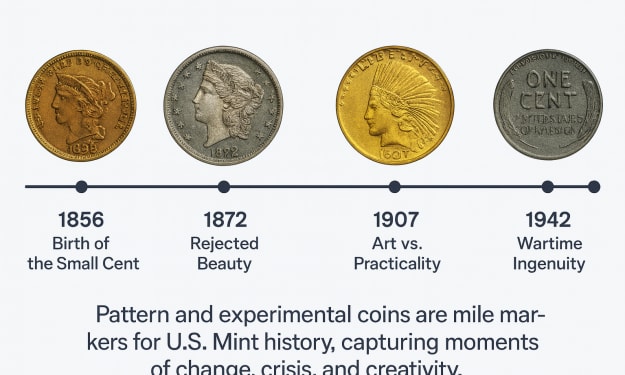
Rarely Seen: Experimental & Pattern U.S. Coins That Spark the Hobby
So, What Exactly Are These Coins? Let’s clear up the biggest confusion first. "Pattern" and "experimental" are related, but they’re not the same thing. Knowing the difference is your first step from curious collector to informed enthusiast.
By Laura Bennett6 days ago in Education
The Blue Ridge Stalker
Tom had left the Ford down the way, its spark plugs finally exhausted and no mechanics for a dozen miles back through the foothills to Strossburg. No matter, he had worn his boots—almost as if he planned for this to happen. The puzzle he sought to solve emanated from the woods clinging to the slopes above; the valley behind held no mysteries.
By Stephen A. Roddewig5 days ago in Fiction



Comments
There are no comments for this story
Be the first to respond and start the conversation.