
Reflecting on the Majesty of Allah in Ramadan's Last Ten Days: Exploring the Profound Impact of Surah Al-Mulk
Surah Al-Mulk, the 67th chapter of the Quran

As the holy month of Ramadan progresses, Muslims around the world eagerly anticipate its final ten days, often regarded as the most spiritually significant period of the entire month. Within these days lies the third Ashra, a time dedicated to seeking refuge, forgiveness, and salvation. It is during these final days that believers intensify their prayers, supplications, and reflections, seeking to draw closer to their Creator and prepare themselves for the culmination of Ramadan – the blessed Day of Eid. Among the various acts of worship and contemplation, one particular practice holds immense significance: the recitation and reflection upon Surah Al-Mulk from the Quran.
Surah Al-Mulk, the 67th chapter of the Quran, consists of thirty verses that beautifully encapsulate the sovereignty and majesty of Allah. It serves as a poignant reminder of His supreme authority over all creation and the inevitability of the Day of Judgment. In the context of Ramadan's final ten days, delving into the depths of Surah Al-Mulk holds profound implications for believers seeking to deepen their spiritual awareness and prepare for the Hereafter.
Contemplating the verses of Surah Al-Mulk during the third Ashra of Ramadan provides a unique opportunity for believers to immerse themselves in the awe-inspiring majesty of Allah. The Surah begins with the declaration, "Blessed is He in whose hand is the dominion, and He is over all things competent" (Quran 67:1). This verse immediately sets the tone, affirming Allah's sovereignty and power as the Creator and Sustainer of the universe. It invites believers to reflect on the vastness and complexity of creation, recognizing the divine wisdom inherent in every aspect of existence.
As believers delve deeper into Surah Al-Mulk, they encounter vivid descriptions of the heavens and the earth, the celestial bodies, and the intricate design of the universe. Verses such as "Who created death and life to test you [as to] which of you is best in deed" (Quran 67:2) serve as a reminder of the transient nature of life and the profound purpose behind every trial and tribulation. This reflection prompts believers to reassess their priorities, striving to align their actions with the divine will and seeking excellence in all aspects of their lives.
Moreover, Surah Al-Mulk contains verses that vividly depict the Day of Judgment and the accountability of humankind before their Creator. The Surah warns of the fate of those who reject the truth and persist in disbelief, while also offering hope and mercy to those who turn to Allah in repentance. This juxtaposition of divine justice and mercy serves as a catalyst for believers to seek forgiveness and redemption during Ramadan's final days, recognizing their dependence on Allah's infinite grace and compassion.
In the hustle and bustle of daily life, it is easy for believers to lose sight of the bigger picture – the ultimate purpose of their existence and the reality of the Hereafter. However, the last ten days of Ramadan provide a golden opportunity to pause, reflect, and realign one's priorities with the eternal truths revealed in the Quran. Surah Al-Mulk serves as a guiding light, illuminating the path towards spiritual enlightenment and moral rectitude.
In conclusion, reflecting on the majesty of Allah through the verses of Surah Al-Mulk during Ramadan's last ten days is a transformative experience that deepens one's awareness of divine sovereignty and prepares believers for the Day of Judgment. It is a time of introspection, repentance, and renewal, as believers strive to draw closer to their Creator and attain His pleasure. As we immerse ourselves in the profound wisdom of the Quran, may we emerge from Ramadan spiritually rejuvenated, with hearts full of faith and minds enlightened by divine guidance.
About the Creator
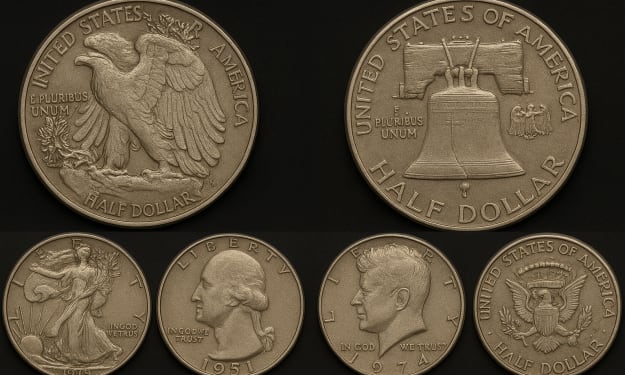
Half Dollars That Defied Time: Kennedy, Franklin & Walking Liberty
If you’ve found yourself holding an old half dollar, you’ve probably wondered: is this just pocket change, or could it be something more? I’ve had that same conversation with countless collectors in my eight years as a numismatist. The answer often hinges on three legendary names: Walking Liberty, Franklin, and Kennedy. More than just silver, these coins are tangible pieces of 20th-century America. This guide will help you understand their stories, values, and which one might be the perfect fit for your goals, whether you're building a collection or an investment.
By Laura Bennett5 days ago in Education
Rewiring Wellness: How Neuroscience Is Redefining the Mind-Body Connection in Therapy
In recent years, neuroscience has reshaped the understanding of how emotional and physical processes interact, offering therapists new insight into healing. The mind-body connection, once viewed as more philosophical than scientific, now has clear biological explanations. Studies show that thoughts, emotions, and physical sensations are deeply intertwined, influencing everything from stress responses to overall wellbeing. This knowledge is transforming modern therapeutic practices by providing clinicians with evidence-based tools that support integrated healing.
By Debra Bailey PHDabout 21 hours ago in Education
Rachel Reviews: The Spiral Archive by Pieter Hendrik
It's difficult for me to know where to start with a review of this book as it was, for me, an entirely unique experience and one that I'll probably never have again. I don't want that to be interpreted as unenjoyable but it has left me scratching my head a little and ruminating on its content, its themes and its characters.
By Rachel Deeminga day ago in BookClub



Comments
There are no comments for this story
Be the first to respond and start the conversation.