
Redefining the Workplace: How HRM Systems Are Revolutionizing Human Resource Management
HRM System

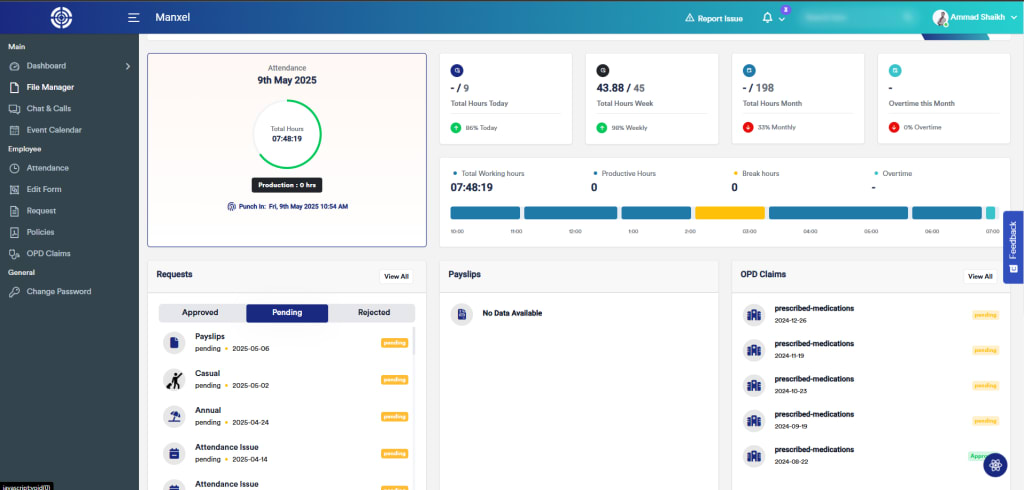
In the age of digital disruption, where agility and data-driven decisions define success, Human Resource departments are no longer confined to administrative roles. Instead, they’re becoming strategic partners in business growth—and at the center of this transformation is the Human Resource Management System (HRM System).
Today’s HRM systems do more than just automate tasks—they enable smarter hiring, boost employee engagement, ensure compliance, and empower businesses to scale effortlessly. This article dives deep into how HRM systems are redefining modern workplaces, and why they are a non-negotiable asset for companies in 2025 and beyond.
The Evolution of HR: From Manual to Intelligent Systems
Traditionally, HR departments managed a heavy load of paperwork, from physical attendance records to filing cabinets full of employee documents. Processes like recruitment, onboarding, and performance reviews were time-consuming, error-prone, and inconsistent.
With the rise of cloud computing and artificial intelligence, HRM systems emerged as a game-changer, transforming manual processes into streamlined, automated workflows. No longer just digital databases, modern HRM platforms offer end-to-end employee lifecycle management—centralized, secure, and scalable.
What Does an HRM System Really Do?
A comprehensive HRM system combines various HR functions into a single platform, improving visibility, efficiency, and strategic decision-making.
Key Features Include:
Centralized Employee Database: Access all employee records—contact info, job history, certifications—in one place.
Payroll & Compensation Automation: Streamlined salary processing, benefits, and tax deductions.
Recruitment & ATS: Simplified job postings, resume parsing, candidate tracking, and interview scheduling.
Performance Management: Real-time feedback, goal tracking, appraisals, and performance analytics.
Learning & Development: Assign training, track progress, and manage certifications.
Time and Attendance: Real-time clock-in/clock-out, shift planning, remote tracking, and geofencing.
HR Analytics: Visual dashboards for turnover rates, hiring effectiveness, engagement trends, and more.
Employee Self-Service: Empower employees to update data, apply for leave, access payslips, and request documents.
These systems are often cloud-based and mobile-friendly, ensuring HR operations remain uninterrupted—whether you're in the office or halfway across the globe.
Why HRM Systems Are No Longer Optional
As businesses grow, complexity grows with them—more employees, more data, more compliance requirements, and more expectations. Here’s why HRM systems have become essential:
1. Scalability Without Chaos
Manual HR operations break down beyond a certain scale. HRM systems allow you to expand your team across multiple regions without losing control over compliance, payroll, or employee engagement.
2. Faster, Smarter Hiring
The average time to fill a role without automation is 42 days. With HRM tools, job openings, candidate reviews, and interviews are coordinated in real-time, significantly reducing hiring delays and improving candidate experience.
3. Employee Experience on Par with Tech Giants
From onboarding to development, employees today expect seamless digital experiences. HRM systems offer self-service portals, e-learning, and personalized growth paths that boost satisfaction and retention.
4. Real-Time Decision-Making
HR analytics give managers actionable insights. Instead of guessing who’s ready for a promotion, or why attrition is high in a certain department, you’ll have data to act on—instantly.
HRM Systems in Action: Case Studies Across Industries
To truly appreciate the power of HRM systems, let’s look at how companies across different sectors use them.
🚀 Tech Startup (100–200 employees)
Problem: Struggling with remote onboarding and ad-hoc performance reviews.
Solution: Adopted a cloud-based HRM system.
Result: Onboarding time dropped by 60%, and real-time performance feedback improved retention by 30%.
🏥 Healthcare Network (multi-location)
Problem: Manual scheduling and compliance issues across hospitals.
Solution: Integrated HRM with time-tracking and certification management.
Result: Staff scheduling accuracy improved, and compliance penalties dropped to zero.
🛒 Retail Franchise (franchise model)
Problem: Decentralized HR data and inconsistent employee policies.
Solution: Rolled out a unified HRM system across all outlets.
Result: Standardized onboarding and payroll processing across all 25 stores.
Choosing the Right HRM System: Your Checklist
There are dozens of HRM platforms out there—so how do you choose?
✅ Start with the Essentials:
Is it cloud-based and mobile-accessible?
Does it scale with your business?
Can it integrate with existing systems (e.g., accounting, CRM)?
Does it support multi-location or remote teams?
Are analytics and reporting included?
💡 Bonus Features to Consider:
AI-based resume screening or attrition prediction
Mental wellness tracking
DEI (Diversity, Equity, Inclusion) dashboards
Integration with Microsoft Teams or Slack
About the Creator
Ejaz Hussain
Email marketing | SEO |Blog
Keep reading
More stories from Ejaz Hussain and writers in Education and other communities.
The HRM System: Powering People, Driving Productivity
In today’s hyper-connected and rapidly evolving business world, organizations are facing growing pressure to remain agile, efficient, and employee-centric. Among the many tools enabling this transformation, the Human Resource Management System (HRM System) stands out as a critical pillar for sustainable growth.
By Ejaz Hussain7 months ago in Education
How Mathematical Principles Drive Stable Monthly Results in Index Trading
Index trading has gained popularity among investors who value consistency over speculation. While market headlines often focus on short-term price swings, steady monthly returns in index trading are built on mathematical logic rather than predictions. By understanding how numbers shape market behavior, traders can develop strategies that prioritize reliability and long-term growth over emotional decision-making.
By Agast Mishraa day ago in Education
The Devil's Cut
“Comrade, finally you’re awake.” The voice was smooth, sensual. A flickering incandescent bar was all that lit the white, sterile room. All Vladimir remembered was everything going black. He tried to move his arms and found them strapped to the gurney.
By Matthew J. Fromm6 days ago in Fiction



Comments
There are no comments for this story
Be the first to respond and start the conversation.