
Paradise Lost
Unveiling the Untold Story of Lucifer's Fall

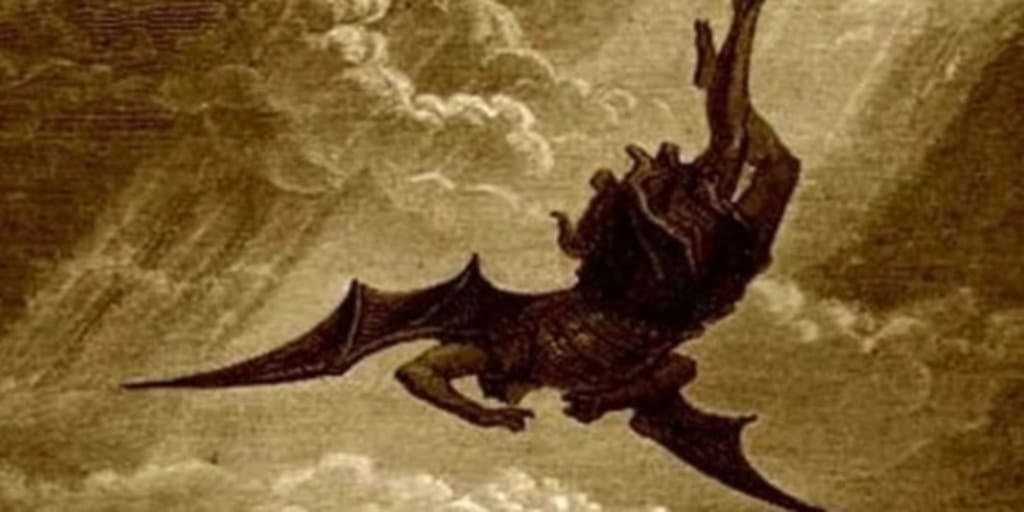
John Milton's Paradise Lost is regarded by many as one of the greatest poems ever written in the English language. This epic poem follows two different narratives: the biblical story of Adam and Eve as they fall from grace and are expelled from the Garden of Eden, and the story of Satan, or Lucifer, who, along with the other fallen angels, must create their own home after being expelled from Heaven.
Background on John Milton
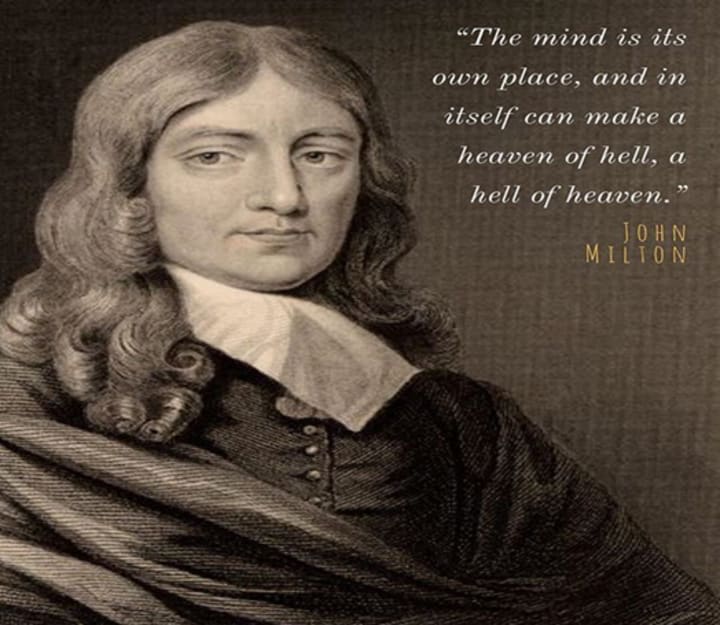
John Milton was an English poet born in 1608. He was a huge advocate for freedom of speech and freedom of the press, aspects that certainly bleed into his work. Milton was not a big fan of the monarchy, and many believe this is why his portrayal of Satan is much more sympathetic. He aims to tell you Satan's story rather than just labeling him as evil. Paradise Lost was first published in 1667 and consisted of ten books; in 1674, it was redrafted to contain twelve books. John Milton is considered among the greatest English poets to have ever lived, and Paradise Lost is seen as his magnum opus, the greatest of all his work.
A Summary of Paradise Lost
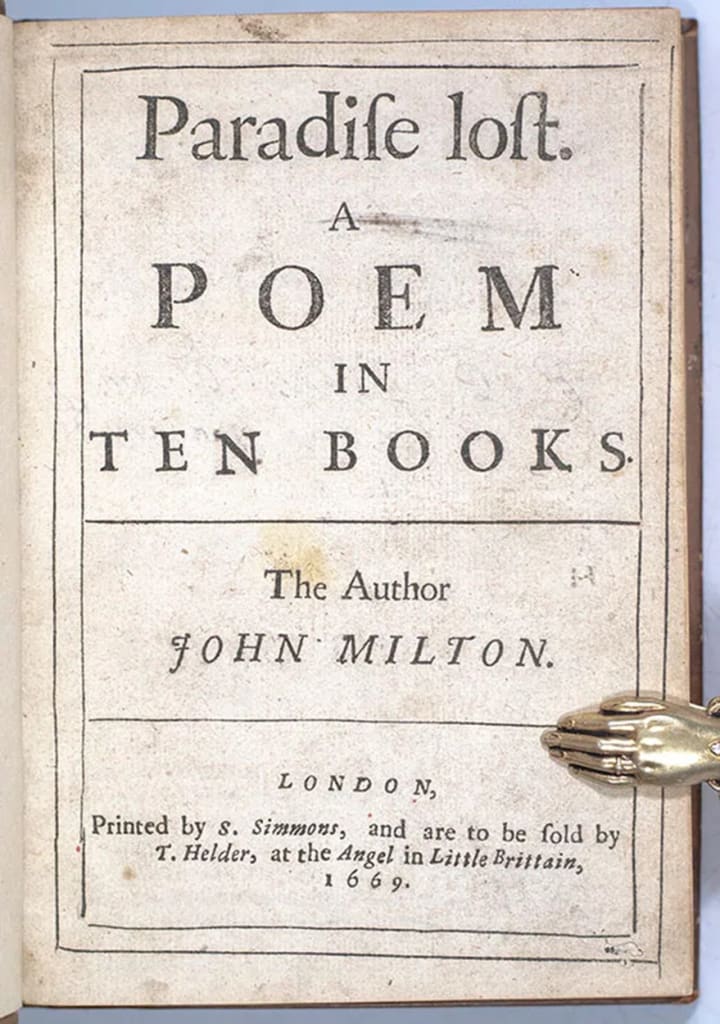
Stories and poetry from hundreds of years ago can be difficult to read at times, so hopefully, this summary of John Milton's Paradise Lost is comprehensible or, at the very least, entertaining.
The Beginning
The poem begins with a brief discussion of humankind and its disobedience towards God, referring to Adam and Eve eating the forbidden fruit from the Tree of Knowledge. Milton's speaker places some of the blame on the "infernal serpent," the fallen angel referred to as Satan (also known as Lucifer). This angel stirred hatred, envy, and revenge, placing himself above his peers and believing his glory to be equal to God's. This turned into a war in Heaven, resulting in God hurling Satan and his followers from Heaven into a fiery pit below. The fallen angels wake up in a lake of fire in Tartarus, or what we know as Hell, where they are bound by adamantine chains.
When Satan wakes, he describes his surroundings:
"A dungeon horrible, on all sides round / As one great furnace flamed, yet from those flames / No light, but rather darkness visible / Served only to discover sights of woe."
Milton contrasts the two domains: if Heaven is a place in the sky full of light, then Hell is a dungeon, a fiery abyss where only darkness is visible—a prison for the fallen.
Satan's Plot
Next to Satan is his second-in-command, Beelzebub. Despite their predicament, Satan feels no regret for his rebellion against God. In fact, he sees this time as a period of regrouping before they launch their next attack. Beelzebub, however, is not so convinced. After witnessing their failure the first time, he questions whether God can be defeated. Satan doesn't dismiss this idea; rather than another battle head-on, he suggests a new tactic. God has many beloved creatures, so what if they were able to corrupt them using their powers and the allure of evil?
"To do aught good will never be our task / But ever to do ill our sole delight, / As being contrary to His high will / Whom we resist. If then His Providence / Out of our evil seek to bring forth good, / Our labor must be to pervert that end, / And out of good still to find means of evil."
Rather than another battle in Heaven, Satan recommends a proxy war halfway between Heaven and Hell using God's favorite creations. With a plan, the two angels spread their wings and leave the river of fire.
The Fallen Angels' Council
Satan calls out to his fellow fallen angels and beckons them to his cause. His speech has the desired effect as the fallen angels gather around him. They have been erased from the book of life and the other books in Heaven, but all is not lost. Even demons could be worshipped like gods in the eyes of man. During this speech, we learn the names of a few more fallen angels turned demons: Moloch, the king of human sacrifice, and the lustful Belial. By the end of this speech, Satan has taken the thousands of wounded and disheveled angels and turned them into an army that once again believes in a cause. Rather than be ashamed of their actions, they should embrace their evil nature and be proud of the demons they have become. They can make themselves a new home in Hell, and to mark this day, they construct a great temple in the city known as Pandemonium, which in Greek means "all the demons" and "all the spirits" in Latin.
The Plan
Pandemonium becomes the focal point where all the demons gather for council. In the first gathering, Satan is honest with his peers: the war in Heaven was difficult, and it might be impossible for them to ever retake Heaven. He opens the floor to anyone who wants to speak.
Moloch favors the direct approach of open war, believing they should lay siege to Heaven once again, this time using the newfound weapons of Hell. Moloch is driven by revenge and anger; to him, there is nothing worse than their fate in Hell, not even death, and so there is nothing to lose by striking now when those in Heaven least expect them to do so.
Next to speak is a much calmer Belial. He believes their punishment could be even worse if they choose to attack Heaven again. There might come a time when God forgives them for their betrayal, but Belial doesn't necessarily advocate for peace. They should wait and see what God has planned for them and then act upon the matter.
Mammon doesn't call for war either but accepts that he will never bow down to God again. Mammon calls for industry. They are free to do as they please in Hell; if they work together, they can make Hell a kingdom as great as Heaven. This idea is met by applause and garners the most support from his fellow demons so far.
The last to speak is Beelzebub, who also wishes to be free of God's servitude. He tells his peers of stories he heard in Heaven: the creation of a new world that would be populated by man, a new race that God loves even more than angels. They can have their revenge by corrupting and destroying these humans without another war. This suggestion garners even more support than Mammon's idea. When their votes are cast, Beelzebub and Satan's plan is chosen as their course of action.
Satan's Journey
Satan volunteers to leave Hell and scout for this promised land. With Satan gone, the council reconvenes to discuss how to begin building Hell into a kingdom that can rival Heaven. Satan now has the rather difficult task of finding a way out of Hell. Eventually, he reaches the gates, which there are nine in total: three made from brass, three from iron, and lastly, three from adamantine. Guarding these gates, he sees two figures in the distance: a woman with the lower half of a serpent surrounded by a pack of dogs, and a second figure shrouded in darkness. These two figures are known as Sin and Death.
Satan confronts this woman and demands to be allowed to pass. She asks if he has forgotten who they are and explains that they are his children. Sin and Death were created from his actions as an angel: Sin sprang forth from his head, and she was then impregnated by Satan, giving birth to Death, who then impregnated Sin again, resulting in a pack of hounds that follow and torment her. Satan's children guard the gates of Hell and hold the keys needed to open them.
Satan realizes that his children can be persuaded to join his cause. After explaining his plot for vengeance against God, Sin is persuaded and uses the keys to unlock the gates of Hell. Ahead of him is only darkness, but Satan chooses to leave Hell and fly straight into it. Caught in a storm, Satan falls through the sky until he catches a ride on a cloud, flying blindly towards the noise he hears. He finds himself in the presence of Chaos and Night, the rulers of this dark abyss.
"I come no spy / With purpose to explore or to disturb / The secrets of your realm."
Ensuring Chaos and Night that he means no ill will, Satan explains his plan once again and asks for assistance in finding this new world. By claiming and corrupting the new world with evil, Satan promises that Chaos can also reign freely. This is enough to convince them to join his cause. Chaos points to where a new world has been created, and Satan assumes this must be the prophesized Earth created by God for mankind. Sin and Death follow slowly behind Satan, creating a bridge from Hell to this new world, allowing the demons of Hell to travel easily between the two.
The Creation of Earth
In Book 3, we shift perspective to Heaven, where God has been watching everything transpire. He can see Satan traveling to Earth and knows this will lead to the fall of man. The free will he gave to man will lead to this corruption and downfall. However, it is the free will to love that makes man different from angels and God's other creations.
Back to Satan, who has now found Earth. He lands and sees an enormous gate with a stairway that he assumes connects Earth to Heaven. Satan sees God's creation in all its glory and feels overwhelming jealousy. Drawn in by the sun, he comes across an angel standing on a hill, whom he recognizes as Archangel Uriel. Satan takes the form of a cherub and approaches Uriel. He lies, claiming he has just come down from Heaven, curious about this new world and its inhabitants. Uriel is unable to see past Satan's disguise and is happy to see an angel so interested in God's new creation. He points Satan towards Paradise, the Garden of Eden.
Satan in the Garden
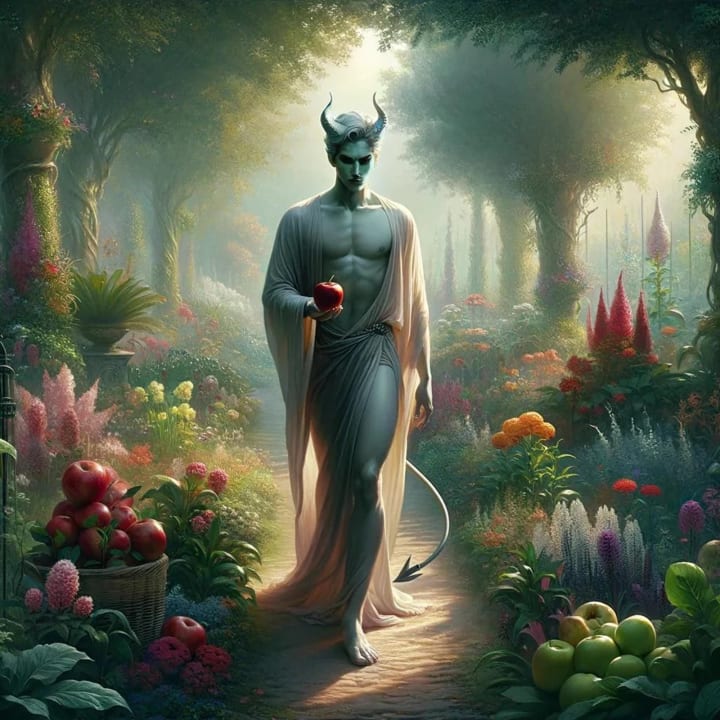
Once Satan reaches Paradise, he climbs the wall to get in. Immediately, he sees Adam and Eve, who remind him of angels but are more graceful. When Satan hears them speak, he knows they are superior to animals but inferior to angels. Satan is once again filled with envy as he watches Adam and Eve lovingly speak to one another. Satan assumes that Adam and Eve will eventually feel the wrath of God and grow to fear him. This brings Satan some satisfaction as he sneaks into the undergrowth. We then hear from Adam and Eve themselves, as Adam explains that God gave them free will to love as they wish, much like angels, but also told them they were not to eat from the Tree of Knowledge.
Satan is now both fascinated and angry. His disgust grows as Adam and Eve kiss before falling asleep together. This fills Satan with a deeper hatred for mankind than before. He considers his plan: should he destroy them outright or corrupt them with evil and force God to destroy them? After much contemplation, Satan resolves that he will corrupt and condemn mankind.
The next morning, Uriel arrives in Paradise, this time to warn Gabriel that there is an imposter in Paradise. He had noticed Satan acting suspiciously the day before and had investigated for himself. Gabriel promises Uriel that they will find the intruder by nightfall.
Satan in the Form of a Toad
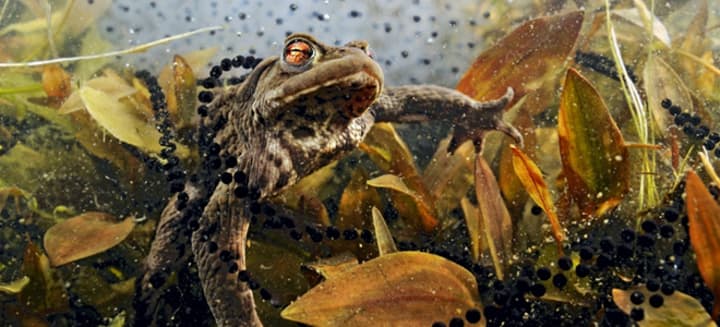
The angels search the Garden of Eden, eventually finding Satan hiding in the undergrowth, whispering into Eve's ear in the form of a toad. They capture him and take him to Gabriel, who demands to know what Satan is doing in Paradise. Satan and Gabriel both take up arms and prepare to fight one another, but this is broken up by a sign from Heaven. God will allow Satan to leave without consequence this time, so Satan flies away, leaving the angels to once again guard Adam and Eve.
God Sends Raphael
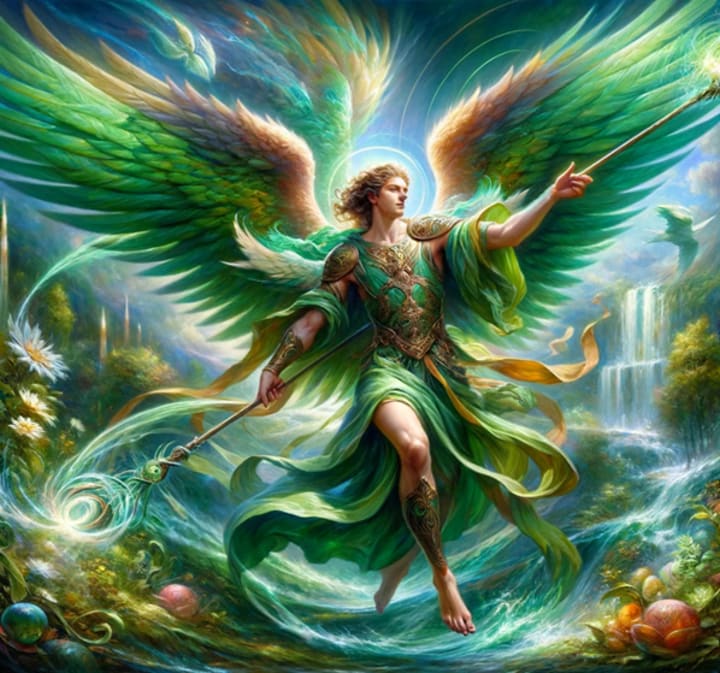
Raphael is sent by God to warn Adam and Eve about Satan. Upon entering Paradise, Raphael is greeted warmly by Adam, who invites him to stay and eat with them. Raphael only eats what he needs to survive, as angels are different from mankind. They discuss creation and the universe. Raphael then explains the free will given to man and why it is so important. They move on to discuss the battle in Heaven.
Raphael's Story of Satan
Raphael begins with Satan before he was evil, describing him as one of God's favorites and the most beautiful of all the angels. It was Satan's own pride and ambition that led to his downfall. He decided to revolt after God chose his Son to reign over the angels. Satan felt that he was not being treated as an equal and began whispering in the ears of the angels who were also unhappy. He held a secret meeting, where he riled up his army to attack God. Many angels did not fall for Satan's deceit and immediately fled to warn God of the uprising.
After much debate, the fallen angels agree to fight openly in Heaven. Michael sounds the trumpet, calling all angels to take up arms and go to battle. The loyal angels outnumber Satan's army, but Satan is ready for them. The battle lasts all day and night until God's angels must retreat. Raphael explains that God only allowed the battle to play out to test their loyalty. The next day, the good angels return with renewed energy, but Satan and his angels have created artillery from the materials around them. The loyal angels are forced to retreat again until God's Son enters the fray.
Without needing a weapon, the Son drives Satan and his angels out of Heaven with the force of ten thousand thunders. He is so powerful that the gates of Heaven open up by themselves to allow him to pass. The fallen angels fall into Hell, and the Son returns to Heaven in victory. Satan and his army wake up in Hell, which is where Paradise Lost begins.
Raphael is reluctant to tell Adam about how Earth was created because of mankind's innate curiosity, but he is pressed by Adam to continue.
Raphael Continues the Story
When Satan and his army were defeated, God knew that his actions would lead to the fall of man. Therefore, he decided to create a new world to be populated by a new race of beings with free will to love. He sent his Son, who took the "golden compasses" and described a great circle of light to be their new home. He created Heaven, Earth, Hell, and the waters in between.
The Son took six days to create everything in the universe, with the stars, moons, and planets all in their fixed places. As Adam listens intently, he wants to know more about the stars and planets and the universe as a whole. Raphael tells him to be content with his place in the universe. Raphael's message is clear: men should think about things they can understand and not try to figure out the mysteries of the universe, which is reserved for God alone. Raphael again warns Adam to beware of Satan.
Satan Returns
On the way back to Hell, Satan sees the other fallen angels and enters the body of a sleeping serpent. At midnight, he slithers through the undergrowth, avoiding the angels guarding Adam and Eve. Satan hides behind the Tree of Knowledge and waits for the angels to leave at dawn.
Eve's Dream
We now return to Adam and Eve. As they prepare a meal for their guest, Adam tells Eve about Raphael's warning. Eve recounts a dream she had: she heard a voice speaking to her and saw an angel standing by her bed. The angel took her to the Tree of Knowledge and told her to eat from it. She touched the fruit and felt full of knowledge. The angel told her that she was now like God and woke up feeling full of joy. Raphael assures Adam that this is only a dream and that he should not worry about it.
The First Humans
Eve and Raphael prepare a meal while Adam asks Raphael about what came before his creation. Raphael tells Adam about how God created the first man and woman: Adam was formed from the dust of the ground, and Eve was created from one of Adam's ribs. God breathed life into Adam, and he awoke in the Garden of Eden, where he found himself surrounded by beauty and abundance. Raphael tells Adam that he was created in the image of God, with free will to choose between good and evil. Adam asks why God created him with free will if he knew that he would fall. Raphael explains that free will is essential for true love and that without it, Adam would be no better than a puppet. Raphael leaves Adam and Eve with a final warning: they must remain obedient to God and not eat from the Tree of Knowledge.
Satan's Final Temptation
Satan, now in the form of a serpent, returns to the Garden of Eden. He finds Eve alone and begins to flatter her, telling her that she is more beautiful than any other creature. He leads her to the Tree of Knowledge and convinces her to eat the forbidden fruit. Eve eats the fruit and immediately feels a change within her. She returns to Adam and tells him what she has done. Adam is horrified but decides to eat the fruit as well, not wanting to be separated from Eve. The two of them are filled with shame and guilt and try to cover themselves with fig leaves.
The Fall of Man
God sends the Son to judge Adam and Eve. He calls out to them, and they confess their sin. The Son tells them that they must leave the Garden of Eden and that they will now experience pain and suffering. He clothes them in garments of skin and banishes them from Paradise. The Son also tells the serpent that he will be cursed to crawl on his belly and that there will be enmity between his offspring and the offspring of the woman. Adam and Eve are sent out into the world, where they will have to toil and labor for their sustenance.
The Aftermath
Satan returns to Hell and is greeted with cheers and applause from his followers. He tells them of his victory and how he has corrupted God's new creation. However, as he finishes speaking, he and his followers are turned into serpents as punishment for their actions. They are forced to slither on their bellies and eat dust for the rest of their days.
Adam and Eve, now outside the Garden of Eden, begin their new life. They experience pain, suffering, and death, but they also have hope for redemption. God promises that one day, a Savior will come to defeat Satan and restore humanity to its original state of grace.
Conclusion
John Milton's Paradise Lost is a complex and multi-layered work that explores themes of free will, obedience, and the nature of evil. By telling the story of Satan's fall from grace and the subsequent fall of man, Milton delves into the consequences of disobedience and the importance of free will in the relationship between God and his creations. Through his epic poem, Milton invites readers to reflect on their own choices and the impact of their actions on themselves and the world around them.
About the Creator
Horace Wasland
Research analyst, writer & mystical healer. Exploring the edge where science meets mystery. From mystery/the mystical, to facts, news & psychology. Follow for weekly insights on all four and please leave a tip if you like what you read :)
Keep reading
More stories from Horace Wasland and writers in Education and other communities.
Discovery of the Beelzebufo
In a remarkable paleontological discovery, scientists have unearthed fossils of an enormous frog, Beelzebufo ampinga, from the Cretaceous period. This creature, aptly dubbed the “Devil Toad,” was a monstrous amphibian living among dinosaurs millions of years ago. The discovery, led by paleontologist David Krause of Stony Brook University, was published in the Proceedings of the National Academy of Sciences.
By Horace Waslandabout a year ago in Education
How Milwaukee Businesses Misjudge Mobile App Timelines?
Timeline optimism is one of the most expensive habits in software. In Milwaukee, it shows up quietly. A launch date is set to align with a trade show. A quarter-end deadline is chosen to please leadership. A six-month roadmap is approved because “the features aren’t that complex.” On paper, everything looks reasonable.
By Mary L. Rodriquez5 days ago in Education
Miss Persephone's Manual to a Seemingly Ordinary Life
Miss Persephone was found at the dining table, her blue eyes swollen, her tears arriving and retreating like the tides of the ocean. Earlier that day, her family had visited her in the retirement home where she had lived for eight years. It was her eightieth birthday.
By Imola Tóth2 days ago in Fiction




Comments (1)
Thanks for this piece