
Old Africa
What their forefathers had passed through and the effects it still has on them
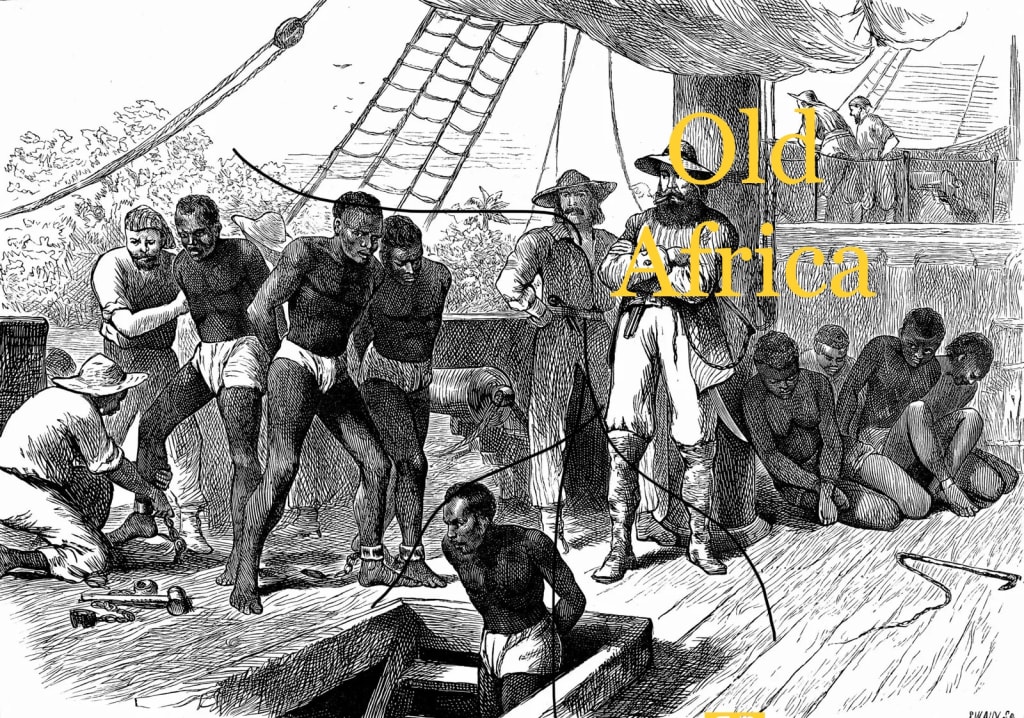
In the vast continent of Africa, there was a dark period in its history that still haunts the Africans till date. This period was characterized by the slave trade, a brutal and inhumane practice that saw millions of Africans torn away from their homes and sold into slavery.
For centuries, Europeans, mainly Portuguese, Spanish, Dutch, and British traders, engaged in the trade of African slaves. Africans were mainly captured through wars or raids, by other Africans, and were then sold to European traders who then transported them across the Atlantic Ocean to the Americas to work on cotton, sugar, and tobacco plantations.
The trade route largely began on the West African coast, with many African kingdoms and chieftains participating in the capture and sale of their fellow Africans. Some even went as far as raiding neighboring kingdoms and tribes to capture people, with the hope of trading them for goods such as guns, alcohol, and other commodities.
The African slave trade is a dark period in human history where millions of Africans were forcibly taken from their homes, families, and communities and sold into slavery in the Americas and other parts of the world.
During the 15th century, Europeans began exploring the coast of Africa looking for new trade opportunities. They started trading with the African kingdoms, exchanging gold, ivory, and other valuable goods for slaves. At first, the slave trade was small, but as European expansion continued, so did the demand for slaves.
Captured Africans were often forced to march long distances to the coast where they were packed into ships bound for the Americas. Many died in the brutal journey, known as the "middle passage," because of the harsh conditions such as disease, dehydration, and lack of sanitation. Once they arrived in the Americas, slaves were sold to plantation owners and subjected to back-breaking labor, torture, and abuse.
The impact of the African slave trade is still felt today, as it disrupted African societies.
Even though slavery was abolished in the 19th century, its impact is still felt today. The impact of the African slave trade on Africa is enormous and far-reaching. The forced removal of millions of people disrupted families and tore apart entire communities. The development of trade and agriculture on the continent was severely limited, as human resources were taken away. The scars of the slave trade can still be seen in the economic, political, and social structures of many African countries today.
Moreover, the effects of the African slave trade on the diaspora are equally profound. The African diaspora refers to the descendants of Africans who were forcibly removed from their homes, tribes , communities.
The African slave trade had a profound effect on the diaspora, which refers to the mass dispersion of people of African descent throughout the world as a result of slavery and colonization.
The slave trade led to the forced migration of millions of Africans who were stripped of their identities, cultures, and languages. They were taken from their homes, separated from their families and friends, and subjected to brutal labor conditions, disease, and violence.
The effects of the slave trade on the diaspora were far-reaching and long-lasting. One of the most significant impacts was the destruction of African culture and traditions. As slaves were brought from different parts of Africa, they were forced to create new identities and cultures by combining their own beliefs and practices with those of other slave communities. This resulted in the development of new cultures that were different from their African roots.
Another important impact of the slave trade was the development of racism and discrimination against people of African descent. The transatlantic slave trade created a system of white supremacy. The legacy of slavery is also evident in the poverty and underdevelopment that is still present in many African countries, as the loss of so many people and resources has proved difficult to overcome.
About the Creator
Keep reading
More stories from writers in Education and other communities.
Echoes of the Current: Reuniting a Family Waterwheel with Its Roots
Heritage often survives in fragments—old photographs, half-remembered stories, and objects whose original purpose has faded with time. Yet some pieces of the past retain a powerful pull, calling families to reconnect with their roots. For one family, that call came in the form of a waterwheel that once stood at the center of their land and livelihood. Returning it to its original home became a meaningful journey of remembrance, restoration, and renewal.
By Grady Gastonabout 23 hours ago in Education




Comments (1)
Y’all need to read this