
Neil Armstrong - The First Man to Walk on the Moon
A look at the life, accomplishments, and legacy of Neil Armstrong, the American astronaut who made history by being the first human to set foot on the moon.

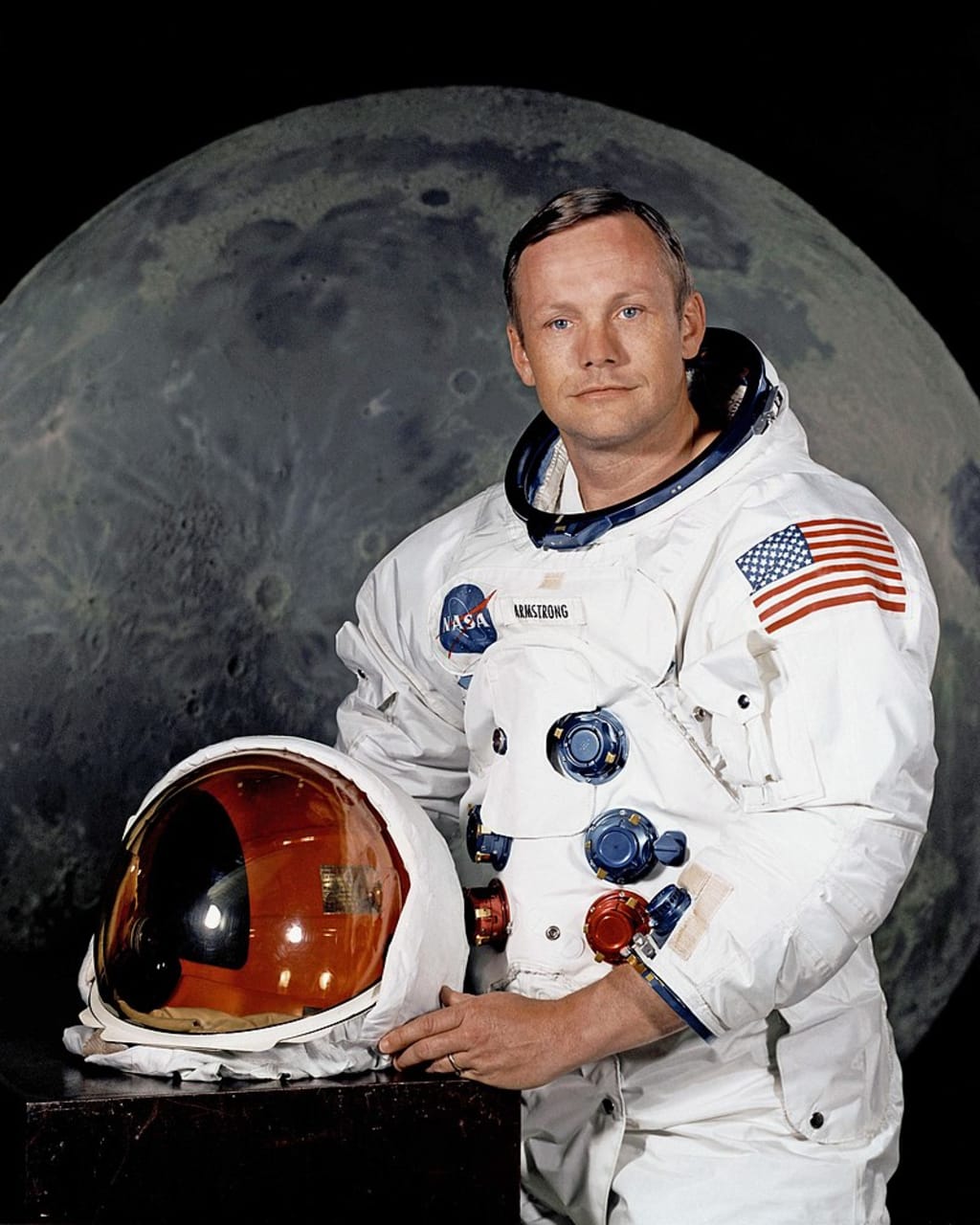
Neil Armstrong (1930-2012) was an American astronaut and the first person to walk on the Moon. Born in Wapakoneta, Ohio, Armstrong served as a naval aviator during the Korean War before becoming a test pilot. In 1962, he joined NASA as an astronaut.
Armstrong made his first spaceflight as command pilot of Gemini 8 in 1966, which was the first mission to dock with another spacecraft in orbit. But he is best known for commanding the Apollo 11 mission in 1969, which made him the first human to set foot on the Moon. As he stepped off the lunar lander, he famously spoke the words "That's one small step for man, one giant leap for mankind."
After leaving NASA in 1971, Armstrong taught aerospace engineering at the University of Cincinnati and served on various corporate boards. He was also a private pilot and flew various types of aircraft throughout his life. Armstrong died in 2012 at the age of 82.
Neil Armstrong was a part of the United States' space program during a time of great innovation and exploration. He was one of the Mercury Seven, a group of astronauts chosen by NASA to be the first Americans in space.
Armstrong was chosen as the commander of the Apollo 11 mission because of his experience and expertise. On July 16, 1969, he, along with Buzz Aldrin and Michael Collins, launched aboard the Saturn V rocket from Kennedy Space Center in Florida. Four days later, Armstrong and Aldrin landed the lunar module, Eagle, on the Moon's surface while Collins orbited overhead in the command module, Columbia.
As the first person to step onto the lunar surface, Armstrong's historic words have been immortalized in history. He spent approximately two and a half hours outside the lunar module, during which time he collected samples, planted the American flag, and conducted experiments. The mission was a major achievement for the United States, and it marked the end of the Space Race between the US and the Soviet Union.
After leaving NASA, Armstrong worked as a professor of aerospace engineering at the University of Cincinnati. He also served on the boards of various companies and organizations, including the Mayo Clinic and the National Space Society. Armstrong was widely regarded as a humble and private person, and he was reluctant to capitalize on his fame as the first man on the Moon.
Neil Armstrong's legacy as a pioneer of space exploration continues to inspire people around the world. His courage, dedication, and commitment to excellence have made him a role model for generations to come.
In addition to his achievements in space exploration, Neil Armstrong was also known for his contributions to aviation. As a young man, he earned his pilot's license before he even had his driver's license, and he went on to become a skilled pilot of both airplanes and helicopters. He even earned a master's degree in aerospace engineering, which helped prepare him for his work at NASA.
During his time as a test pilot, Armstrong flew many experimental aircraft, including the X-15 rocket plane, which set several altitude and speed records. His experience as a test pilot gave him the skills and knowledge he needed to become an astronaut, where he was able to help test and develop the technologies necessary for spaceflight.
After retiring from NASA, Armstrong continued to be involved in aviation, serving as the chairman of Computing Technologies for Aviation, Inc., and as a member of the board of trustees for the Experimental Aircraft Association. He also worked with NASA on several projects, including the Space Shuttle program and the investigation into the Challenger disaster.
Throughout his life, Neil Armstrong was a humble and private person, who shunned the spotlight and preferred to focus on his work. He once said, "I am, and ever will be, a white socks, pocket protector, nerdy engineer." His legacy as a pioneer of space exploration and aviation continues to inspire and educate people around the world.
About the Creator
5 Practical Ways an LCD Monitor Improves Daily Productivity at Work
Modern work depends on clarity, comfort, and steady focus throughout the day. Employees move between emails, documents, meetings, and data without pause. In this environment, the screen becomes more than a tool. It becomes a daily partner in how work flows and how decisions take shape.
By Olivia Barna day ago in Education
How to Succeed at the Benson Directory®
Congratulations and welcome to the Benson Directory® employee #22391! As our newest call handler, you will have the privilege of speaking with dozens of unique and interesting people on a daily basis as well as the opportunity to earn bonuses for high performance. Contained within this handbook you will find a set of ease to follow instructions designed to help you settle in to your new role and begin paving the way to success.
By S. A. Crawford4 days ago in Fiction



Comments
There are no comments for this story
Be the first to respond and start the conversation.