
National Healthcare Decisions Day (US) will held on 16 April 2025
"A Day to Empower Conversations About Future Healthcare Choices and Ensure Your Wishes Are Honored"

In order to encourage people to participate in advance care planning, the United States observes National Healthcare Decisions Day (NHDD) on April 16. In order to ensure that people's wishes are respected and known even if they are unable to communicate them, this initiative aims to inspire, educate, and empower individuals to make informed decisions regarding their preferences regarding healthcare. **The Purpose and History of NHDD** NHDD was established in 2008 by attorney Nathan Kottkamp to address the lack of advance care planning awareness and communication. Following Tax Day, the date of April 16 was chosen to represent the significance of addressing life's uncertainties—taxes and the need for healthcare planning. The initiative seeks to provide clear, concise, and consistent information about healthcare decision-making, making the process accessible to all individuals, regardless of age or health status
The Value of Preventative Care Planning Using legal instruments like advance directives and healthcare power of attorney designations, advance care planning entails reflecting on one's own healthcare values and preferences. Even when individuals are unable to make decisions for themselves, this procedure ensures that they receive the care they desire. Additionally, it eases the burden on loved ones who might otherwise be forced to make difficult decisions on their own. **Common Misconceptions**
The notion that advance care planning is only for the elderly or those with serious illnesses is a widespread misconception. However, any age can experience unanticipated health events, so it is essential for everyone to consider their healthcare preferences. People are able to make thoughtful decisions without the stress of a crisis when they start these conversations early. **Starting the Conversation**
Although it can be difficult to start discussions about one's preferences for healthcare, it is an essential step in ensuring that one's wishes are carried out. Guides for navigating these conversations with trusted family members, healthcare providers, and others are available from resources like The Conversation Project. The most important thing is to concentrate on the individual and clearly communicate these values. **Documenting Decisions**
After discussing healthcare preferences, it's essential to document them formally. This can include:
- **Advance Directives**: Legal documents outlining specific medical treatments an individual wishes to accept or refuse.
- **Healthcare Power of Attorney**: Designating a trusted person to make healthcare decisions on one's behalf if incapacitated.
To assist individuals in this process, organizations such as the National Hospice and Palliative Care Organization provide state-specific advance directive forms and guidance. **Community Involvement and Resources**
NHDD is supported by various organizations, including healthcare systems, legal services, faith-based groups, and community organizations. These entities host events and provide resources to educate the public about advance care planning. For instance, the National Healthcare Decisions Day initiative offers free conversation guides and materials to facilitate discussions and decision-making citeturn0search0.
**Taking Action**
NHDD participation can be as straightforward as: - Reflecting on personal healthcare values and preferences.
- Discussing these preferences with loved ones and healthcare providers.
- Documenting decisions through appropriate legal forms.
- Encouraging others to engage in advance care planning.
People can ensure that their healthcare choices are known and respected by taking these steps, giving them and their families peace of mind. **Conclusion**
The significance of proactive healthcare planning is brought to mind on National Healthcare Decisions Day. By engaging in advance care planning, individuals take control of their healthcare decisions, ensuring that their values and preferences guide their care, even in unforeseen circumstances. Embracing this initiative fosters a culture of open communication and respect for individual healthcare choices.
encourages people to prepare in advance for their medical care. It makes people aware of advance directives and how important it is to share preferences for healthcare with loved ones and providers. In medical situations, NHDD ensures that people's values and choices are respected by empowering them to make informed decisions.
About the Creator
Keep reading
More stories from Rebecca Long and writers in Education and other communities.
Trump Trade Team Chases 90 Deals in 90 Days — Experts Say "Good Luck With That"
As former President Donald Trump eyes a return to the White House in 2025, his team is already preparing an aggressive trade agenda that promises to shake up the global economic order. In a bold and highly ambitious move, insiders say the Trump trade team is aiming to negotiate or renegotiate 90 trade deals within the first 90 days of a second Trump administration.
By Rebecca Long10 months ago in Trader
Shaping Future-Ready Minds: How Educators Can Prepare Students for a Changing World
In today’s world, technology is changing rapidly, jobs are evolving, and new industries are emerging every year. As the pace of change accelerates, many traditional teaching methods are no longer sufficient. What worked in classrooms twenty years ago may not work now, especially when it comes to preparing students for the future. Teaching for tomorrow means going beyond textbooks and tests. It means helping students gain the skills they need to face a world full of change.
By Thomas Kuriakose, MD6 days ago in Education
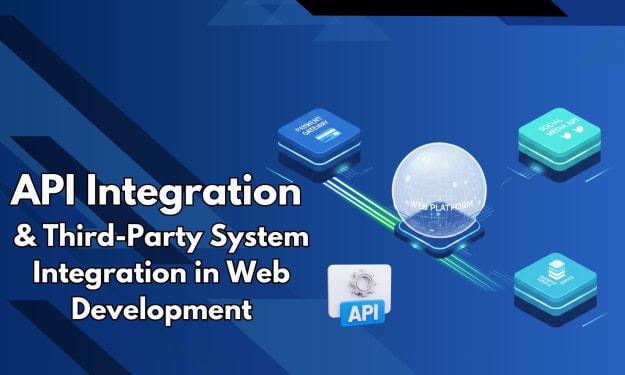
API Integration and Third-Party System Integration in Web Development
Ever wonder how a modern application can deliver immense user-focused functionalities today? Basically, an app’s framework is supported by its core features. Along with that, they are integrated with various functionalities through API integration and third-party systems.
By Nitish Yadava day ago in Education



Comments
There are no comments for this story
Be the first to respond and start the conversation.