
Trump Trade Team Chases 90 Deals in 90 Days — Experts Say "Good Luck With That"
Trump’s ambitious plan to secure a trade deal per day if re-elected is being met with heavy skepticism from economists and former officials who warn it’s a logistical and diplomatic long shot.

As former President Donald Trump eyes a return to the White House in 2025, his team is already preparing an aggressive trade agenda that promises to shake up the global economic order. In a bold and highly ambitious move, insiders say the Trump trade team is aiming to negotiate or renegotiate 90 trade deals within the first 90 days of a second Trump administration.
Experts in trade, economists, and even some former Trump administration officials are expressing skepticism regarding the lofty objective, which is meant to demonstrate Trump's signature "America First" approach to trade policy. They say the plan is not just overly optimistic — it may be close to impossible.
**A Bold Promise**
The idea of pursuing 90 trade agreements in 90 days seems designed to send a clear message: the U.S. will no longer tolerate what Trump has called "unfair trade practices" from foreign competitors. Sources close to Trump say the deals would span bilateral and multilateral agreements, focusing on reducing trade deficits, boosting American exports, and pressuring countries like China, Mexico, and Vietnam to make concessions favorable to U.S. manufacturers and farmers.
Trump has long criticized existing trade deals, from NAFTA to the Trans-Pacific Partnership, claiming they hollowed out American industry. During his first term, he imposed tariffs on a wide range of imports, including Chinese goods, steel, and aluminum, and replaced NAFTA with the United States-Mexico-Canada Agreement (USMCA). Trump wants to quickly and globally implement that strategy now. "Logistical Obstacles" But how realistic is it to finalize 90 trade agreements in 90 days?
“Not very,” says Wendy Cutler, a former U.S. trade negotiator now at the Asia Society Policy Institute. “Trade agreements are complicated, necessitate extensive stakeholder consultation, and necessitate legal vetting. You can’t just churn them out like fast food.”
Even under the most favorable conditions, trade deals typically take months or years to complete. Negotiations involve not only tariffs and quotas, but also issues like labor standards, environmental protections, intellectual property rights, and digital trade. Many of these topics require careful alignment between governments, private industry, and often legislatures.
Moreover, countries on the other side of the table may not be in any rush to strike deals on Washington’s timeline — especially if they view the proposals as one-sided or heavy-handed.
The broader context Additionally, the international setting is not as conducive to quick deals as it once was. The global economy is still recovering from the COVID-19 pandemic and grappling with inflation, supply chain shifts, and geopolitical tensions, especially between the U.S. and China. Rather than focusing on trade liberalization, many nations are turning inward, emphasizing domestic resilience. “The world has changed,” says Jennifer Hillman, a senior fellow at the Council on Foreign Relations. “There’s more skepticism about globalization, and governments are more cautious about ceding ground in trade talks. It’s not a buyer’s market anymore.”
At the same time, some nations might be reluctant to engage in serious negotiations with the United States until they know for sure that Trump is fully committed and that Congress will support his agenda. **Political Realities**
New trade agreements may face opposition from Democrats and Republicans in Congress even if Trump wins the presidency. As trade policy has become more politicized, lawmakers on both sides are wary of agreements that could hurt workers or domestic industries. In Trump’s first term, trade policy was largely driven by executive action — especially tariffs and unilateral moves. However, congressional approval of many of the longer-lasting trade agreements, such as the USMCA, required time and political negotiation. If Trump attempts to bypass Congress or use executive power too aggressively, legal challenges are likely.
**Substance or Symbolism? **
The "90 in 90" plan, according to some observers, is more symbolic than practical. It was a campaign talking point designed to energize Trump's base and portray him as a dealmaker and disruptor. “It’s classic Trump,” says Edward Alden, a trade expert at the Council on Foreign Relations. “Throw out a big, dramatic number. It doesn’t have to be real. It just needs to be good on TV and sound impressive. Still, even symbolic moves can have real-world consequences. If Trump moves quickly to impose tariffs or cancel existing agreements, it could disrupt global supply chains, unsettle markets, and strain relations with key allies.
**Conclusion**
Whether Trump’s trade team can deliver 90 deals in 90 days is highly doubtful. The sheer complexity of modern trade agreements, coupled with global uncertainty and political hurdles at home, makes the goal seem more aspirational than achievable.
But that may not matter to Trump or his supporters. The promise itself, which is bold, combative, and blatantly nationalistic, reinforces the message that they want to hear: that under Trump, America will no longer play by the old rules. Whether that approach will lead to better outcomes for American workers and businesses remains to be seen. But one thing is clear: if Trump returns to the Oval Office, the world should prepare for another turbulent chapter in U.S. trade policy.
About the Creator
Keep reading
More stories from Rebecca Long and writers in Trader and other communities.
US and Iran to begin critical nuclear talks as Trump threatens
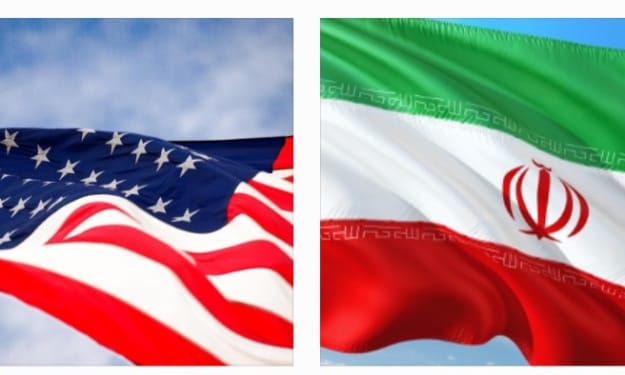
As Trump threatens war, crucial nuclear talks between the US and Iran will begin. The United States and Iran are poised to reopen crucial nuclear negotiations at a pivotal time for international diplomacy amid rising tensions and the recent threat of war made by former President Donald Trump. The international community is anxiously awaiting the high-stakes talks after years of strained relations, economic sanctions, and increasingly hostile rhetoric. The upcoming negotiations mark the first substantive attempt by the two nations to return to the nuclear bargaining table since the U.S. unilaterally withdrew from the Joint Comprehensive Plan of Action (JCPOA) in 2018. Under President Barack Obama's leadership, Iran agreed to halt its nuclear program in exchange for sanctions relief in the landmark 2015 agreement. The Trump administration dismantled the agreement, citing violations and perceived flaws, which set off a chain reaction of political and economic repercussions. Iran has increased its nuclear activities since then, reducing its cooperation with international inspectors and enriching uranium well beyond the JCPOA's limits. The collapse of the agreement has intensified fears of a nuclear-armed Iran and sparked regional instability. Early in his term, President Joe Biden had indicated that he intended to revive the agreement, but efforts were hampered by disagreements regarding compliance and sequencing. However, in recent weeks, diplomatic signals from both Tehran and Washington have suggested a tentative willingness to restart dialogue. It is anticipated that senior officials from Iran and the United States will meet in a neutral location, possibly in Geneva or Vienna, with European mediators playing a crucial role in easing communication. The renewed talks come at a precarious moment, as Donald Trump—currently the Republican frontrunner for the 2024 presidential election—has issued stark warnings, threatening military action should Iran move closer to nuclear weapon capability. At a campaign rally in Florida last week, Trump declared that “Iran will face consequences like never before” if it continues to defy U.S. demands. Some analysts interpreted his remarks as a direct challenge to Iran and the diplomacy and restraint of the Biden administration. Iranian leaders, who consider the former president to be the one who orchestrated the failure of the JCPOA, have reacted strongly to Trump's threat. The spokesperson for Iran's Foreign Ministry responded by saying that Trump was "sabotaging peace" and that any aggressive actions would be met with "decisive and firm retaliation." Despite the hostile posturing, behind-the-scenes diplomacy has been quietly intensifying. Sources close to the talks suggest that both sides recognize the unsustainable nature of the current standoff. Iran’s economy continues to suffer under the weight of U.S.-imposed sanctions, with inflation and unemployment at critical levels. At the same time, the Biden administration is under pressure from both domestic critics and allies to stop the nuclear crisis from getting any worse without going to war. Experts note that any progress in the negotiations will be painstaking. Iran is likely to demand that economic sanctions be lifted immediately and that the United States not abandon the deal again. Washington, on the other hand, will seek verifiable commitments from Iran to reduce uranium enrichment and restore full access to international inspectors.
By Rebecca Long10 months ago in Journal
Encrypted Memory
The Things We Bury Don’t Stay Silent Memory is not a clean archive. It is not a library with labeled shelves or a hard drive that stores facts without bias. Memory leaks. It corrodes. It reshapes itself every time we touch it. Now imagine a world where memory can be encrypted—locked away, digitized, protected by algorithms stronger than emotion. A world where pain can be sealed, love preserved, trauma compressed into unreadable code. We like to believe that forgetting is a failure of the mind. But what if forgetting is a survival mechanism? In an age of artificial intelligence, neural networks, and digital permanence, we are approaching a terrifying and fascinating possibility: memory that can no longer fade. This is the story of encrypted memory—not just as technology, but as a mirror to what it means to be human. The Fragile Architecture of Human Memory Human memory was never designed to be permanent. It bends to emotion. It fractures under trauma. It edits itself for comfort. We misremember not because we are weak, but because the mind protects itself. Painful memories dull over time. Joyful ones glow brighter. Entire moments disappear—not erased, but quietly buried. Yet modern culture treats memory as data. Something to be stored, retrieved, verified. Photos timestamp our joy. Messages archive our heartbreak. Cloud servers remember what we wish we could forget. In trying to preserve everything, we may be losing something essential: the mercy of forgetting. Encrypted Memory: A Technological Dream The idea of encrypted memory emerges at the intersection of neuroscience and artificial intelligence. Researchers are already exploring: Brain-computer interfaces Memory mapping Neural data storage AI-assisted recall The goal sounds noble: To help patients with Alzheimer’s. To restore memory after trauma. To preserve identity beyond physical decline. But encryption adds a darker layer. Encryption means restricted access. It means memory can be locked—not just from others, but from ourselves. Who decides which memories are encrypted? And who holds the key? When Forgetting Becomes a Luxury For some, forgetting is not a choice—it is a curse. Survivors of trauma often relive memories they desperately want to escape. War veterans, abuse survivors, cancer patients—memory does not fade for them. It sharpens. Encrypted memory promises relief: Seal the moment of impact Isolate emotional overload Contain psychological damage But relief comes with risk. Pain shapes identity. Loss teaches depth. Suffering rewrites perspective. If we encrypt pain, do we also encrypt growth? Cancer, Survival, and the Weight of Remembering For those who survive life-threatening illness, memory becomes complicated. Cancer survivors often describe memory in fragments: Hospital smells White ceilings The sound of machines The look in loved ones’ eyes These memories do not fade easily. They return uninvited, encrypted into the nervous system itself. Survival brings gratitude—but also guilt. Hope—but also fear. What if encrypted memory could soften the sharpest edges of survival? What if positivity could be engineered? And what would be lost in the process? AI as the Archivist of the Self Artificial intelligence does not forget unless programmed to. It remembers patterns, not pain. Data, not meaning. If AI becomes the keeper of memory, memory stops being emotional—it becomes informational. A heartbreak becomes a dataset. A childhood becomes a timeline. A person becomes a profile. Encrypted memory, managed by AI, could outlive the human who created it. Imagine dying—and leaving behind a perfectly preserved version of your memories. Not stories. Not feelings. But records. Would that still be you? Love, Loss, and the Desire to Preserve Love is where encrypted memory becomes most dangerous. We already preserve love digitally: Photos of people we lost Voice notes we replay Conversations we never delete But love was never meant to be permanent. It was meant to be felt, not archived. If we encrypt memories of love—lock them away untouched—do we honor them, or freeze them unnaturally? Grief requires movement. Healing requires distortion. Love needs time to change shape. Encryption stops time. Privacy, Power, and Ownership of Memory Encrypted memory raises one terrifying question: Who owns your memories? If memory becomes data: Can it be hacked? Can it be sold? Can it be altered? If corporations manage memory encryption, identity becomes a subscription. Access becomes conditional. Your past could be: Restricted Monetized Rewritten The most intimate thing you own—your inner life—would no longer be fully yours. The Ethical Paradox of Perfect Recall Perfect memory sounds powerful. In reality, it is unbearable. Studies show that people with hyperthymesia—those who remember everything—often suffer deeply. They cannot escape regret. They cannot soften trauma. They cannot forget mistakes. Encryption promises control—but control over memory may cost emotional freedom. We need forgetting the way forests need fire: Destructive, yes—but necessary. Encrypted Memory as Metaphor Beyond technology, encrypted memory already exists inside us. We all encrypt parts of ourselves: Childhood wounds Unspoken grief Unreturned love Shame we never name We lock these memories away, protecting ourselves from their power. But encryption is not healing. It is postponement. What we do not process eventually demands attention. The Future: Choice or Illusion? As technology advances, encrypted memory may become optional—or mandatory. We may be offered: Memory backups Trauma filters Emotional firewalls Marketed as wellness. Sold as empowerment. But choice is only real when consequences are understood. The future will not ask whether we can encrypt memory. It will ask whether we should. Conclusion: The Courage to Remember Imperfectly Memory is not meant to be secure. It is meant to be alive. It fades, reshapes, and sometimes breaks us open. But in that imperfection lies meaning. Encrypted memory may protect us from pain—but it may also protect us from becoming fully human. To remember imperfectly is to live honestly. To forget partially is to survive gently. To feel deeply—even when it hurts—is to remain human in an age of machines. Perhaps the bravest act is not encrypting memory— —but trusting ourselves to carry it.
By Zahid Hussain7 days ago in Trader
What’s Your Initial Reaction to an Income Loss?
They either freak out and spiral — or they stay calm and get to work. Most people panic. They lose a job, a client pauses, an investment dips, or a revenue stream dries up, and suddenly their nervous system is on fire. Anxiety spikes. Sleep disappears. Decisions get sloppy. Fear starts driving behavior.
By Destiny S. Harris6 days ago in Trader



Comments
There are no comments for this story
Be the first to respond and start the conversation.