


Naming conventions are an important aspect of C# programming as they help make code more readable and maintainable. Here are some commonly accepted naming conventions in C#:
1. Camel case: In C#, the convention is to use camel case for naming variables and method parameters. This means that the first letter of the first word should be lower case and the first letter of each subsequent word should be capitalized. For example: firstName, totalPrice, customerEmail.
2. Pascal case: In C#, the convention is to use Pascal case for naming classes, structures, enums, and methods. This means that the first letter of each word should be capitalized. For example: Customer, OrderItem, GetTotalPrice().
3. Underscore prefix: In C#, the convention is to use an underscore prefix for naming private instance variables. For example: _firstName, _totalPrice, _customerEmail.
4. Constants: In C#, the convention is to use all uppercase letters for naming constants. For example: MAX_VALUE, PI.
5. Interface naming: In C#, the convention is to use the letter "I" as a prefix for interface names. For example: IComparable, IDisposable.
6. Acronyms: When using acronyms or abbreviations in a name, each letter should be capitalized. For example: XMLReader, HTTPHandler, IOStream.
These naming conventions are not only good practice, but they are also widely used in the C# community. Following these conventions will make your code more consistent and easier for other developers to understand and maintain.
Let's see, i will illustrate these naming conventions in C#:
1. Camel case:
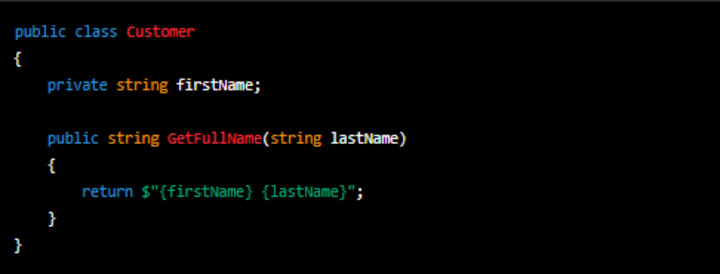
In this example, we use camel case for naming the firstName variable and the GetFullName method parameter. This makes the code more readable and helps distinguish local variables and method parameters from class properties.
2. Pascal case:

In this example, we use Pascal case for naming the OrderItem class, the ProductName and UnitPrice properties, and the GetTotalPrice method. This makes the code more consistent and easier to read, especially for other developers who are familiar with C# naming conventions.
3. Underscore prefix:

In this example, we use an underscore prefix for naming the firstName variable, which is a private instance variable. This is a widely used convention in C# and helps to distinguish private variables from public properties.
4. Constants:
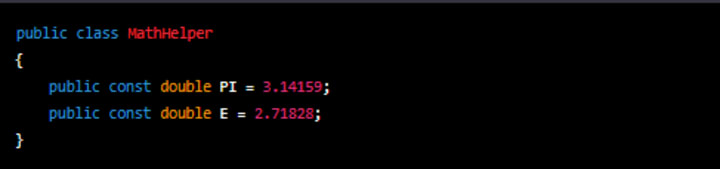
In this example, we use all uppercase letters for naming the PI and E constants. This convention makes it clear that these values are not meant to be changed, and helps distinguish constants from other variables.
5. Interface naming:

In this example, we use the letter "I" as a prefix for the IComparable interface name. This convention makes it clear that this is an interface, and helps distinguish it from classes. We then implement this interface in the Person class, which also follows Pascal case naming convention.
6. Acronyms:

In this example, we use Pascal case naming convention for the XmlReader class, but we also capitalize each letter in the "XML" acronym. This makes the name more readable and easier to understand. Similarly, we also use Pascal case for the XmlDocument class, which follows the same convention.
Here are a few more examples of naming conventions in C#:
7. Boolean properties:
In C#, the convention is to use a verb that starts with "Is" or "Has" for naming boolean properties. For example:

This convention makes it clear that these properties are boolean and represent some kind of status or state.
8. Enumeration naming:
In C#, the convention is to use singular nouns for enumeration names. For example:

This convention makes it clear that the enumeration represents a single value or category, rather than a collection or group.
9. Event naming:
In C#, the convention is to use a verb that ends with "-ed" for naming events. For example:

This convention makes it clear that the event represents an action or state change that has already occurred, rather than something that is currently happening.
10. Extension method naming:
In C#, the convention is to use a verb that starts with a lowercase letter for naming extension methods. For example:

This convention makes it clear that the method is an extension method, and helps distinguish it from regular instance methods.
Overall, following naming conventions is an important aspect of writing clean, readable, and maintainable code in C#. While there are some variations in naming conventions used by different developers and organizations, adhering to widely accepted conventions can help make your code more understandable and easier to work with for other developers.
About the Creator
Bharath S
From Oddanchatram, Tamil Nadu, India
Understanding Ductwork Airflow Distribution for Modern Homes
Ductwork airflow distribution is the system that moves heated or cooled air through a building. Many homeowners hear the word ductwork but do not fully understand what it does or why it matters. This guide explains the basics in a clear and simple way. By the end, you will know how air moves, why design matters, and how small issues can affect comfort and energy use.
By Lickety Splita day ago in Education
Smart Ways to Prevent AI From Taking Your Job
Artificial intelligence is changing the workplace faster than almost any technology before it. From automated customer service to AI-generated reports, images, and code, it’s natural to wonder: Will AI take my job?
By Anthony Bahamonde3 days ago in Education
So You Decided To Become a Nurse Practitioner:
So you decided to become an "Advanced Practice" nurse. Congratulations!... is what I would say if this was a good idea. Grad school? In this economy? What were you thinking? Likely it was something along the lines of either 1) “I've seen these other chucklefucks do it— Why can't I?” or even 2) “I've got a nice career, I should shake it up. I miss feeling like I have no clue what I'm doing.”
By Sandor Szabo6 days ago in Fiction


Comments
There are no comments for this story
Be the first to respond and start the conversation.