
Modern Periodic Table: A Comprehensive Guide
Through this comprehensive guide, we will explore what Modern Periodic Table is, its purpose, key features, and the numerous benefits it offers.

Modern Periodic Table holds immense significance in the field of science. If you are intrigued by the importance of the Periodic Table and wish to delve deeper into its intricacies, this article is for you. Through this comprehensive guide, we will explore what Modern Periodic Table is, its purpose, key features, and the numerous benefits it offers. So, let us embark on this enlightening journey into the realm of the Modern Periodic Table.
Understanding the Modern Periodic Table
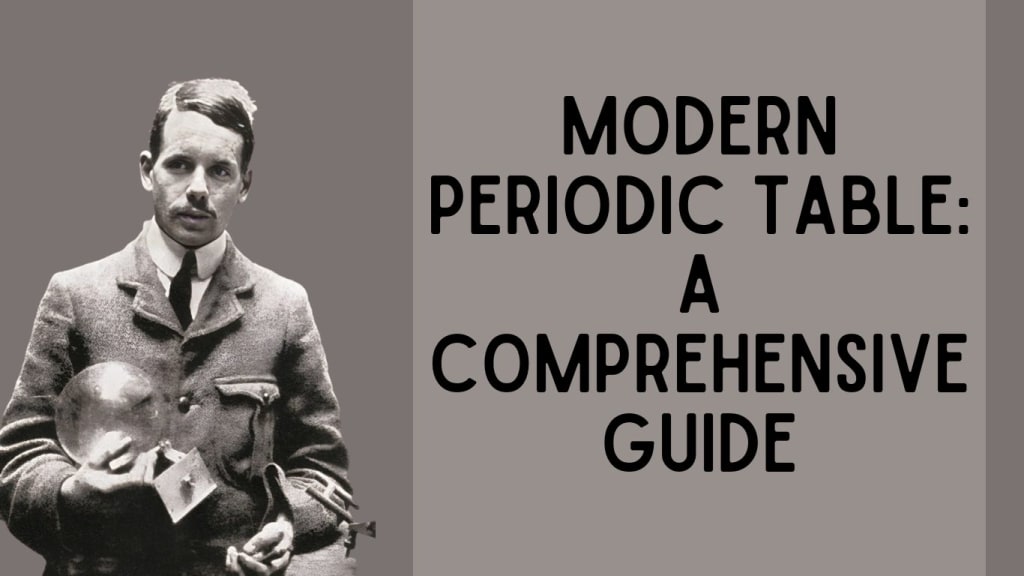
The Modern Periodic Table is a systematic arrangement of elements based on their atomic numbers. It follows the fundamental rule that the properties of elements repeat periodically with their atomic numbers. This rule forms the foundation for constructing the Periodic Table. Now, you might be curious about the origins of the Modern Periodic Table. Allow me to inform you that the scientist Henry Moseley is credited as the pioneer of the Modern Periodic Table.
The table's arrangement follows a precise pattern where elements are organized in ascending order of their atomic numbers. This arrangement leads to the occurrence of elements with similar properties after a specific interval. The same rule applies to the electronic configuration of elements, where similarities in electronic arrangements result in comparable chemical properties.
Key Features of the Modern Periodic Table
Let us now delve into the notable features of the Modern Periodic Table, which are essential from both an academic and scientific perspective:
Atomic Number-based Arrangement: The Modern Periodic Table's uniqueness lies in its organization according to the atomic numbers of elements. The atomic number is a fundamental property that determines an element's position in the table.
Block Classification: The Periodic Table classifies elements into four blocks: the s-block, p-block, d-block, and f-block. Each block has its specific nomenclature, defining the elements it contains.
Long Form of the Periodic Table: The Modern Periodic Table is also referred to as the "Long Form" due to its comprehensive nature. It showcases all the elements systematically.
Groups and Periods: The Modern Periodic Table consists of 18 groups and 7 periods. Groups are vertical columns representing elements with similar properties, while periods are horizontal rows that illustrate the number of electron shells in an atom.
Systematic Arrangement: The Modern Periodic Table exhibits a highly organized structure, ensuring clear placement of elements without any ambiguity. It enables easy identification and classification of elements.
Benefits of the Modern Periodic Table
Now, let us explore the significant advantages offered by the Modern Periodic Table:
Simplified Classification and Understanding: The Modern Periodic Table facilitates the classification of elements and aids in comprehending their properties and characteristics, making it an invaluable resource in educational institutions.
Lanthanides and Actinides Placement: Placing the lanthanides and actinides at the bottom of the Periodic Table allows for a focused study of these elements, as their properties differ from those of other elements.
Enhanced Study of Chemistry: The Modern Periodic Table has revolutionized the study of elements in the field of chemistry. It provides a structured framework that makes the study of elements more accessible and the memorization of their properties more manageable. The grouping of elements within the Periodic Table highlights their shared characteristics.
Predicting Compound Formation: The Periodic Table enables scientists to predict the types of compounds an element can form based on its position within the table. Elements placed on the left side predominantly form metallic compounds, while those on the right side tend to form both ionic and covalent compounds.
conclusion
The Modern Periodic Table stands as a cornerstone of scientific knowledge. Its systematic arrangement of elements based on atomic numbers and the repetition of properties allows for easier classification, comprehension, and prediction of compound formation. The Periodic Table has simplified the study of chemistry and serves as an essential tool in educational institutions. As we continue to explore the depths of scientific knowledge, the Modern Periodic Table will remain an invaluable resource, aiding in our understanding of the building blocks of the universe.
About the Creator
Mcpedlx
Mcpedlx is a Professional Educational Platform. we provide you with only interesting content. We're dedicated to providing you with the best of Educational, with a focus on dependability and Education Blogging.
Website: https://mcpedlx.com
The Backbone of Infrastructure: Inside France’s USD 3.12 Billion Steel Tube Transformation (2025–2033)
In the industrial landscape of 2026, the humble steel tube has become a high-tech symbol of France’s commitment to "Green Sovereignty." No longer just a commodity for construction, steel tubes are now the vital arteries of the hydrogen economy, the skeletal frame of the electric vehicle (EV) revolution, and the foundation of a modernized nuclear fleet.
By Neeraj kumara day ago in Education
Nancy Guthrie: Is a miracle still possible after close to two weeks?
Close to two weeks since Nancy Guthrie's abduction As of February 12, 2026, Nancy Guthrie remains classified as missing for 12 days, but there is no official confirmation that she is deceased. Blood matching Guthrie’s DNA was found on her front porch, indicating she likely suffered an injury during the abduction.
By Cheryl E Prestonabout 3 hours ago in Geeks




Comments
There are no comments for this story
Be the first to respond and start the conversation.